

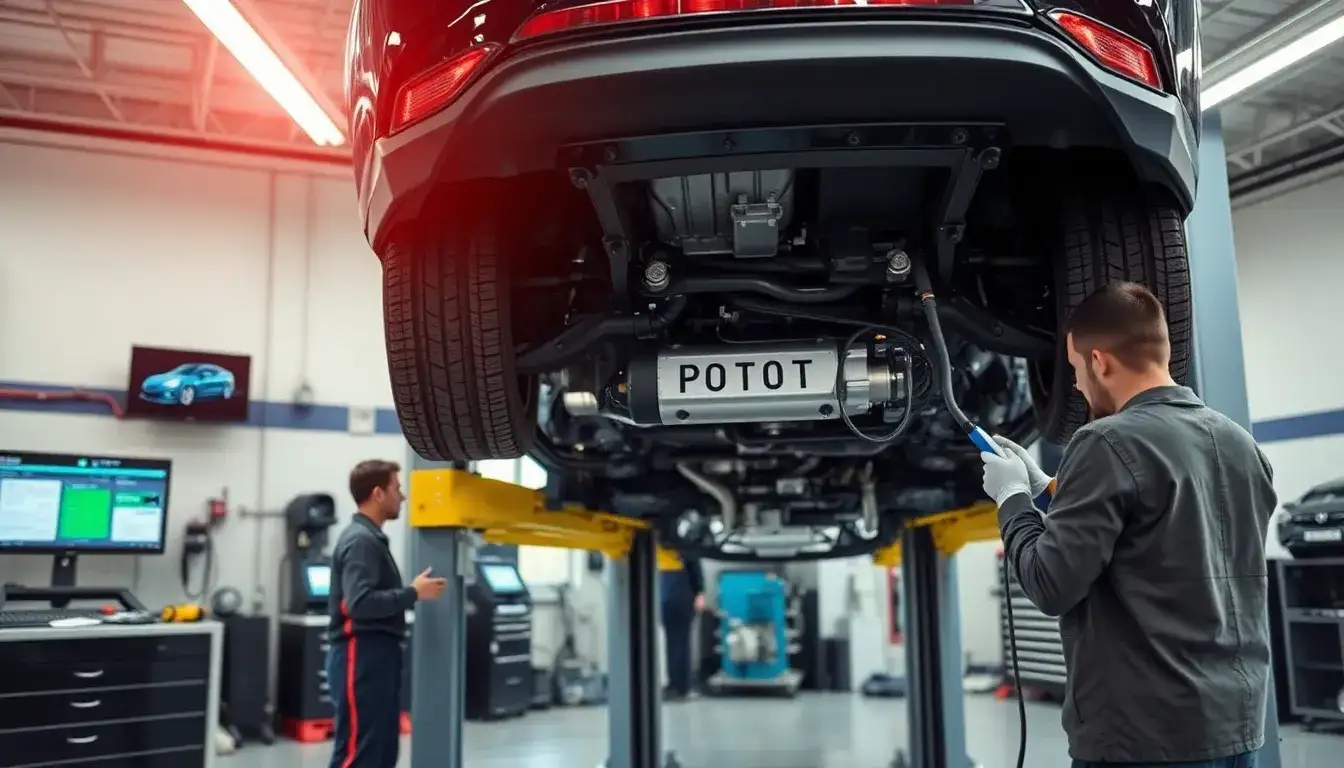
When Ms. Yang, a BYD Seagull owner, received her repair bill after a minor accident, she was taken aback. The costs totaled over 5,000 yuan, including more than 1,200 yuan for the rear bumper, 3,800 yuan for the tailgate, and 200 yuan for painting. This experience resonates with many electric vehicle (EV) owners, highlighting a common concern: the high cost and difficulty of EV repairs. With the increasing penetration of new energy vehicles in the market, expensive and challenging repairs have become a significant barrier to industry growth.
After visiting 4S dealerships, independent repair shops, and consulting with automotive experts and several car owners, it became evident that the seemingly straightforward repair bills are entangled with various issues, including technological barriers, channel monopolies, and a shortage of skilled labor.
Many car owners express their frustration at the high repair costs. Mr. Tang, an owner of a BYD Dolphin, noted that for the same maintenance work, EVs typically cost 1 to 1.5 times more than gasoline vehicles. Similarly, Mr. Niu, who owns a Zhiji LS7, mentioned that even a minor scrape on the chassis could cost around 800 yuan. The owners are also troubled by warranty limitations. For instance, Zhiji vehicle owners mentioned that although there is a lifetime warranty on the entire vehicle, replacing any parts with third-party components voids that warranty.
Price differences among various repair channels are significant. A visit to a JD Car Maintenance store on Rixin Road revealed that the prices for basic services like maintenance and painting for EVs were 30% to 50% lower compared to 4S dealerships. For example, the cost for painting a front bumper at a 4S dealership usually ranges from 1,200 to 1,500 yuan, while at the JD store, the price is only 600 to 800 yuan. Manager Yu from Huijie Car Management confirmed that the price advantage in independent repair shops largely comes from lower labor and operational costs, as 4S dealerships have significant investments in hardware and higher personnel salaries.
However, despite these lower costs, many EV owners are still hesitant. They worry that opting for third-party repairs might impact their original factory warranties. Some brands even restrict basic component replacements, like tires, outside of authorized services. As a result, to preserve their lifetime warranty, many owners feel compelled to pay high prices at 4S dealerships, even for minor damages.
The technical characteristics of new energy vehicles have raised the threshold for repairs. The costs associated with the three electrical systems (battery, motor, and electronic control) account for 30% to 50% of the total vehicle price. If a core component is damaged, replacement costs can easily reach tens of thousands of yuan. Additionally, mainstream technologies such as CTP (cell-to-pack) and CTC (cell-to-chassis) mean that battery cells are glued directly to the battery pack, so even minor damages can necessitate complete replacements, leading to a phenomenon known as “small damages, large repairs.”
During interviews, Mr. Wang, an after-sales engineer for the Avita brand in Yunnan, explained that the highly integrated structure makes non-destructive disassembly challenging. Improper handling can easily damage battery cells or the liquid cooling plate, raising both repair risks and costs. Furthermore, the widespread adoption of advanced technologies has intensified cost pressures; precision electronic components, such as lidar and multiple cameras, are often mounted in vulnerable locations. Minor scrapes can damage several parts, and the replacement costs for these components are often several times higher than those for similar parts in traditional fuel vehicles.
Currently, there is a notable channel monopoly in the EV repair market. Original equipment manufacturers (OEMs) control the circulation of core components and technical information, making it difficult for third-party organizations to gain authorization. Consequently, car owners often have no choice but to go to 4S dealerships for repairs. An after-sales engineer revealed that car manufacturers tightly control core technologies and components to ensure repair quality, which inadvertently restricts competition and keeps prices high.
Additionally, specialized equipment such as insulation testing devices and thermal runaway warning systems are essential for EV repairs, with individual devices costing over 100,000 yuan and requiring continual updates. 4S dealerships must also invest in dedicated explosion-proof repair areas and insulation protection gear, with site renovation costs reaching hundreds of thousands of yuan. Manager Rong from a JD Maintenance store calculated that their investment in EV repair-related equipment exceeds 500,000 yuan, and these costs can only be recouped through service pricing.
The low interchangeability of parts further drives up repair costs. Due to the rapid evolution of EV models, components from different vehicles are often incompatible, forcing repair shops to stock a large inventory of specialized parts. This inventory pressure ultimately translates into higher repair prices, significantly exceeding those of conventional gasoline vehicles. As a result, the operational costs of repair institutions are passed on to car owners.
Guo Zhiyong, deputy dean of the Automobile College at Yunnan Transportation Vocational College, noted that this channel monopoly has created a “double-sided binding” situation: EV owners must choose 4S dealerships to maintain their warranties, while 4S dealerships, lacking competitive pressure, struggle to lower service prices. According to data, by 2025, an estimated 3.5 million out-of-warranty EVs will exist, yet the proportion of independent repair shop visits remains low, with most owners still relying on official channels.
Battery repair presents both safety and cost challenges. As the core component of electric vehicles, battery repairs are not only costly but also carry significant safety risks. Mr. Wang, an after-sales engineer from Avita, explained that battery repairs are high-risk operations requiring strict safety protocols: before work begins, vehicle information must be verified and an explosion-proof repair area established; energy isolation requires double disconnection, voltage verification, and a 15-30 minute wait; all personnel must wear insulation gear rated for over 1000 volts during disassembly, and any exposed copper terminals need immediate insulation coverage; after repairs, insulation tests, airtightness tests, and charge-discharge functionality tests must be conducted to ensure compliance with an IP67 protection level.
These stringent requirements deter many ordinary repair shops. Manager Rong from JD Maintenance mentioned that battery faults from impacts are typically “replaced, not repaired.” High internal cell group complexity leads to exorbitant repair costs, and the consistency of repaired cells is hard to guarantee. Discrepancies in capacity and internal resistance between old and new cells can cause overcharging or over-discharging, resulting in thermal runaway risks. Mr. Wang added that the new safety requirements for electric vehicle batteries (GB38031-2025), effective July 2026, mandate that batteries must not ignite or explode throughout their lifespan. To mitigate risks, manufacturers prefer to replace entire battery packs that have been factory-validated rather than risk repairs.
Importantly, the “removed” battery packs are not simply discarded. Brands and the industry are establishing comprehensive recycling systems: batteries with a capacity drop below 80% are repurposed for energy storage systems or low-speed electric vehicles, while severely damaged batteries are recycled to extract metals like nickel, cobalt, and lithium, reintegrating them into the production cycle. Regions like Chongqing are beginning to develop industrial bases for battery recycling, creating a complete chain from “recycling—transportation—disassembly—utilization” to minimize resource waste.
The rapid expansion of the EV repair market starkly contrasts with the shortage of skilled professionals. The lack of specialized technicians and the challenges in cultivating them have also driven up repair costs. According to a forecast from the Ministry of Industry and Information Technology and other departments, by 2025, there will be a shortage of approximately 1.03 million professionals in the EV sector, with 80% (about 824,000) specifically needed for after-sales service.
During a visit to a JD Maintenance store on Rixin Road, it was discovered that the entire staff included only one certified technician for EV repairs. This situation is not unique to small repair shops; many have expressed the desire to expand into EV repairs but face difficulties in hiring and retaining talent. Training a qualified EV technician requires an investment of tens of thousands of yuan and over six months of practical experience, while the industry’s high turnover rate makes this cost unsustainable for smaller shops.
The core reasons for the talent shortage include high entry barriers and training costs. According to Guo Zhiyong, EV repair technicians must hold a low-voltage electrician certification issued by the Ministry of Emergency Management as a legal requirement for working on high-voltage systems. This certification requires a 5-8 day in-person training course, followed by a day of examination, with typical costs ranging from 800 to 1,500 yuan and a recertification every three years. In addition, technicians must obtain a vocational qualification certificate for automotive repair, which has five levels requiring 1-3 months of training and assessment at each level, costing between 1,500 and 4,000 yuan. For specific roles, additional certifications for high-voltage electricians, electrical repair qualifications, charging pile maintenance, and intelligent network testing are also required, each costing between 1,000 and 2,000 yuan and taking 1-2 weeks to complete.
On the corporate side, there are also specific certification requirements. A junior technician can only repair vehicles that are in a safe state after being disconnected from power, while higher qualifications are needed for live work or vehicles with uncertain statuses. The costs for internal training certificates from companies are typically around 3,000 to 4,000 yuan per level. In contrast, gasoline vehicle repair only requires a basic automotive repair technician certification without any high-voltage electrical qualifications. Training for EV repairs takes 2-3 times longer and costs about 60% more, with multiple overlapping certifications further elevating the entry barriers.
Consequently, the qualification requirements for EV repair technicians are significantly higher than those for gasoline vehicles. This discrepancy stems from two main factors: the high safety risks associated with high voltage and the rapid technological evolution of components. While gasoline vehicles typically operate at 12V, EVs operate at 300-800V, posing electrocution risks that necessitate dual certification for both electrical and high-voltage expertise. Additionally, the fast-paced advancements in battery chemistry and electronic control software require technicians to undergo continuous retraining; otherwise, their knowledge may become outdated within 3-5 years.
Specific estimates indicate that by 2025, there will be around 3.5 million out-of-warranty EVs on the road, and with an average of 150 vehicles serviced per technician annually, approximately 23,000 more technicians will be needed just for these out-of-warranty vehicles. Currently, there are fewer than 50,000 qualified EV repair technicians nationwide, with a conservative estimate of a shortage of 150,000 to 200,000, growing at a rate of 30% annually.
Despite the high demand for renewable energy repair professionals, the educational institutions face significant investment challenges. Guo Zhiyong revealed that this field requires substantial facilities and equipment for the entire vehicle, three electrical systems, safety protection, etc., with initial investments ranging from 3 to 5 million yuan. Most institutions find it challenging to make such a significant one-time investment for a single program. This imbalance between talent supply and market demand exacerbates the talent shortage.
As we search for the keyword “EV repair” on social media, it becomes clear that many consumers harbor concerns. Although EVs are environmentally friendly and economical to operate, the exorbitant repair costs make potential buyers hesitate to commit to switching to electric vehicles. In light of the myriad challenges facing the EV repair market, several industry insiders urge a multi-faceted exploration of solutions related to technology, channels, and policies.
In terms of channels, the independent after-sales market is emerging. Companies like Contemporary Amperex Technology Co. Ltd. (CATL), insurance firms, and internet platforms are entering the market, breaking the channel monopoly of OEMs. Chain brands like JD Maintenance are pushing for a transformation that integrates fuel and electric services by reducing parts costs through bulk purchases, while gradually enhancing their EV repair capabilities.
On the policy side, relevant departments are promoting the transparency of repair technology information to safeguard the rights and interests of third-party repair institutions. Guo Zhiyong suggests establishing a standardized training system for EV repair, integrating it into vocational education curricula, and shortening the training periods through school-enterprise cooperation to alleviate the talent gap. Additionally, he emphasizes the need to expedite the development of industry standards for battery repairs and high-voltage operations to regulate market order.
From a corporate perspective, some automakers are beginning to adjust their after-sales strategies. Mr. Wang, an after-sales engineer at Avita, noted that manufacturers are gradually opening up certain non-core repair technologies to lower the entry barriers for third-party institutions. They are also optimizing parts design to enhance compatibility and reduce the incidence of “replacement instead of repair.” Some brands have introduced differentiated warranty schemes that maintain product quality while offering car owners more repair options.
For car owners, effectively planning repair strategies is crucial. As we approach the “over-warranty year” for EVs, with 3.5 million out-of-warranty vehicles contributing to a billion-yuan independent after-sales market, this growth presents both new opportunities for the industry and corresponding demands for technical adaptation, talent supply, and market regulation. The development of the EV after-sales repair sector will continue to interact with the overall pace of industrial development.
Original article by NenPower, If reposted, please credit the source: https://nenpower.com/blog/challenges-in-electric-vehicle-maintenance-high-costs-and-complex-dynamics-behind-repair-bills/

