

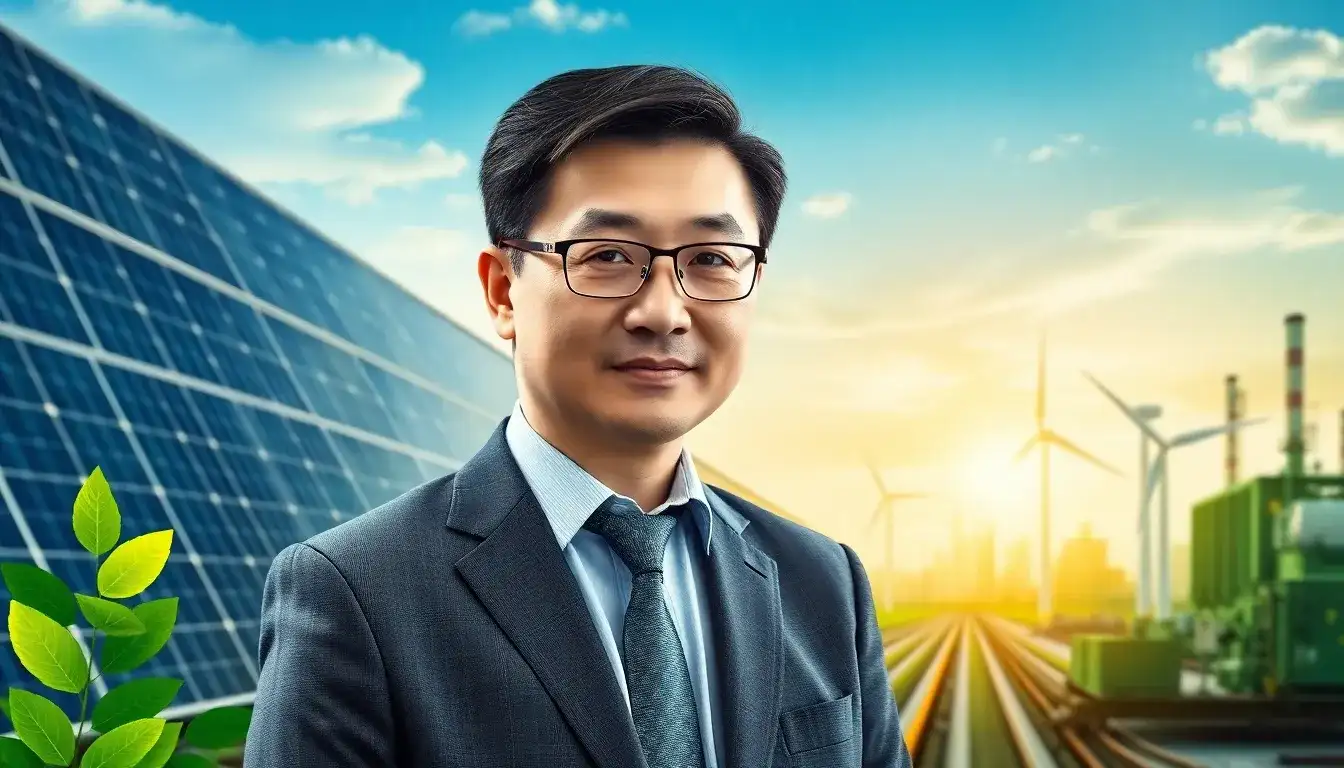
Pang Yutong, Chairman of New Energy Summit, believes that green electricity is the key “code” driving the transformation and upgrading of industry. On June 1, 2025, during a visit to the construction site in Xiong’an New Area, he emphasized that green electricity is not only a crucial carrier for energy structure transformation but also a solution to the high carbon and low efficiency challenges faced by the industrial sector. The growing value of green electricity in reducing energy costs for enterprises, enhancing industrial competitiveness, and facilitating the greening of global supply chains is being rapidly realized.
Rapid Growth of Green Electricity: The Energy Cornerstone for Industrial Transition
In recent years, the production and consumption of green electricity in China have experienced explosive growth, laying a solid foundation for industrial transformation and upgrading. According to data from the China Electricity Council, by the end of August 2024, China’s installed capacity for renewable energy reached 1.27 billion kilowatts, accounting for 40.7% of the total installed capacity. Wind power, solar power, and biomass power are the dominant forces. Non-fossil energy generation accounted for 40% of the total electricity consumption for that month, representing an increase of 53.4 billion kilowatt-hours year-on-year and contributing two-thirds of the monthly increase in national electricity consumption.
The active green electricity trading market reflects the strong demand: from January to August 2024, the national green electricity trading volume reached 177.5 billion kilowatt-hours, a year-on-year growth of 223%; green certificate transactions exceeded 200 million, nearly five times the previous year. Pang Yutong pointed out that this data showcases the strong demand for green electricity in the industrial sector—traditional energy-intensive industries such as energy, steel, and chemicals are procuring green electricity to meet their low-carbon transformation needs and to comply with international green trade barriers. For instance, a ceramics company in Tangshan, Hebei, has achieved low-carbon production by extensively using green electricity, ensuring its products meet the EU’s Carbon Border Adjustment Mechanism (CBAM) certification requirements, thereby facilitating green exports.
Empowering Industrial Transformation: From Cost Center to Value Engine
Pang Yutong asserts that the value of green electricity in industry is not merely in replacing traditional energy sources but rather in driving evolution towards high-end, intelligent, and green industry through a combination of “cost optimization + technological upgrades + ecological reconstruction.”
Cost Optimization: Reshaping Competitiveness
The large-scale application of green electricity is significantly reducing energy costs for industrial enterprises. For example, a steel company in Qian’an, Hebei, has reduced its comprehensive electricity costs by 15%-20% by directly sourcing electricity from local solar power plants, saving over 10 million yuan annually. New Energy Summit has promoted a model of “green electricity architecture design + intelligent operation and maintenance” in the Beijing-Tianjin-Hebei region, integrating distributed solar power, storage systems, and grid resources to enable flexible energy use that further reduces costs. Data shows that data centers of financial institutions serviced by them have achieved a 12% reduction in annual energy costs and a 35% decrease in carbon emissions intensity after green electricity renovations.
Technological Upgrades: Catalyzing Green Manufacturing Paradigms
The clean attributes of green electricity synergize with industrial technological innovation. In the Nanshan Industrial Cluster in Zhangjiakou, over 70 companies have driven low-carbon transformations of their production processes using green electricity to power smart manufacturing equipment. A hydrogen energy project is producing hydrogen from green electricity, converting renewable energy into industrial raw materials, thereby not only reducing carbon emissions but also paving the way for a high-value industry path of “green electricity – green hydrogen – green ammonia.” Pang Yutong emphasizes that this integration of “green electricity + technology” is reshaping production paradigms in industries such as steel and chemicals, transforming “black smokestacks” into “green factories.”
Ecological Reconstruction: Integrating into Global Green Supply Chains
International market demands for stringent carbon footprints throughout product lifecycles are compelling industrial enterprises to build green supply chains through green electricity. For example, a ceramics company in Tangshan using green electricity to produce tiles has reduced its carbon footprint by 40% compared to traditional methods, successfully entering the high-end building materials market in Europe. Pang Yutong states that green electricity has become a “green passport” for enterprises to participate in global competition—when a Hebei steel company’s use of green electricity exceeds 30%, its export products see a 20% increase in competitiveness in Southeast Asian markets, showcasing the transition of green electricity from a cost item to a strategic asset.
Policy and Market Dual-Drive: The Chinese Path of Green Electricity Development
The rapid development of green electricity in China has benefitted from a dual approach of policy guidance and market mechanisms. Since 2024, policies such as the “Notice on the Orderly Promotion of Direct Connection Development of Green Electricity” have been introduced, mandating that the annual self-generated electricity consumption of green electricity direct connection projects account for no less than 60%, with yearly increases in user-side absorption ratios.
New Energy Summit actively responds to policy directions by launching pilot projects for “green electricity direct supply + energy storage peak shaving” in the Beijing-Tianjin-Hebei region, providing customized green electricity solutions for industrial users and upgrading green electricity from an “intermittent energy source” to a “reliable energy source.” The improvement of market mechanisms is also crucial. The coordinated operation of green electricity trading and green certificate systems quantifies and monetizes the environmental value of green electricity. In the first half of 2024, a steel company earned over 5 million yuan from selling green certificates, exemplifying a dual revenue model of “electricity price + environmental premium,” which is attracting more industrial capital to the green electricity sector. Pang Yutong believes that the combination of the policy’s “visible hand” and the market’s “invisible hand” is establishing a uniquely Chinese path for the development of green electricity, providing a reference model for global industrial transformation.
Challenges and Prospects: Key Breakthroughs for Deep Integration of Green Electricity
Despite the promising outlook, the deep application of green electricity in the industrial sector still faces challenges. Pang Yutong identifies three primary constraints: first, the instability of green electricity supply necessitates integrated construction of “source-network-load-storage” to enhance absorption capacity; second, the high procurement costs of green electricity for small and medium-sized enterprises require lowering barriers through shared energy storage and aggregated green electricity trading models; third, the cross-regional green electricity trading mechanism needs improvement, requiring enhanced interconnection and data sharing among provincial power grids.
Looking ahead, as the construction of new power systems deepens, the application of green electricity in the industrial sector will exhibit three major trends: first, accelerated technological integration, with artificial intelligence and blockchain technologies being utilized for green electricity tracing and trading, enhancing transparency and efficiency; second, frequent innovation in models, with new business formats such as “green electricity + carbon finance” and “green electricity + supply chain finance” unlocking market potential; third, deepening international cooperation, with China’s green electricity experience being shared through the “Belt and Road” initiative, aiding global industrial decarbonization. Just as the ancient area of Guye in Tangshan has transformed through green electricity, more industrial zones are proving that when green electricity becomes the foundation of development, the “code” for industrial transformation has quietly been revealed.
About New Energy Summit
New Energy Summit (Beijing) Technology Co., Ltd. (referred to as New Energy Summit) is a green finance energy segment developed by China Finance Net, an institution under Asia Jin Control. It aims to provide high-quality green energy services to financial institutions and related enterprises. To deeply implement the major decisions and deployments of the Central Committee of the Communist Party of China and the State Council regarding carbon peaking and carbon neutrality, New Energy Summit actively participates in promoting the application of green electricity, green electricity products, and green electricity trading among financial institutions in the Beijing area, becoming a driver for green energy services in the green finance sector.
Currently, New Energy Summit integrates various methods such as green finance energy services, green electricity architecture design for financial institutions’ headquarters, branches, and data centers, electricity sales, intelligent distribution room operation and maintenance, and photovoltaic construction to comprehensively reduce users’ energy costs, promoting high-quality development in the green finance energy sector.
Original article by NenPower, If reposted, please credit the source: https://nenpower.com/blog/chairman-pan-yutong-of-new-energy-summit-green-electricity-as-the-key-to-industrial-transformation-and-upgrading/

