

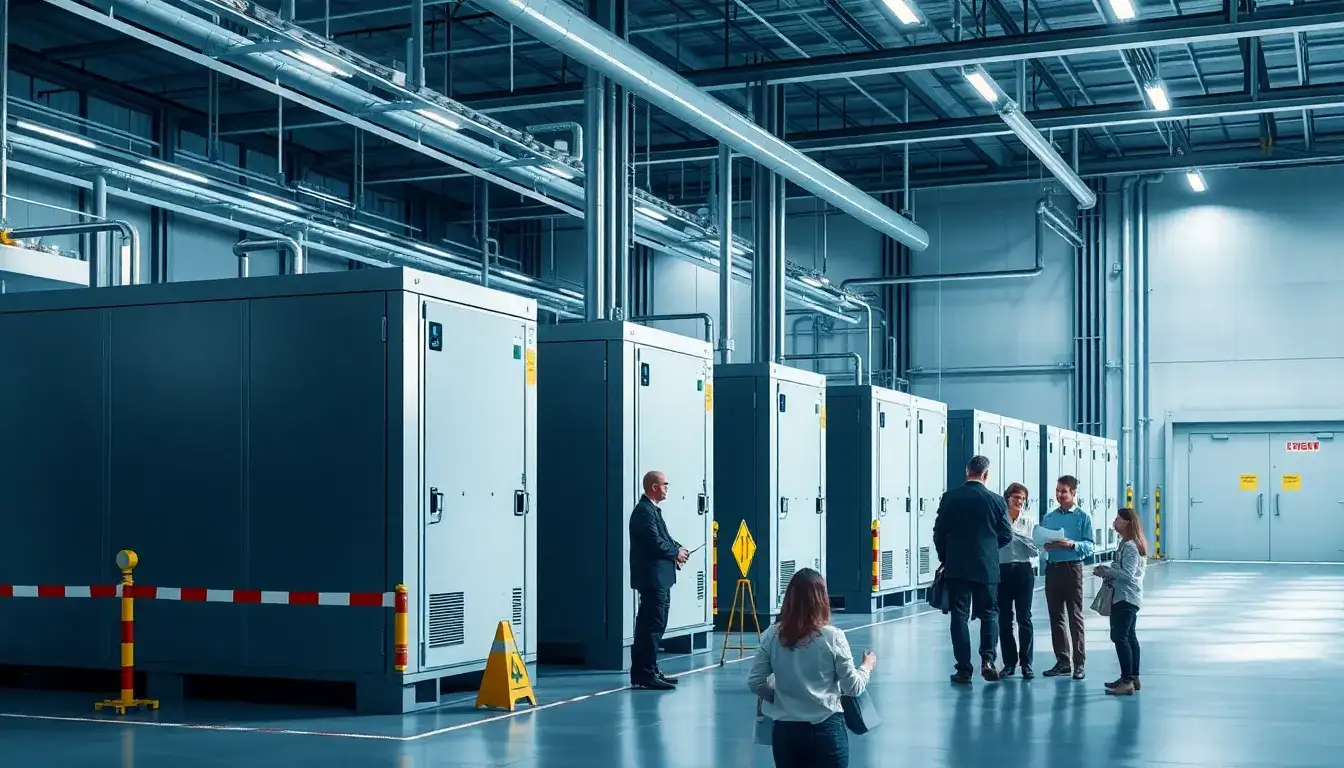
The Central Electricity Authority (CEA), part of the Ministry of Power in India, has released a draft amendment to its safety regulations concerning electric supply. This draft, titled “Central Electricity Authority (Measures relating to Safety and Electric Supply) (First Amendment) Regulations, 2025,” sets forth comprehensive safety standards specifically for Battery Energy Storage Systems (BESS).
A public notice inviting comments on this draft has been issued under Section 177 of the Electricity Act, 2003. Stakeholders and members of the public have until July 20, 2025, to submit their feedback. The draft can be accessed on the CEA’s website, or interested parties can review it in person at the CEA office in New Delhi during working hours.
The primary goal of these draft regulations is to enhance safety requirements for BESS installations. A new chapter, titled “Chapter X-A,” has been introduced, encompassing various safety provisions including fault tolerance, fire suppression, emergency stops, security measures, ventilation, and hazard detection.
A significant proposal outlines that battery chargers must be compatible with the battery chemistry, and the system should be designed to withstand two faults without leading to catastrophic failures. All components involved must adhere to applicable safety standards.
Moreover, the Battery Management System (BMS) is required to monitor and record voltage, temperature, and current at both the cell and module levels. It should also trigger alarms and halt operations if any monitored parameter exceeds safe thresholds. The Power Conversion System (PCS) must operate automatically, synchronize with the grid, and include self-protection features.
Battery containers are mandated to be explosion-proof and equipped with sufficient ventilation. Specific clearance distances between containers and buildings have been defined, and if these distances cannot be achieved, extensive fire testing will be necessary to guarantee safety. Furthermore, every BESS container with a capacity of 200 kWh or more is required to have a water-based fire suppression system.
Additional regulations stipulate the inclusion of proper lighting, emergency exits, signage, and security features such as fencing and CCTV monitoring. Provisions for electrolyte spill containment, proper earthing, and manual emergency stop mechanisms are also outlined.
An independent third-party fire safety audit must be conducted within three months of the final regulation being published, and the audit report must be submitted to the Electrical Inspector. Additionally, it is essential for the relevant state government to ensure that fire safety officers are trained to manage BESS-specific risks, with training guidelines to be provided by the Directorate General of Fire Safety (DGFS) within three months of the notification.
A new regulation (Regulation 137) has also been introduced, stating that the CEA will issue a list of relevant standards applicable to these amendments separately within three months of the regulation’s publication. These draft amendments are part of India’s increasing emphasis on the safety of energy storage systems as battery technology becomes integral to the country’s energy infrastructure. The CEA’s initiative underscores the necessity for structured guidelines to mitigate fire, chemical, and operational hazards as the sector evolves.
Original article by NenPower, If reposted, please credit the source: https://nenpower.com/blog/cea-releases-draft-safety-regulations-for-battery-energy-storage-systems-and-invites-public-feedback/

