

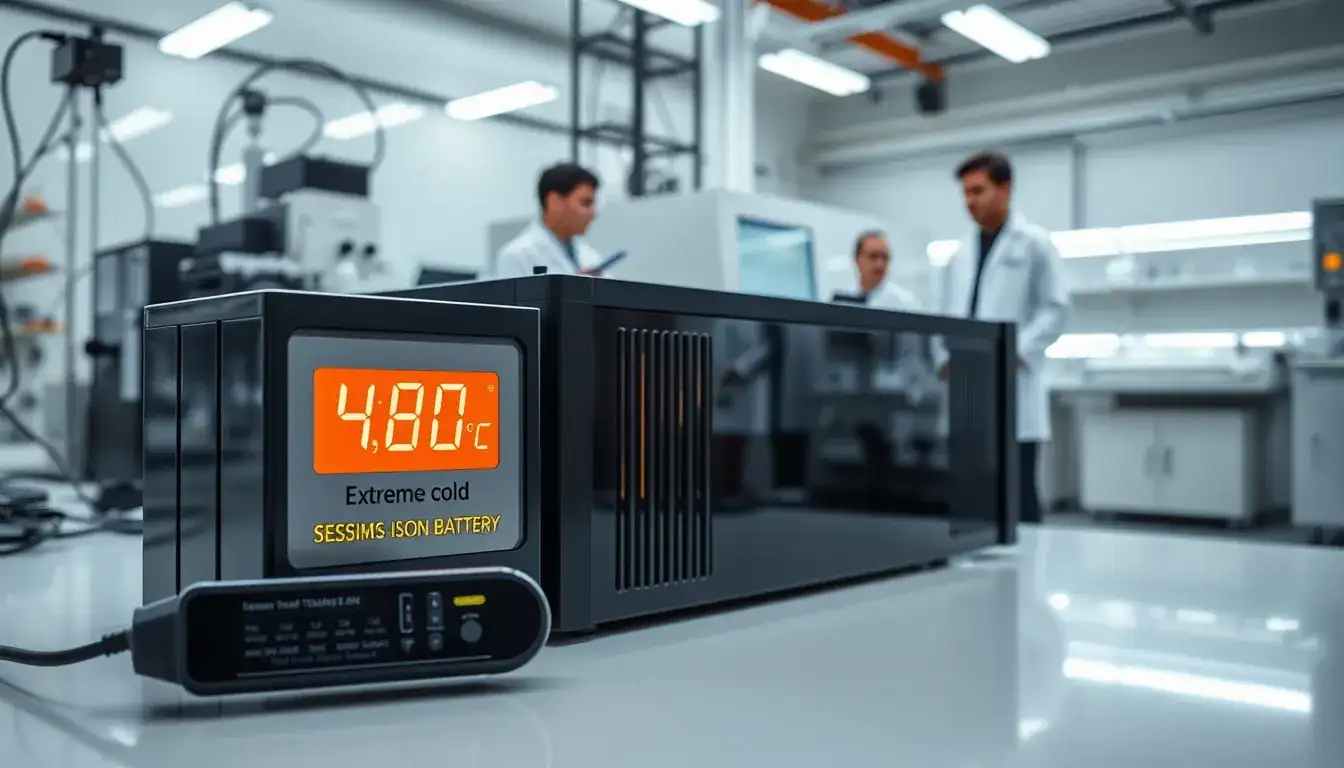
At minus 40°C, still 90% battery capacity! CATL has made a significant breakthrough with the introduction of its sodium-ion battery brand, “Sodium New”. This innovative product has pushed the boundaries of material performance and is set to achieve large-scale production, effectively reducing the new energy industry’s reliance on lithium resources. For instance, the Sodium New passenger vehicle battery can maintain 90% usable capacity at minus 40°C and shows minimal power degradation even when only 10% charge remains.
Currently, the application of sodium-ion batteries is accelerating in the energy storage and logistics sectors, leading to new demand for battery production. Recently, CATL unveiled its second-generation Super Charging Battery at a tech event themed “Awakening Boundaries”. This battery is the world’s first lithium iron phosphate battery that offers both 800 km of long-range capability and a peak charging rate of 12C. Furthermore, the company launched the “Sodium New” battery, marking the world’s first sodium-ion battery designed for large-scale automotive production.
Compared to lithium batteries, sodium batteries have several advantages, including abundant resources, lower costs, enhanced safety, and adaptability to extreme temperatures. With the mass production of the Sodium New battery, the commercialization process of the entire sodium battery industry is likely to accelerate. According to plans, the first product, a 24V integrated battery for heavy trucks, is expected to enter mass production in June this year in collaboration with FAW Jiefang. The Sodium New power battery is set to begin mass production in December 2025, initially launching with a chocolate battery swap model.
Breaking Resource Boundaries: CATL’s Sodium New battery has achieved significant advancements, addressing the challenges faced by batteries in extremely cold environments. Ouyang Chuying, co-president of CATL’s R&D system, noted that the abundance of sodium in the earth’s crust is estimated to be 421 times that of lithium, with sodium at 2.74% and lithium at only 0.0065%.
CATL’s CTO for domestic passenger and commercial vehicles, Gao Huan, introduced two versions of the Sodium New battery, which can operate in a temperature range from minus 40°C to plus 70°C. The Sodium New passenger vehicle battery achieves an energy density of 175 Wh/kg, making it the highest energy density sodium battery globally, comparable to lithium iron phosphate batteries. It supports charging rates of up to 5C and has a range of 500 km, with a lifespan exceeding 10,000 cycles.
The Sodium New 24V integrated battery for heavy trucks boasts a lifespan of over 8 years, with total lifecycle costs reduced by 61% compared to traditional lead-acid batteries, ushering commercial vehicles into an era of “lead-free, battery-life parity”. Gao Huan confirmed that mass production of the Sodium New 24V battery will commence in June 2025 in partnership with FAW Jiefang, while the passenger vehicle power battery will commence mass production in December 2025.
According to SNE statistics, CATL’s global market share for power batteries has been steadily increasing. In the first two months of 2025, CATL’s power battery usage accounted for 38% of the global market, with a 43% share in Europe, reflecting an 8 percentage point increase year-on-year and a 13 percentage point lead over the second-ranked company. CATL’s first quarter report for 2025 indicated a revenue of 84.705 billion yuan, a 6.18% increase year-on-year, and a net profit of 13.963 billion yuan, up by 32.85%.
Investment advisor Qu Fang from Wanyuan Securities noted that CATL continues to maintain good market growth and share, with net profit growth surpassing revenue growth, indicating an increase in product profitability. The overall market growth for power batteries is accelerating, further establishing CATL’s position as a leading player in the battery sector.
As demand grows for downstream markets such as smart robots and flying cars, CATL’s technological advantages in lithium iron phosphate, ternary batteries, and solid-state batteries will become increasingly prominent.
In the sodium-ion battery sector, various types are categorized based on electrolyte and electrode materials, including high-energy-density sodium-sulfur batteries, high-temperature stable sodium-salt batteries, gas-reaction sodium-air batteries, organic batteries compatible with existing industrial chains, and highly safe aqueous batteries. Their main advantages lie in the abundance of sodium resources, cost potential, and excellent low-temperature performance.
Research indicates that there are currently 14 new or under-construction sodium-ion battery production projects, which, if completed, will exceed 110 GWh in capacity. Projections suggest that by 2025, China’s sodium-ion battery shipments will surpass 4.5 GWh, with estimates of over 30 GWh by 2030. The sodium-ion battery industry has received significant government attention and support, with several policies aiming to facilitate its commercialization.
As we move into 2025, major battery companies like CATL, BYD, and Zhongke Haina are releasing updates on sodium battery developments, indicating a competitive race for strategic positioning in the sodium battery sector. Recently, Zhengli New Energy was listed on the Hong Kong Stock Exchange, with plans to use part of the proceeds from its IPO for the development and commercialization of high-rate, long-life sodium-ion power batteries.
Other companies such as BYD and Zhongke Haina have also made strides in sodium battery technology, with BYD reporting significant advancements in safety and low-temperature performance. Additionally, Haicheng Energy introduced its first dedicated sodium-ion energy storage battery, demonstrating advantages in cycle performance, temperature range, and charging efficiency.
Despite the current high cost of sodium-ion battery storage compared to lithium-ion batteries, future applications and increased production capacity are expected to narrow this gap. Hu Yongsheng, director of the Clean Energy Laboratory at the Chinese Academy of Sciences, believes that the large-scale production of sodium-ion batteries could stabilize lithium battery prices, reducing volatility.
As the new national standards emerge, leading two-wheeler manufacturers are transitioning from assembly plants to brand manufacturers, enhancing their research and development capabilities and sales channel control. The energy transformation brought by sodium batteries offers these manufacturers opportunities to penetrate upstream in the supply chain.
Looking ahead, various market analysts anticipate that sodium batteries will experience accelerated industrialization, with significant growth expected in demand by 2025, potentially reaching 58 GWh domestically, which translates to a need for 17.4 million tons of sodium-ion battery cathode materials.
In conclusion, sodium-ion battery technology is poised to make a significant impact across various sectors, particularly in energy storage, logistics, and electric vehicles, as its advantages become increasingly recognized and leveraged.
Original article by NenPower, If reposted, please credit the source: https://nenpower.com/blog/catl-launches-sodium-ion-battery-capable-of-90-performance-at-40c-signaling-potential-industry-transformation/

