

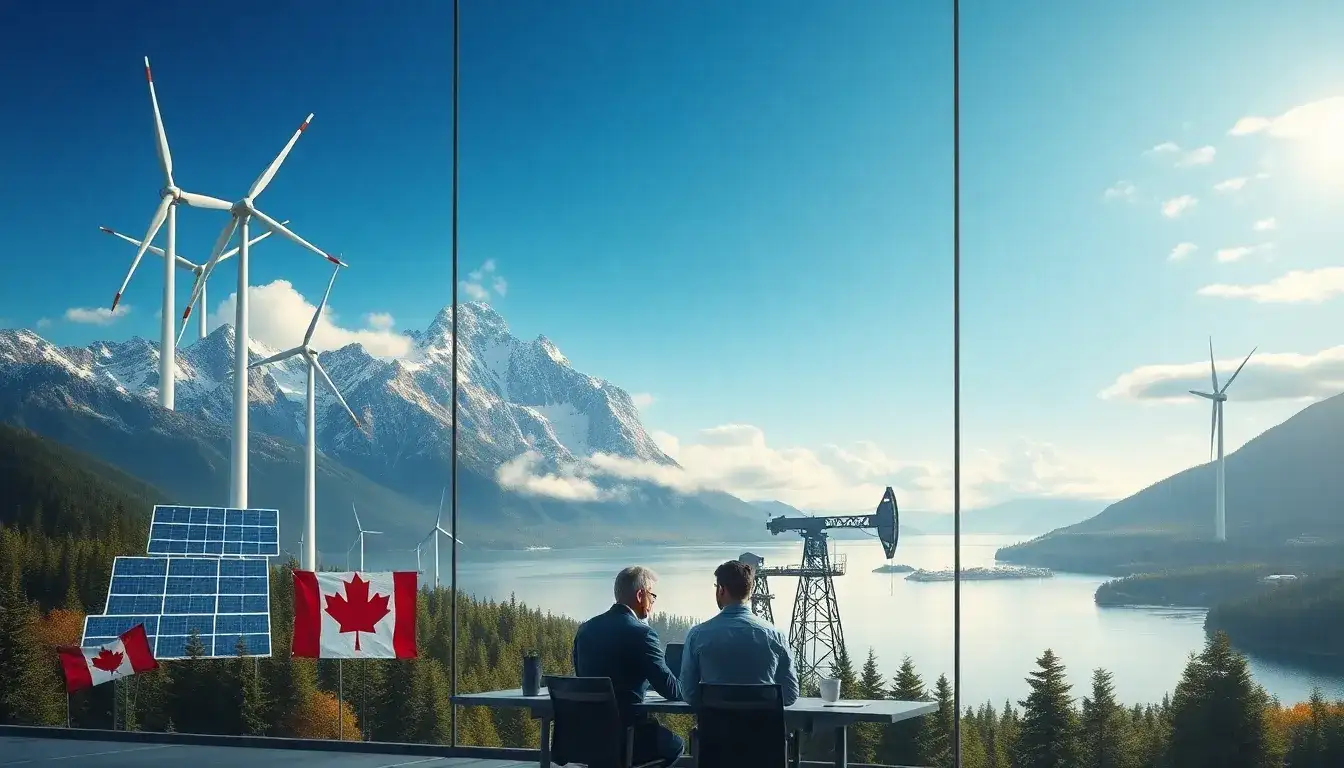
Power Shift: Canada’s Rising Role in Global Energy Resilience
—
Geopolitical tensions in the Middle East serve as a stark reminder that global fragmentation threatens not only stability but also the prospects for an orderly energy transition and societal well-being. At the core of this challenge lies energy security. As global systems evolve and alternatives proliferate, energy resilience is becoming closely intertwined with economic resilience.
Deepening global imbalances cannot be overlooked. Growing gaps between supply and demand, ambition and investment, generation and infrastructure, as well as availability and affordability, signal a volatile path ahead. Governance deficits among major resource players exacerbate these risks. Nearly half of the world’s oil is produced by OPEC+ nations, while over one-third of natural gas originates from the Middle East and Russia. Approximately 75% of critical mineral processing occurs in a single country, with half of those essential for clean energy being restricted by export controls globally.
In contrast, Canada stands out. It ranks highly in various energy resources, yet much of its potential remains untapped. Years of underinvestment have eroded Canada’s competitiveness. A narrow window has emerged. With strong governance and abundant resources, Canada is well-positioned to become a reliable and responsible energy superpower, serving both Canadians and trusted allies. However, realizing this potential requires commitment.
The federal government has devised a plan to unlock significant new investments in the country’s most productive sectors. The ambition is bold, but success hinges on restoring investor confidence and encouraging business engagement. This means addressing market failures—not by overriding markets, but by collaborating with them to catalyze greater investment. The weaponization of energy poses a tangible risk, and failing to fully acknowledge this reality could be a serious policy misstep. Canada must act decisively before the next disruption alters the landscape.
### History Rhymes
The 2022 Russian invasion of Ukraine shattered the illusion that energy affordability and climate goals could be pursued independently of geopolitical risks. Europe’s reliance on a single supplier revealed significant vulnerabilities, while global energy markets faced severe price shocks. As Scotiabank Economics cautioned at the time, geopolitical polarization is not a fleeting risk—it represents a structural shift. This warning has proven prescient, as Russia’s aggression continues into its fourth year, now compounded by implicit political support from the US. Instability in the Indo-Pacific remains, while escalating conflicts in the Middle East are once again disrupting markets. The human toll is substantial.
These dynamics unfold within an erratic policy landscape that has paralyzed global investment activity. The near- and long-term consequences of today’s evolving global environment may be uncertain, but the urgency to enhance energy security is clear.
### Fade the Dichotomy
The previously divisive line between “alternative” and “conventional” energy is giving way to a more pragmatic consensus. The energy crisis of 2022 exposed the fragility of global systems, prompting a shift towards an “all-of-the-above” strategy that prioritizes stability, affordability, and responsibility. Clean energy is now mainstream. Major economic blocs like the EU and US have adopted industrial strategies to accelerate clean energy investments, driven by both geopolitical and geoeconomic motives, as China solidifies its lead.
Technologies once deemed nascent—such as solar, wind, and battery storage—are now being deployed at scale. According to the IEA, global investment in clean energy is projected to double that of fossil fuels by 2025. However, conventional energy remains foundational, with fossil fuels accounting for approximately 80% of global energy demand and 60% of electricity generation last year. Under the IEA’s “current policy” path, they are expected to maintain a significant role in the energy mix over the next decade.
The conversation surrounding sustainability is evolving from energy type to production method, with “abated” versus “unabated” becoming increasingly important distinctions. As systems grow more complex, their vulnerabilities also increase. Energy security now encompasses intricate critical mineral supply chains, advanced grid infrastructure, secure trade routes, and access to cutting-edge technologies. Emerging demand drivers, such as AI data centers and climate-driven cooling appliances, are also exerting nonlinear stress on electricity systems. Meeting these challenges requires not just increased generation but also smarter, more resilient infrastructure and reliable supply chains. Energy security is no longer solely a utility concern; it is essential for sustained economic growth, industrial competitiveness, and social stability.
### Uncertainty is the New Normal
Forecasting the global energy outlook is increasingly challenging. In 2024, global energy demand rose by 2.2%, nearly a full percentage point above the historical average. However, the IEA anticipates this growth will slow to just 0.5% annually over the next decade. Demand trajectories diverge sharply by source, with electricity demand expected to grow at 3% annually through 2035, driven by electrification and digitization. Conversely, demand for conventional fuels may plateau or decline depending on the pace of clean energy deployment and efficiency improvements.
These projections rely on increasingly fragile assumptions. The IEA’s scenarios—from current policies to net-zero pathways—indicate a wide range of outcomes. For instance, electricity demand in 2035 could exceed baseline forecasts by 5% in high-growth scenarios, contingent on factors like EV adoption and coal-to-gas switching. Oil demand could vary by 2–3% on either side of expectations. LNG demand could fluctuate from 4% below to 3% above baseline estimates.
Structural mismatches are widening—not just between supply and demand but also between ambition and investment, generation and infrastructure, extraction and production, as well as availability and affordability. Grid investment is lagging behind generation capacity, and EV charging infrastructure is falling short of adoption targets. The supply of critical minerals, including lithium, nickel, and rare earths, remains insufficient to meet the demands of clean technology.
A weaker global economic outlook may temper near-term energy demand, but this offers little solace. US policy volatility is distorting both short- and long-term demand signals. This is not merely a cyclical downturn but reflects deeper structural shifts as the world’s largest economy redefines its energy agenda. The IEA’s October baseline is already outdated due to US policy reversals, which have cast doubt on EV timelines and clean energy deployment.
### Polarization is Permanent
Geopolitical fragmentation is accelerating. Trade and investment are increasingly influenced by political factors over efficiency. Energy systems are at the core of this risk. The concentration of conventional fuel reserves presents a critical vulnerability. Nearly 60% of global oil reserves are held by just four countries: Venezuela, Saudi Arabia, Iran, and Iraq. Over 60% of natural gas reserves are located in the Middle East and Russia.
On a production basis, the situation is only marginally better. OPEC+ continues to dictate oil supply, while new LNG capacity is concentrated in a few Gulf states. Rising instability in the Middle East has heightened the risks associated with chokepoints. Approximately 20% of global oil and LNG supplies transit the Strait of Hormuz, while the Strait of Malacca handles around 55% of the global seaborne oil trade and over 10% of LNG shipments. Given the volume of energy passing through these narrow, politically sensitive corridors—with limited alternatives—any disruption could send shockwaves through global markets.
This risk is often regarded as a tail risk, but that tail is becoming increasingly crowded. Clean energy supply chains are similarly exposed. The three largest suppliers account for 70% of global extraction of key critical minerals, while over two-thirds of cobalt, graphite, and rare earth output comes from a single country. Refining is even more concentrated, with nearly all refined lithium, graphite, and rare earth elements produced by just three processors. China primarily holds the cards, refining 19 of the 20 critical minerals tracked by the IEA and controlling about 70% of global processing capacity, including over 80% of graphite and a near-monopoly in rare earth refining.
Concentration has only intensified since 2022, with few signs of relief. Governance risks exacerbate these challenges. Nearly three-quarters of global oil reserves—and half of production—are situated in jurisdictions with governance scores significantly below the global average. Natural gas and critical minerals face similar governance deficits, with over 80% of rare earths and 60% of cobalt extracted from high-risk jurisdictions.
Meanwhile, the US—once the world’s swing producer—has become increasingly unpredictable. Shale output is constrained by capital discipline, low prices, and policy uncertainty, while institutional volatility undermines investor confidence. Although the US remains a net energy exporter, compositional imbalances within its energy ecosystem reveal underlying vulnerabilities. Moreover, recent territorial threats towards Canada and Greenland could stem from the nation’s limited reserves of critical minerals.
Economic disparities between regions are also widening. Developing Asia remains heavily reliant on fossil fuel imports from Middle Eastern and Russian suppliers. India, where per capita consumption is just one-tenth of US levels and roughly 10% of the population lacks access to energy, plans to double coal production over the next decade to meet rising demand. Together, India and China account for roughly two-thirds of global coal demand, even as China’s renewable capacity has surpassed its fossil fuel-based thermal generation.
The risk of energy weaponization is no longer theoretical. Nearly half of all critical minerals essential for clean energy technologies are now subject to export restrictions. The chip shortage of 2022 exposed how vulnerable complex supply chains are to disruption. China’s tightening grip on rare earth exports—and indications that India might follow suit—serve as a stark reminder that supply shocks can now be intentional rather than merely collateral.
### Canada’s Energy Edge
Canada is endowed with a wealth of diverse and strategic energy resources. It ranks third in global oil reserves and fourth in production, while being the fifth largest producer of natural gas. As the world’s third-largest producer of hydroelectricity and the second-largest of uranium, both essential for low-emissions power, Canada has significant energy assets. Wind energy ranks ninth, with considerable untapped potential. Furthermore, Canada is among the top three for key critical mineral reserves, such as nickel, cobalt, and rare earth elements.
With this comprehensive array of secure, low-emission, and high-abatement potential energy assets, Canada is uniquely positioned to anchor global energy security. There is a growing national consensus that Canada must leverage this advantage. Threats to economic security and even sovereignty from the US have shifted the domestic dialogue. Strong institutions, the rule of law, relative fiscal discipline, and financial stability position Canada as a trusted energy supplier in an increasingly fragmented world. However, time is of the essence. Over a decade of underinvestment, policy uncertainty, and regulatory gridlock has weakened Canada’s competitiveness, leading capital to flow elsewhere.
Despite shifting sentiment domestically, US policy volatility continues to loom large over investment decisions. Canada must act decisively before the next crisis compels action.
### The Pace of Ambition
Canada’s new federal government has adopted a pro-growth agenda, aiming to become the fastest-growing G7 economy. This involves leveraging its balance sheet—running annual capital-related deficits of around $50 billion (1.5–2% of GDP)—to de-risk private investment and mobilize half a trillion dollars in new outlays over five years. This approach aligns with the 2% real GDP per capita “pace of ambition” previously advocated by Scotiabank.
The federal government’s plan emphasizes urgency and determination. Bill C-5 aims to streamline permitting, reduce regulatory friction, and prioritize projects of national interest. The framework embraces a broad definition of energy security, with provincial counterparts increasingly collaborating. First Nations are central to this agenda, with dedicated funding and partnership models. Opportunities for equity ownership are critical but do not replace constitutional rights.
The “pace of ambition” must align with the “pace of trust.” Achieving meaningful results hinges on utilizing Canada’s energy edge. The energy sector—encompassing both conventional and clean energy as well as related supply chains—accounts for over 10% of Canada’s GDP and nearly 40% of its capital stock. However, capital accumulation in the extractive sector has sharply declined since 2015, and investment in utilities has stagnated over the past decade despite clear needs.
Currently, the share of annual investment in the broader energy sector stands just shy of 25%. Encouragingly, there is over $580 billion in the project pipeline over the next decade, according to Natural Resources Canada. At an average of $50 billion annually, this could significantly contribute to the government’s growth objectives. While not all projects may come to fruition, this activity predates recent policy momentum and discussions of nation-building projects, along with promises of substantial fiscal support. Ultimately, however, markets must determine where to allocate that incremental dollar.
### Harnessing Market Forces
Success depends on aligning market forces with national goals. Bill C-5, combined with the provision of risk capital, has the potential to significantly reduce the cost of capital and hurdle rates for businesses. Nevertheless, the federal government—and other levels of government—could do more to enhance Canada’s investment landscape.
Canada’s expanding array of clean investment tax incentives could benefit from greater coherence and accessibility. Over recent years, the federal government has introduced more than $100 billion in targeted tax credits that could unlock nearly half a trillion dollars in eligible investments over the next decade, according to the Parliamentary Budget Officer (PBO). However, the rollout has been sluggish, and the complexity of the programs—particularly for smaller firms and some Indigenous partners—has drawn criticism.
The upcoming federal tax review presents an opportunity to streamline these incentives and enhance their effectiveness. For instance, the government could improve the monetization of these tax credits, enabling firms to formally leverage their anticipated value to secure more favorable financing terms—a practice already pioneered by the US.
Additionally, the government should reassess its entire policy suite to identify potential distortions in the efficient allocation of capital. The PBO recently pointed out that sector-specific emissions caps could effectively serve as emissions caps in the oil and gas sector, which could distort investment signals based on broad assumptions that are often highly unpredictable.
A neutral, sector-agnostic framework would enhance coherence and preserve market efficiency in capital allocation and emissions reduction. This does not undermine climate goals. The industrial carbon pricing system—though not perfect—remains an effective market-based tool for reducing emissions. The pace and rigor of its implementation are democratic decisions, but governments can mitigate uncertainty by employing instruments like carbon contracts for difference, which provide the long-term clarity needed to attract private investment.
The federal government has already begun experimenting with these guarantee-type mechanisms and will likely need to expand their use to complement more traditional financing tools. This would also send a credible signal to international partners—particularly those in regions like the EU implementing carbon border adjustment mechanisms—that Canada is committed to decarbonization, thereby fostering stronger trade relations and reducing the risk of future tariff-related tensions.
Moreover, the federal government could play a more significant role in catalyzing greater policy coordination across jurisdictions within the country to minimize investor uncertainty. Harmonizing industrial carbon pricing across provinces—potentially with fiscal incentives to encourage alignment—could enhance cost-effectiveness while respecting provincial autonomy. The Canadian Climate Institute has emphasized that aligning large-emitter trading systems across provinces could bolster competitiveness and reduce emissions at a lower cost.
Companies frequently cite the complexity of “policy stacking” as an impediment to efficiency. At the same time, federal policies must account for the substantial regional diversity in Canada’s energy landscape. Disparities in energy costs for households and businesses are influenced by both natural resource endowments and provincial policy choices. For example, energy poverty affects 5.6% of households nationally, but rises to over 13% in certain parts of Atlantic Canada. Similarly, electricity prices for businesses vary significantly—Quebec offers some of the lowest industrial rates in North America, while Alberta and Ontario face much higher costs.
These differences fuel regional tensions, shape public sentiment, and increase political risk surrounding national energy and climate policies. Federal programs and regulations that acknowledge these regional realities can help reduce friction and build broader support for the energy transition.
### Canada’s Strategic Role in Critical Minerals
Internationally, Canada can assume a more strategic role in critical minerals. Even with rich endowments, no country can navigate this landscape in isolation. Coordinated trade, infrastructure, and investment strategies are vital for long-term supply chain leadership. The recently announced G7 Critical Minerals Action Plan is a step in the right direction.
These recommendations are not exhaustive, but they elevate the discussion by ensuring that governments are prepared to address market failures—not by overriding markets, but by collaborating with them to responsibly unlock higher levels of investment.
### Responsible and Reliable Energy. Period.
In this new era, energy policy must be based on realism, resilience, and diversification. Governments and investors are navigating a landscape shaped by the convergence of geopolitics, heightened security risks, climate imperatives, and rapid technological advancements. The path forward is not linear, but it is navigable with foresight, policy flexibility, and strategic international cooperation.
Canada is uniquely positioned to lead. By anchoring its energy strategy in long-term economic resilience and domestic well-being—while presenting itself globally as a secure, reliable, and responsible energy superpower—Canada can shape the future of energy on its own terms.
Original article by NenPower, If reposted, please credit the source: https://nenpower.com/blog/canadas-emerging-role-in-global-energy-security-and-resilience/

