

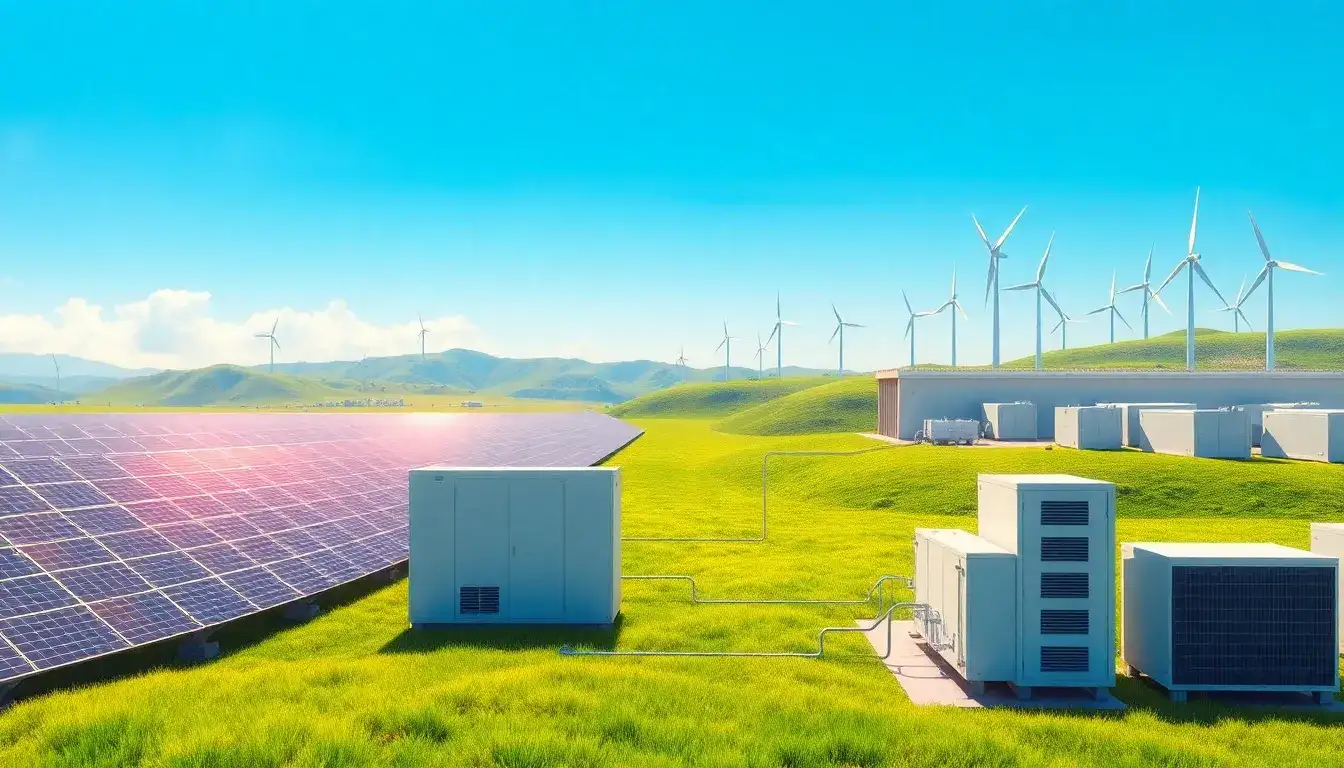
Utility-scale energy storage can be effectively integrated with renewable energy sources such as solar and wind. This integration is crucial for several reasons:
- Balancing Supply and Demand: Renewable energy sources like solar and wind are variable, meaning their output changes depending on weather conditions. Utility-scale energy storage helps balance supply and demand by storing excess energy produced during periods of high generation (e.g., sunny or windy days) and releasing it when needed, such as during evening peak hours or periods of low generation.
- Enhancing Grid Stability: Energy storage systems provide a fast response to grid fluctuations, ensuring stability and reliability. This capability is essential for maintaining a stable power supply as renewable sources become more prevalent.
- Enabling Increased Renewable Adoption: By mitigating the intermittency of solar and wind power, utility-scale storage systems enable higher levels of renewable energy integration into the grid. This integration reduces reliance on fossil fuels and helps achieve emissions reduction goals.
- Economic Benefits: Integrating energy storage with renewables can also offer economic advantages, such as reducing costs associated with maintaining traditional peaking plants. Additionally, it supports energy technologies that are less expensive and less polluting than conventional power plants.
Examples of successful integrations include solar PV projects with battery storage in the United States, which benefit from tax incentives like the Investment Tax Credit. Similarly, energy storage can be coupled with utility-scale wind plants or even conventional gas turbines to enhance operational flexibility.
Original article by NenPower, If reposted, please credit the source: https://nenpower.com/blog/can-utility-scale-energy-storage-be-integrated-with-renewable-energy-sources-like-solar-and-wind/

