

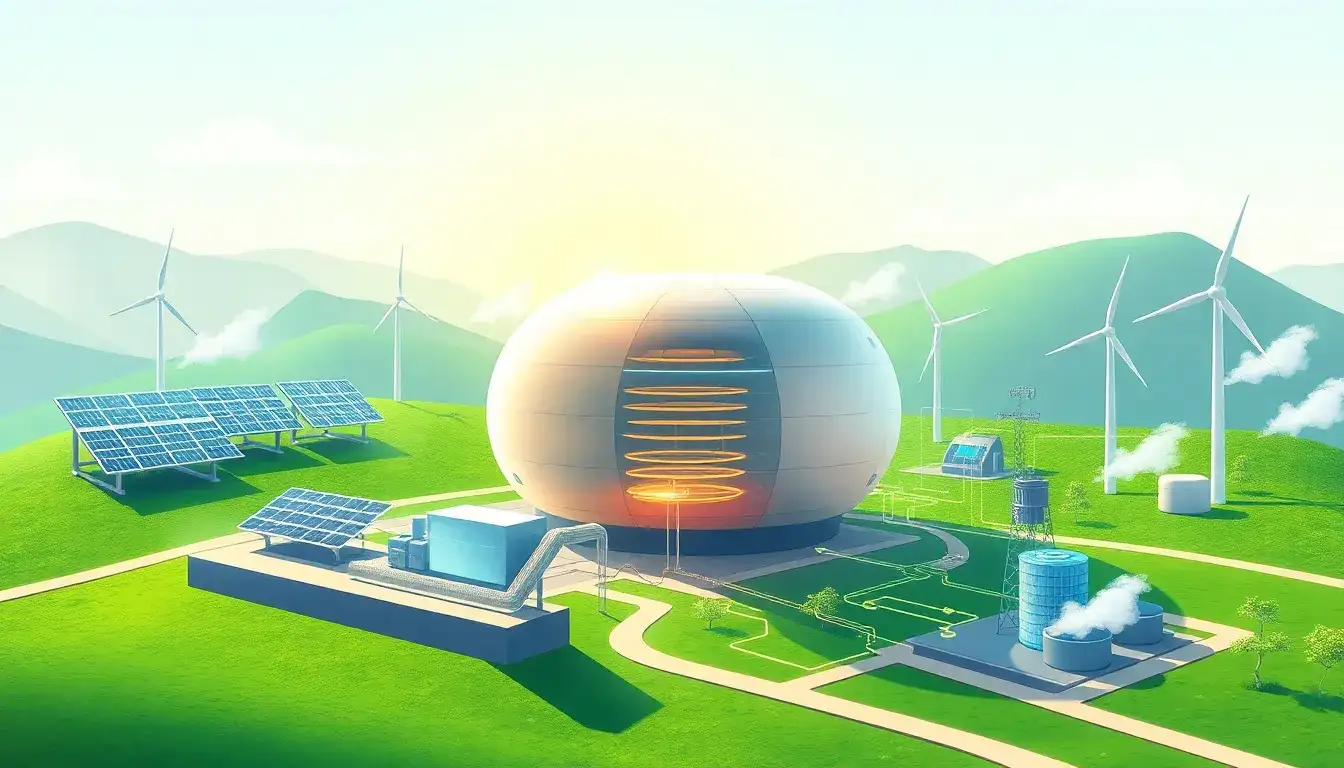
Integration of Thermal Energy Storage with Other Renewable Energy Sources
Thermal energy storage (TES) can be effectively integrated with various renewable energy sources to enhance energy security, reduce environmental impact, and improve grid stability. This integration supports the transition to sustainable energy systems by addressing the intermittency of renewable energy sources like solar and wind power.
Benefits of Integration
- Renewable Energy Augmentation: TES systems can store excess energy generated by solar or wind power, allowing it to be used when needed, thus enhancing the reliability and availability of renewable energy sources.
- Energy Independence: By storing thermal energy, industries and buildings can achieve greater energy independence, using renewable sources to generate heat or electricity and reducing reliance on fossil fuels.
- Grid Stability: TES helps manage peak energy demand and reduce potential grid outages by providing a buffer against variability in renewable energy production.
Integration Mechanisms
- Solar Thermal Energy: Solar thermal systems can be used in conjunction with TES to generate heat during periods of sunlight and store it for later use, ensuring a consistent supply of thermal energy.
- Wind and Photovoltaic Energy: Excess electricity from wind or photovoltaic systems can be converted into thermal energy using resistive heating and then stored for future use, maximizing the utilization of intermittent renewable sources.
- Hybrid Systems: Combining TES with other energy storage technologies, like batteries, can balance power and energy demands, optimizing overall system performance.
Applications
- Industrial Processes: TES is crucial in industrial settings where a high proportion of heat is required, allowing the efficient integration of renewable energy sources into manufacturing processes.
- Energy-Efficient Buildings: In buildings, TES systems can significantly reduce peak heating and cooling demands, enhancing energy efficiency and reducing costs.
- Utility-Scale Operations: TES can be integrated with large-scale renewable energy installations to stabilize grid operations and provide dispatchable power.
In summary, integrating thermal energy storage with renewable energy sources offers a robust solution for managing energy variability, improving energy efficiency, and advancing the transition to cleaner, more sustainable energy systems.
Original article by NenPower, If reposted, please credit the source: https://nenpower.com/blog/can-thermal-energy-storage-be-integrated-with-other-renewable-energy-sources/

