

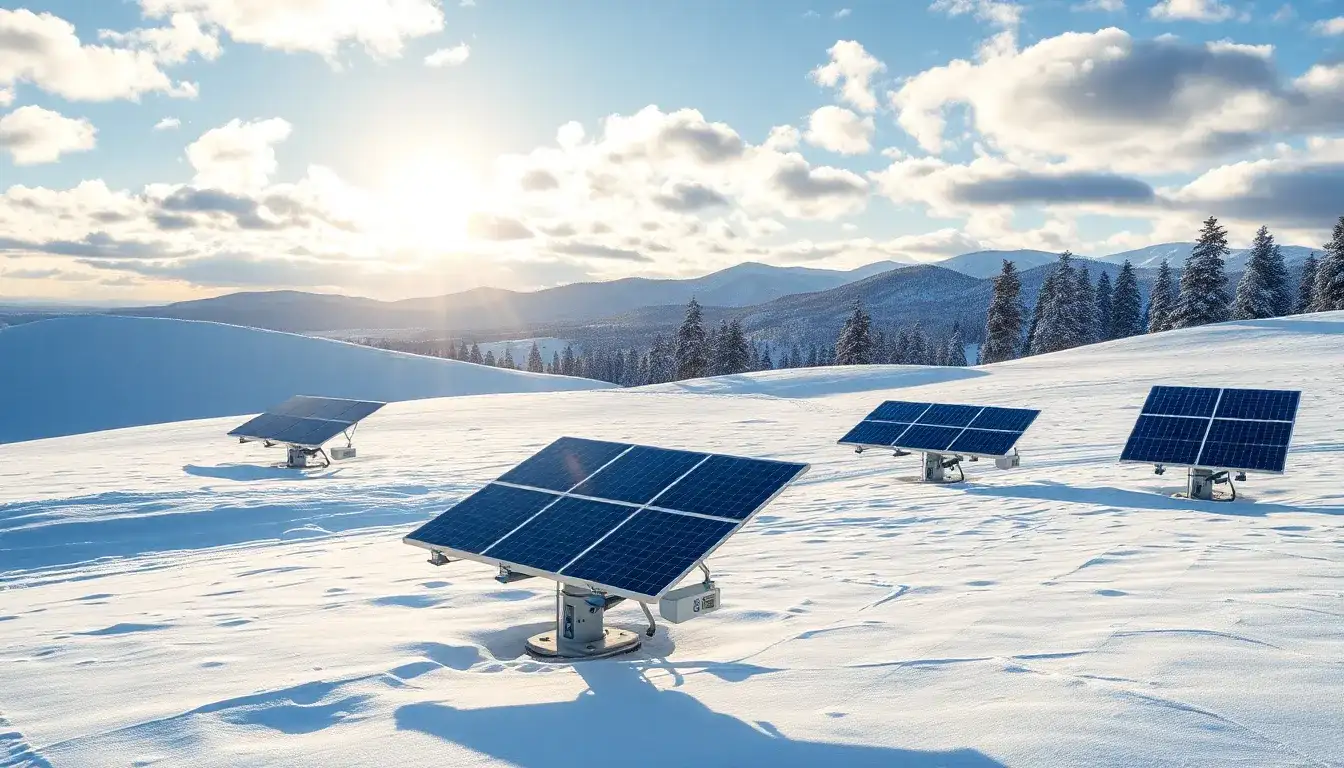
Solar trackers can operate efficiently in regions with frequent snowfall, but they face significant challenges. Snow poses two main issues for solar tracker systems: it increases the structural load, which can damage the system, and it covers the solar panels, reducing energy production. However, there are technologies designed to mitigate these issues:
- Snow Sensors: Advanced systems like the SEVEN Snow Sensor monitor snowfall and adjust the tracker’s position to minimize damage and optimize energy production. By comparing irradiance values from clean and snow-covered sensors, these systems can calculate energy loss and guide strategic planning for snow removal.
- Tracker Innovations: Companies like Array Technologies have developed systems like the SkyLink Tracker, designed to protect solar trackers in regions prone to snow and hail. These systems aim to maintain efficiency even in challenging weather conditions.
- Efficiency Improvements: Despite the challenges, solar trackers generally improve efficiency by 20-40% compared to fixed systems, making them valuable even in regions with frequent snowfall. However, higher upfront costs (20% more than fixed systems) must be considered.
In summary, while snow presents challenges for solar trackers, innovations in snow sensing and tracker design can enhance their efficiency and resilience in snowy regions.
Original article by NenPower, If reposted, please credit the source: https://nenpower.com/blog/can-solar-trackers-operate-efficiently-in-regions-with-frequent-snowfall/

