

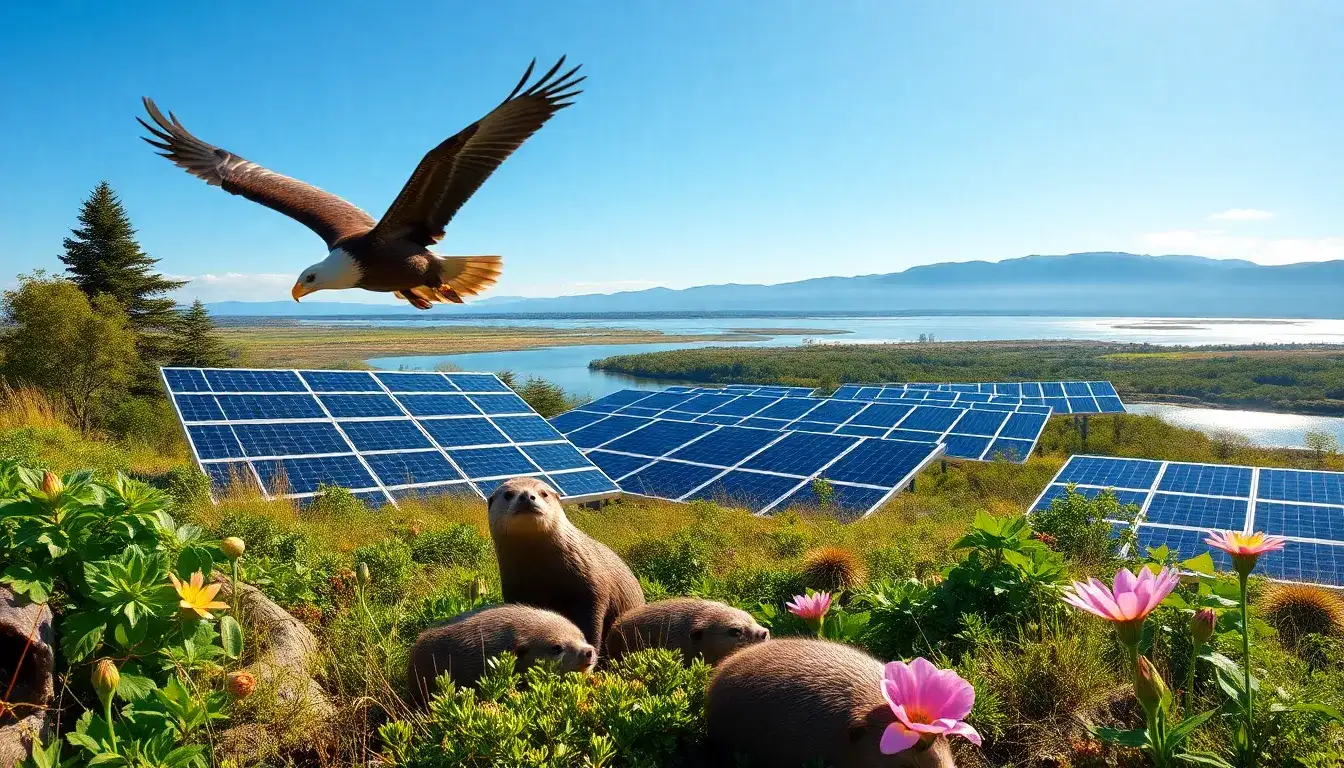
Solar panels and solar energy projects can indeed help in preserving endangered species, primarily by contributing to the mitigation of climate change, which is a major threat to biodiversity and species survival. Additionally, well-planned solar farms can enhance local biodiversity and provide habitat restoration opportunities.
How Solar Panels Help Preserve Endangered Species
- Preventing Species Extinctions Through Climate Change Mitigation
Each gigawatt of installed solar or wind power is estimated to prevent about 42 species from going extinct by reducing greenhouse gas emissions and slowing climate change impacts. For example, the Gemini solar project near Las Vegas is tied to preventing approximately 29 species extinctions—translating to one extinction prevented per 250 acres of solar panels installed. This is because solar power displaces fossil fuel use, reducing pollution and habitat degradation linked to climate change. - Creating and Enhancing Habitats on Solar Farms
Solar farms, when thoughtfully designed, can provide new habitats for wildlife. By incorporating native grasses, wildflowers, and other vegetation around and beneath solar panels, these areas can attract pollinators such as bees and butterflies and support other species. This habitat creation can increase local biodiversity and help sustain populations of endangered or vulnerable species near the installation. - Collaboration with Conservationists
To maximize benefits for wildlife and protect endangered species, solar energy projects should be developed in close consultation with ecologists and conservation organizations. This partnership ensures that sensitive habitats, such as nesting grounds for endangered birds, are identified and protected throughout site selection, construction, and operation phases. - Avoiding High Biodiversity Areas
Solar projects should avoid biodiversity hotspots to minimize negative ecological impacts. Careful planning to place solar arrays in areas with lower ecological sensitivity helps balance energy production with wildlife conservation goals.
Challenges and Considerations
- While solar power offers substantial conservation benefits, poorly planned solar projects can harm wildlife or destroy habitats. For instance, some solar installations have adverse effects on birds or local ecosystems if sited inappropriately. This underscores the need for stringent environmental assessments and wildlife-friendly designs.
Summary
Solar panels help preserve endangered species mainly by fighting climate change-driven habitat loss and species decline. Additionally, solar farms, with proper planning and habitat management, can serve as conservation allies by creating new habitats and supporting biodiversity. Collaboration with conservationists and avoidance of sensitive ecological areas are critical to maximizing these benefits and minimizing potential harm.
In conclusion, solar energy is a powerful tool for species preservation when integrated thoughtfully with ecological considerations.
Original article by NenPower, If reposted, please credit the source: https://nenpower.com/blog/can-solar-panels-help-in-preserving-endangered-species/

