

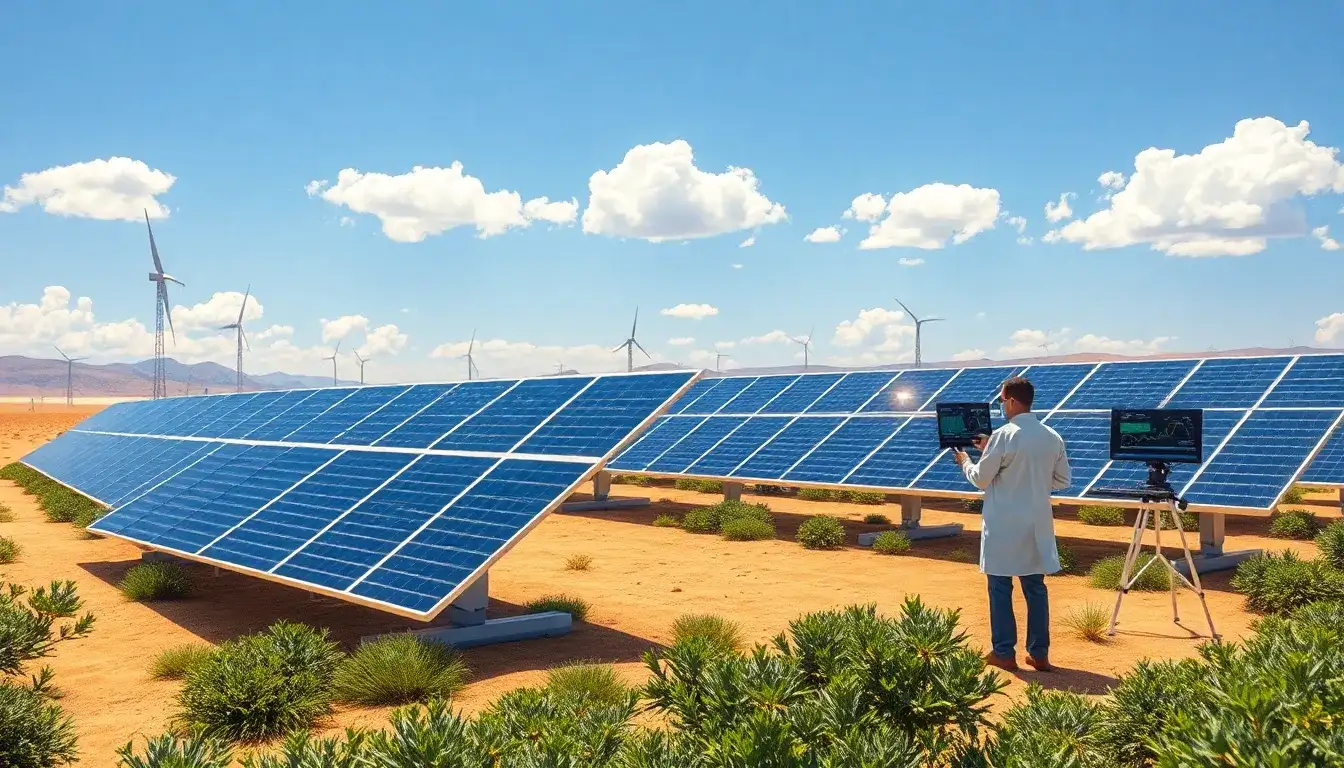
Yes, solar panels can and are cooled to improve their efficiency, especially in hot weather where high temperatures reduce their electrical output. Several cooling methods have been developed and studied, both passive and active, with varying degrees of complexity and effectiveness.
Why Cooling Solar Panels Matters
Solar panels operate optimally around 25°C (77°F). When their temperature rises above this, efficiency drops significantly—heat decreases the photoelectric conversion efficiency and accelerates degradation of the cells. Temperatures on solar panels often exceed 50°C and can reach 80°C or higher under poor heat dissipation conditions.
Cooling Techniques for Solar Panels
Passive Cooling Methods
- Natural Air Cooling: Using fins or heat sinks attached to the back of panels to enhance natural airflow and convective heat dissipation. This method is simple, low-cost, and moderately effective, typically lowering the panel temperature slightly.
- Phase Change Materials (PCMs): PCMs absorb heat by changing phase (e.g., melting) and help to stabilize temperature near optimal levels during peak heating hours. This can help maintain efficiency but requires precise material selection and integration.
- Elevated Mounting & Ventilation: Raising panels a few inches off surfaces to allow air circulation underneath, or using tilted/slotted mounts to promote airflow, reducing panel temperatures by a few degrees Celsius.
Active Cooling Methods
- Forced Air Cooling: Fans or blowers are used to force air over or under panels, increasing heat transfer but requiring additional power input to run fans. This reduces panel temperature more effectively than natural convection but at a higher system complexity and cost.
- Water Cooling: Spraying or circulating water on the panel surfaces or the backs of the panels can reduce temperatures by 10-20°C, significantly increasing output efficiency. Water cooling is highly effective and can also clean the panels, but it consumes water and needs infrastructure. Some systems recycle water and use geothermal heat exchangers to enhance cooling efficiency.
- Combined Photovoltaic-Thermal (PV/T) Systems: These integrate solar thermal collectors with PV modules, removing heat actively while capturing thermal energy. This combination can increase overall energy conversion efficiency but is technologically more complex and expensive.
Advanced or Experimental Cooling
- Heat Pipes and Immersion Cooling: Heat pipes transfer heat efficiently from panels to heat sinks or other cooling media. Immersion cooling involves submerging cells in coolant liquids. These methods ensure uniform temperature control but are less commonly used commercially.
- Cooling with Liquid Nitrogen or Wind Turbines: Techniques like liquid nitrogen cooling drastically reduce temperatures but are generally impractical for most installations. Wind turbines placed near panels can circulate cool air naturally, complementing solar production.
Effectiveness and Practical Considerations
- Water cooling has been reported to improve efficiency by up to 14-15% during peak heat periods, with temperature reductions of 10-20°C being common and significantly beneficial to panel longevity and power output.
- Passive air cooling is less expensive and simpler but yields smaller temperature reductions, which still improve panel output somewhat.
- Active cooling methods improve efficiency more substantially but at higher capital and operating costs. The additional power consumption to run cooling systems must be balanced against the gain in electrical output.
- Reflective coatings and regular cleaning also help reduce solar panel temperatures by reflecting sunlight and removing dust, respectively, aiding cooling indirectly.
Summary
Cooling solar panels is a well-established approach to improving their efficiency in hot weather. Techniques range from simple passive air cooling and phase change materials to active water and air cooling systems that can significantly lower panel temperatures and boost energy generation. The choice of cooling method depends on factors such as cost, installation scale, local climate, water availability, and system complexity.
Key Points
| Cooling Method | Temperature Reduction | Efficiency Gain | Complexity/Cost | Notes |
|---|---|---|---|---|
| Natural Air Cooling | ~2-4°C | Small to moderate | Low | Uses fins, elevated mounting, heat sinks |
| Passive PCM Cooling | Moderate | Moderate | Low to moderate | Phase change materials stabilize temps |
| Water Cooling | 10-20°C | Up to ~14-15% | Moderate to high | Includes spraying or flowing water |
| Forced Air Cooling | Moderate to high | Moderate to high | Moderate to high | Requires fans and power input |
| PV/T Hybrid Systems | Varies | Higher overall output | High | Combines thermal and electrical generation |
| Advanced (Heat Pipes, Immersion) | High | High | Experimental/complex | Ensures uniform temperature control |
Cooling solar panels effectively combats heat-related efficiency losses and is increasingly adopted, especially in hot climates and large solar farms.
Original article by NenPower, If reposted, please credit the source: https://nenpower.com/blog/can-solar-panels-be-cooled-to-improve-their-efficiency-in-hot-weather/

