

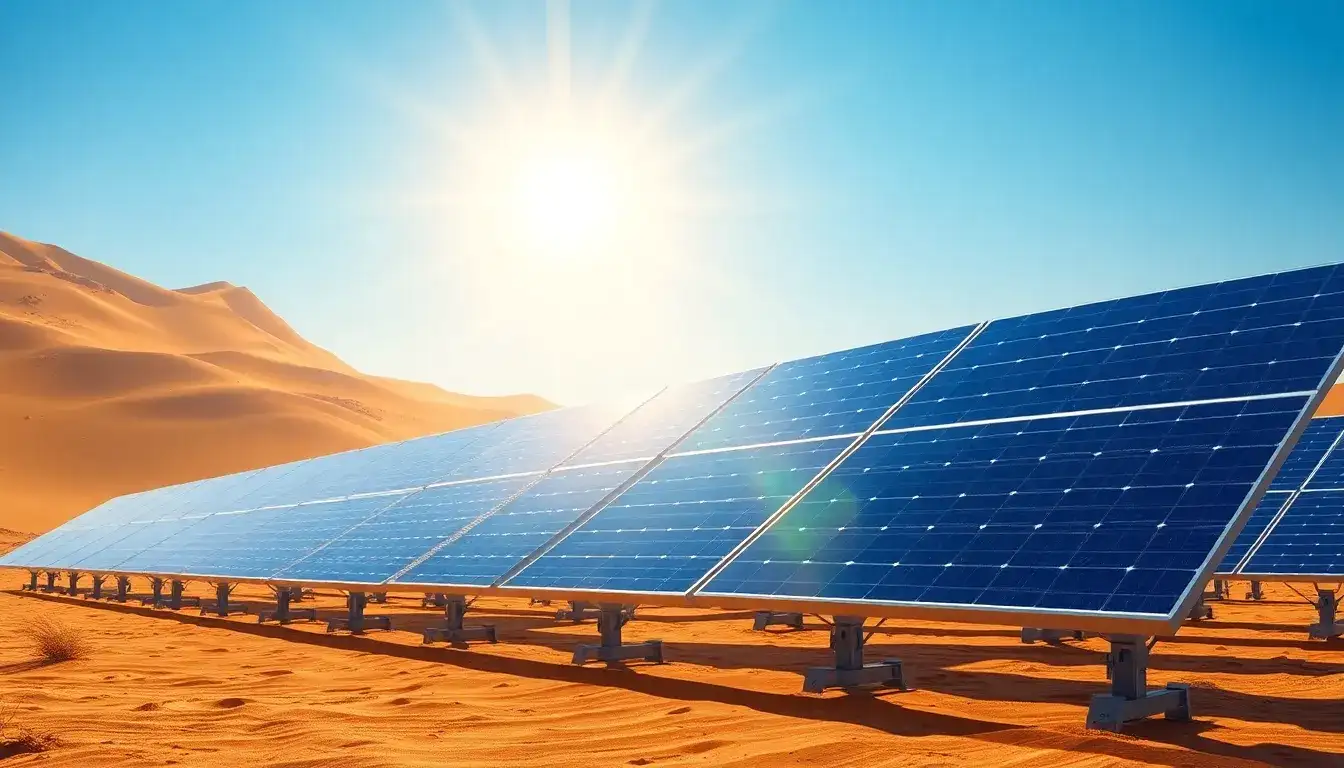
Solar panels experience reduced efficiency when operating in extreme heat because their photovoltaic (PV) cells produce less voltage as temperature rises. For every degree Celsius above 25°C (77°F), solar panel efficiency typically declines by about 0.3% to 0.5%. This decline occurs despite more sunlight being available, as overheating negatively impacts the electrical performance of the cells.
Cooling Solar Panels to Improve Efficiency
Yes, solar panels can be cooled to improve their efficiency in hot conditions. Cooling helps maintain or restore efficiency levels closer to their optimal operating range (around 25°C), reducing thermal losses and enhancing overall power output.
Cooling Technologies and Approaches
- Passive Cooling:
Techniques such as heat sinks, reflective coatings, and ensuring proper ventilation or air gaps (e.g., tilted panels to allow airflow underneath) help dissipate heat naturally without additional energy input. This method is simple and low-cost and can reduce panel temperatures moderately. - Natural Circulation Cooling:
Adding fins or channels on the back of panels to facilitate cooling using air or water without pumping systems. Water cooling is generally more effective than air because water has higher thermal conductivity. - Forced Circulation Cooling:
Using pumps or fans to actively circulate air or liquid to remove heat from the panel surface. This approach offers better cooling but requires additional energy and infrastructure. - Water Cooling Systems:
Experimental and commercial water spray or circulation systems can reduce panel temperatures significantly (by up to 10-20°C in tests), increasing voltage output and overall electrical efficiency by about 1-1.3%. Even when accounting for the power consumed by the cooling system, net gains in efficiency are observed (approximately 0.5% improvement). This method also helps clean the panels. - Advanced Hybrid Systems (PV/T):
Photovoltaic-thermal hybrid systems combine solar electricity generation with solar thermal collection, cooling the panels while capturing heat for other uses. These can achieve very high total solar energy conversion efficiencies (40-80%). - Other Cooling Methods:
Experimental approaches include cooling with liquid nitrogen or wind turbines to blow air over panels, though these are less common and more complex.
Additional Benefits of Cooling Solar Panels
- Cooling extends the lifespan of solar cells by reducing heat-induced degradation.
- Panels can also help cool buildings by shading roofs and allowing airflow underneath, reducing heat transmission indoors by up to 38% in some cases.
- Cooling strategies can reduce maintenance costs by minimizing heat-related damage.
Summary Table of Cooling Methods
| Cooling Method | Temperature Reduction | Efficiency Gain | Energy/Input Need | Notes |
|---|---|---|---|---|
| Passive (heat sinks, ventilation) | Moderate (<15°C) | 10-15% efficiency gain | None | Simple, low cost, relies on natural airflow |
| Natural Circulation (air/water) | Moderate | 10-15% efficiency gain | None | Water better than air |
| Forced Circulation (air/water) | High (15-50°C) | 11-27% efficiency gain | Requires power | Better cooling but higher cost |
| PV/T Hybrid Systems | Moderate to High | 40-80% total solar energy efficiency | Requires power | Captures thermal energy for secondary use |
| Water Spray Cooling | Up to 20°C | ~1-1.3% electrical efficiency | Pump energy | Also cleans panels, tested in trials |
| Advanced (liquid nitrogen, wind turbines) | Variable | Potentially significant | Specialized inputs | Less common, more complex |
In conclusion, actively cooling solar panels in extreme heat is a proven method to enhance their electrical efficiency and extend their service life. Both passive and active cooling techniques are available, with water cooling and hybrid PV/T systems showing promising results in reducing panel temperature and improving energy yield, particularly in hot climates.
Original article by NenPower, If reposted, please credit the source: https://nenpower.com/blog/can-solar-panels-be-cooled-to-improve-their-efficiency-in-extreme-heat/

