

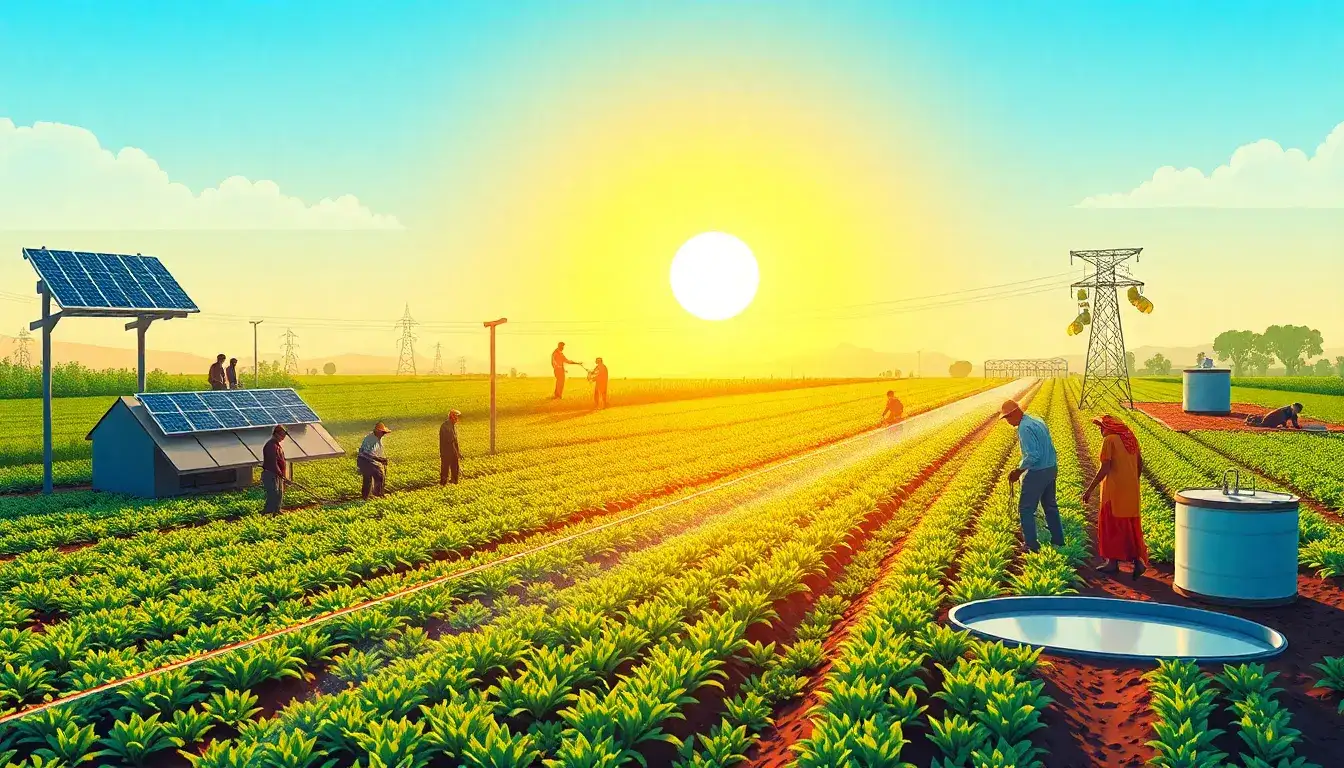
Solar irrigation systems can help reduce water waste in agriculture through multiple mechanisms related to energy efficiency, precision water application, and sustainable resource management.
Water Efficiency Benefits of Solar Irrigation Systems
- Enhanced Water Conservation: Solar-powered irrigation systems improve water efficiency by up to 50%, largely due to their ability to power modern, precise irrigation technologies such as drip irrigation that deliver water directly to the plant roots, minimizing runoff and evaporation.
- Precision Water Application: These systems often integrate advanced sensors and controllers that monitor soil moisture levels and weather in real-time, enabling farmers to irrigate crops only as much as needed, thus reducing over-irrigation and water wastage.
- Reduced Over-Irrigation and Environmental Impact: By avoiding excess watering, solar irrigation prevents soil erosion, waterlogging, and degradation of soil health, which are common problems in traditional irrigation methods.
Environmental and Economic Advantages
- Carbon Emissions Reduction: Solar irrigation eliminates reliance on diesel or gasoline-powered pumps, significantly cutting greenhouse gas emissions and air pollution associated with fossil fuels, thus contributing to climate change mitigation.
- Lower Operating Costs: Although initial setup costs for solar irrigation may be higher, the ongoing savings on energy (up to 90% reduction compared to diesel pumps) and water make it economically beneficial over time.
- Sustainability in Remote Areas: Solar irrigation systems are particularly advantageous in areas lacking grid electricity, enabling sustainable farming without expanding fossil fuel use or putting pressure on local power infrastructure.
Considerations and Potential Challenges
- Groundwater Use Increase: Some studies note that the zero-cost pumping enabled by solar energy can lead to increased groundwater extraction if not carefully managed, potentially causing resource depletion despite water efficiency gains.
- Need for Integrated Water Management: To maximize benefits and prevent unintended impacts like groundwater overuse, solar irrigation should be part of broader sustainable water management strategies including water source monitoring and regulation.
Real-World Examples
- India’s KUSUM scheme subsidizes solar pumps to promote sustainable irrigation, aiming to reduce groundwater depletion and promote water conservation.
- Farmers using solar-powered drip irrigation report 30-50% reductions in water waste compared to traditional methods.
In summary, solar irrigation systems can significantly reduce water waste in agriculture by enabling precise, sensor-driven irrigation powered by renewable energy. They support sustainable water use, reduce carbon emissions, and lower energy costs, but their full water-saving potential depends on proper management to avoid over-extraction of groundwater.
Original article by NenPower, If reposted, please credit the source: https://nenpower.com/blog/can-solar-irrigation-systems-help-reduce-water-waste-in-agriculture/

