

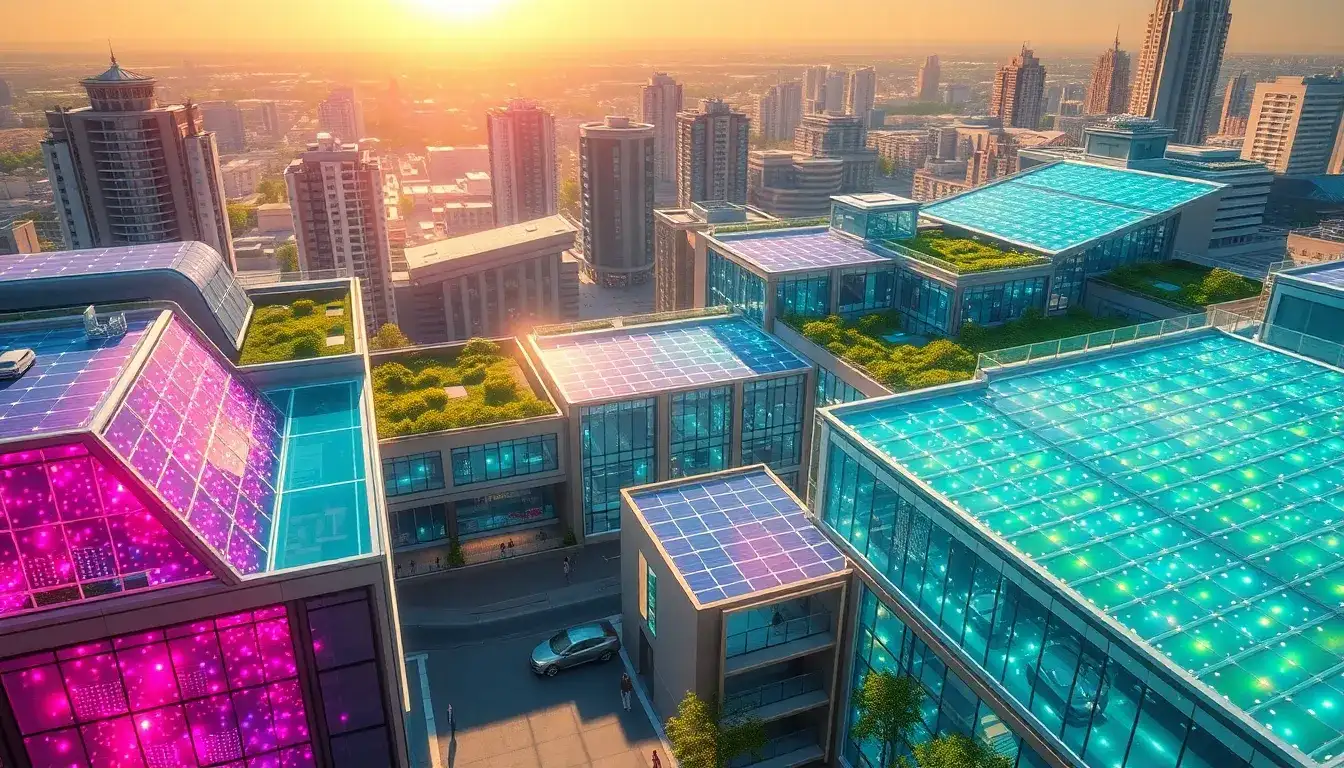
Quantum dot solar cells (QDSCs) can indeed be integrated into building materials such as windows and roofs, representing a significant advancement in building-integrated photovoltaics (BIPV).
Integration into Windows and Building Facades
- Transparent Solar Windows: Quantum dots can be engineered to absorb infrared light while remaining transparent in the visible spectrum. This enables the creation of power-generating windows that maintain clarity and aesthetic appeal while producing electricity. For example, large-area transparent “quantum dot glass” (TQDG) combining quantum dot-based luminescent solar concentrators with edge-attached solar cells has been demonstrated, achieving about 1.57% power conversion efficiency with over 80% visible light transmittance. Such materials also improve thermal insulation and soundproofing, making them multifunctional building envelope materials suitable for nearly zero-energy buildings.
- Solar Facades and Energy-Generating Building Exteriors: Quantum dot technology allows entire building exteriors to serve as solar panels without compromising design. These facades can be semi-transparent or fully integrated with architectural elements.
Integration into Roof Materials
- Solar Roof Shingles: Quantum dot solar cells can be incorporated into roofing materials, such as flexible and lightweight solar roof shingles. These offer a seamless solar power solution integrated directly into roofing, enhancing aesthetics and functionality without the bulkiness of traditional panels.
- Lightweight and Flexible Panels: QDSCs can be produced as lightweight, flexible films or coatings. This flexibility expands their application to various roof types and irregular surfaces, facilitating easier installation and maintenance compared to conventional rigid silicon panels.
Advantages of Quantum Dot Integration in Building Materials
- Broad Spectrum Absorption: By tuning the size and composition of quantum dots, these solar cells capture a wider spectrum of sunlight (including infrared), which increases overall efficiency compared to traditional photovoltaic materials.
- High Efficiency Potential: Quantum dot cells have the potential to exceed 30% conversion efficiency in the future, surpassing conventional silicon cells, which enhances the viability of building-integrated solar solutions.
- Enhanced Building Performance: Apart from energy generation, these materials can provide improved thermal insulation, soundproofing, and mechanical safety compared to standard glass or roofing materials, contributing to building energy efficiency and occupant comfort.
- Eco-Friendly Manufacturing and Scalability: Quantum dots can be combined with bioconjugates to create more environmentally friendly and potentially scalable solar cells, supporting sustainable building technologies.
Summary
Quantum dot solar cells are promising for seamless integration into building materials like windows and roofs through:
- Transparent, power-generating windows that remain clear and provide thermal benefits.
- Flexible, lightweight solar shingles and films for roof integration.
- Building facades serving as multifunctional solar energy generators.
These integrations support the development of net-zero energy buildings by combining energy harvesting with building envelope functions, and ongoing research is improving efficiency, durability, and cost-effectiveness of quantum dot-based BIPV technologies.
Original article by NenPower, If reposted, please credit the source: https://nenpower.com/blog/can-quantum-dot-solar-cells-be-integrated-into-building-materials-like-windows-and-roofs/

