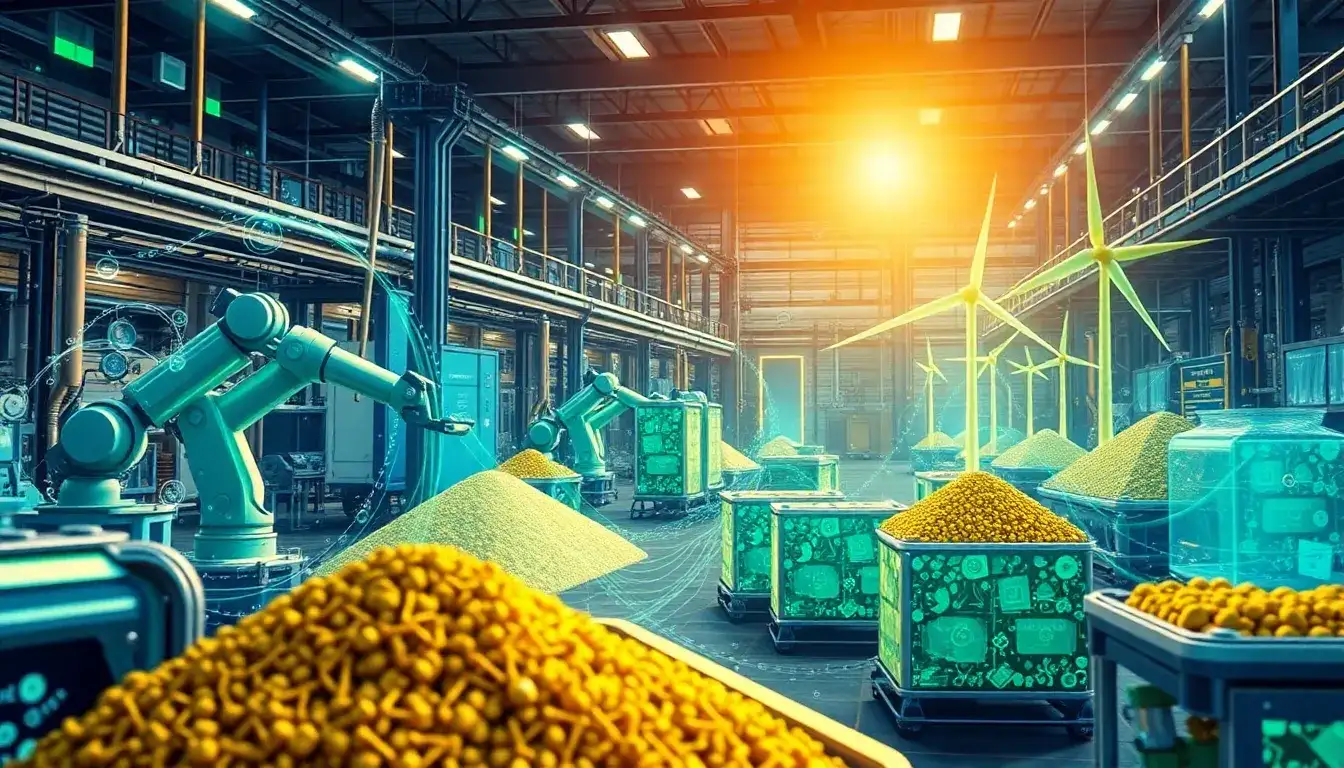
Machine learning (ML) can significantly help reduce waste in battery material production by optimizing manufacturing processes, improving efficiency, and enhancing material recovery. Here are the key ways ML contributes to waste reduction in this field:
Optimization of Production Processes
- ML algorithms analyze vast amounts of production data in real time to optimize battery material manufacturing conditions. This enables manufacturers to detect process deviations early, perform root cause analysis, and adjust parameters dynamically to avoid defects and minimize scrap materials.
- By uncovering hidden correlations in process data, ML facilitates continuous learning and improvement, resulting in more efficient use of raw materials and less production waste.
- Optimization also includes reduction of energy consumption during production, contributing to overall sustainability.
- Such improvements help manufacturers produce higher-quality batteries at lower cost and with reduced environmental footprint.
Enhanced Recycling and Material Recovery
- AI and ML technologies play a transformative role in battery recycling, automating workflows to improve recovery rates of valuable materials like lithium, cobalt, and nickel from spent batteries.
- Advanced ML models can analyze battery composition to identify the best recycling methods, enabling recovery of up to 95% of lithium and significantly reducing material waste.
- Robotics combined with AI further increase the safety, efficiency, and economy of recovering materials from used batteries, thus supporting circular economy principles and reducing the need for raw mining.
Broader Implications for Sustainability and Cost Reduction
- By integrating ML throughout the battery lifecycle—from production to recycling—manufacturers reduce dependency on rare raw materials, lower manufacturing costs, and minimize environmental impacts associated with mining and disposal.
- Initiatives such as the Global Battery Alliance’s “battery passport” platform use AI to track and analyze battery lifecycle data, fostering more sustainable and transparent battery production practices.
In summary, machine learning empowers the battery industry to optimize production processes, reduce defects and waste, recover valuable materials more effectively, and ultimately contribute to a more sustainable and cost-efficient battery material supply chain.
Original article by NenPower, If reposted, please credit the source: https://nenpower.com/blog/can-machine-learning-help-reduce-waste-in-battery-material-production/