

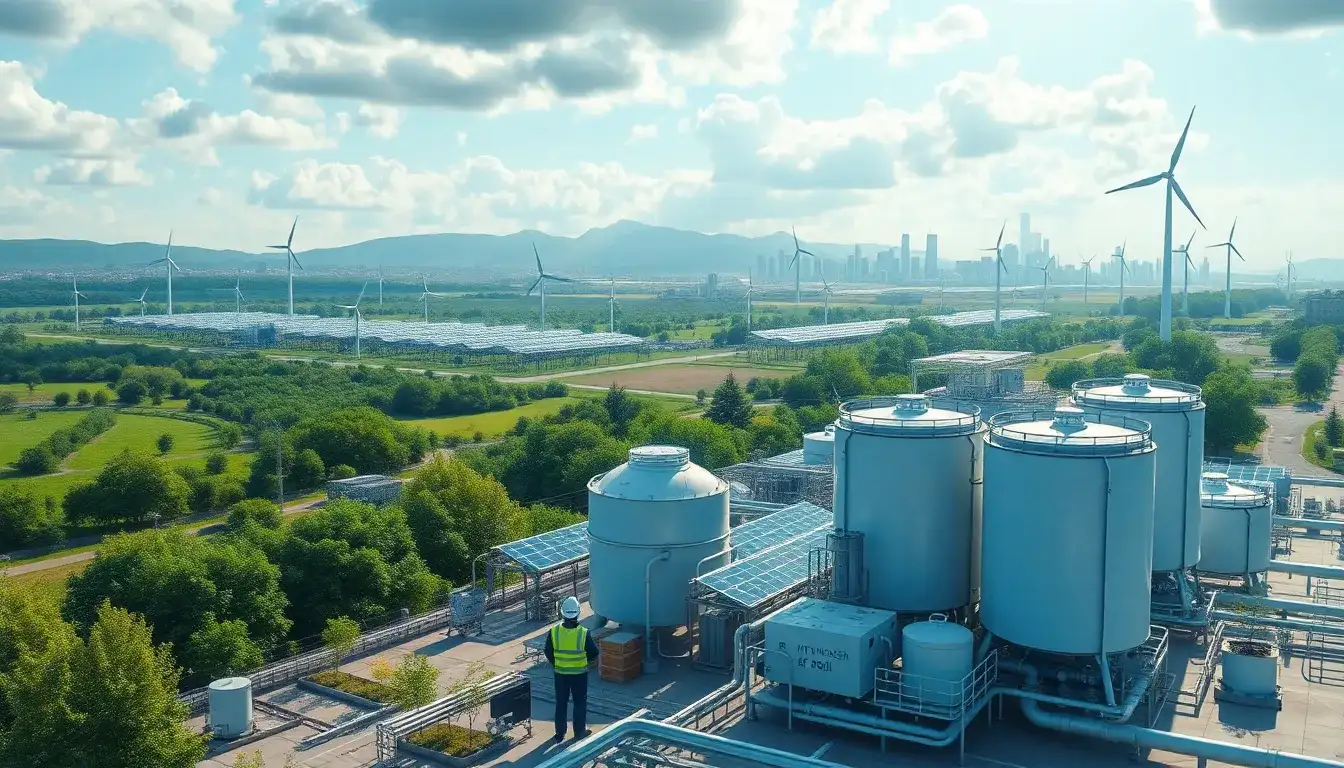
Hydrogen production can indeed play a significant role in balancing the increasing demand for power by offering flexible and low-carbon energy storage options.
Key Points
- Energy Storage and Grid Stabilization: Green hydrogen, produced from renewable energy sources via electrolysis, can help stabilize the grid by balancing supply and demand. This is particularly important when using variable renewable energy sources like wind and solar, as they can create fluctuations in electricity supply.
- Long-Term Energy Storage: Compared to batteries, hydrogen can provide longer-term energy storage solutions. It can be stored over months or even seasons, making it a valuable asset for managing seasonal demand variations and times of low renewable energy production.
- Supply Flexibility: Hydrogen can be used in power generation to provide electricity during peak demand periods, as it can be stored and converted back into electricity when needed. This flexibility is crucial for maintaining grid stability and meeting demand fluctuations.
- Carbon Emissions Reduction: Green hydrogen is a zero-carbon fuel when produced using renewable energy, and blue hydrogen offers a low-carbon alternative by utilizing carbon capture and storage (CCS). Both types help reduce the carbon footprint of the energy sector, contributing to a cleaner energy system.
- Future Projections: As the energy sector transitions towards renewable sources, hydrogen’s role in energy storage and grid balancing is expected to grow. By 2050, green hydrogen is projected to dominate the hydrogen production landscape, complemented by blue hydrogen, which will help meet a significant portion of final energy demands.
In summary, hydrogen production can significantly contribute to balancing power demand by providing flexible energy storage, reducing carbon emissions, and enhancing grid stability.
Original article by NenPower, If reposted, please credit the source: https://nenpower.com/blog/can-hydrogen-production-help-in-balancing-the-increasing-demand-for-power/

