

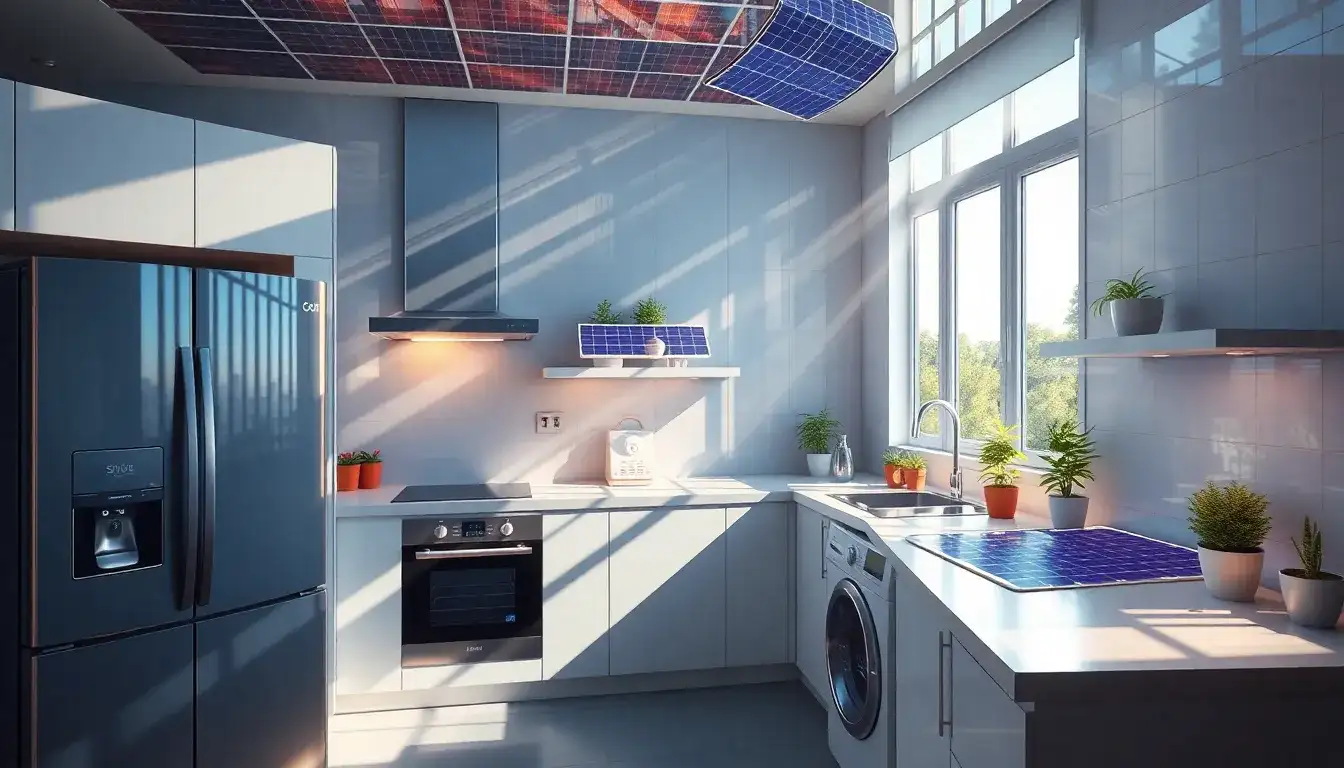
Flexible solar panels can effectively power small devices and mobile setups, but they are generally not suitable for directly powering large household appliances due to their lower efficiency, power output, and durability compared to rigid panels. Here’s a detailed breakdown:
Key Limitations for Large Appliances
- Lower Efficiency
Flexible panels typically achieve 7–15% efficiency vs. 19.2% for rigid panels. This reduced efficiency limits their energy output per square foot, making them impractical for high-demand applications like refrigerators, AC units, or washing machines. - Power Output Constraints
Most flexible panels produce around 100W under optimal conditions, generating 400–500Wh daily (enough for phones, lights, or fans). Large appliances often require 1,000W+, necessitating multiple panels and significant space—unrealistic for most flexible setups. - Durability Concerns
While durable for portable use, flexible panels have shorter lifespans (10–15 years vs. 25+ for rigid panels) and are less resilient to extreme weather. Prolonged heavy loads could accelerate wear.
Effective Use Cases
- Small Devices: Phones, LED lights, laptops, and exhaust fans.
- Mobile Applications: RVs, boats, and camping setups where weight and portability matter.
- Supplementary Power: Pairing with rigid panels or batteries to maximize surface area on curved roofs.
Workarounds for Higher Demand
- Multiple Panels: Daisy-chaining 100W panels (e.g., four panels for ~400W) can support mid-sized systems but adds cost and complexity.
- Battery Storage: Pairing with portable power stations (e.g., EcoFlow RIVER 2) to store energy for intermittent high-demand use.
- Hybrid Systems: Combining flexible panels with rigid ones to boost output while leveraging flexible panels’ adaptability.
Conclusion
Flexible solar panels excel in portable, low-power, or space-constrained applications but lack the efficiency and robustness for large appliances. For grid-scale or heavy home use, rigid panels remain superior. However, flexible panels are ideal for off-grid mobility, small-scale charging, and scenarios requiring lightweight, curved-surface installations.
Original article by NenPower, If reposted, please credit the source: https://nenpower.com/blog/can-flexible-solar-panels-be-used-effectively-for-powering-large-appliances/

