

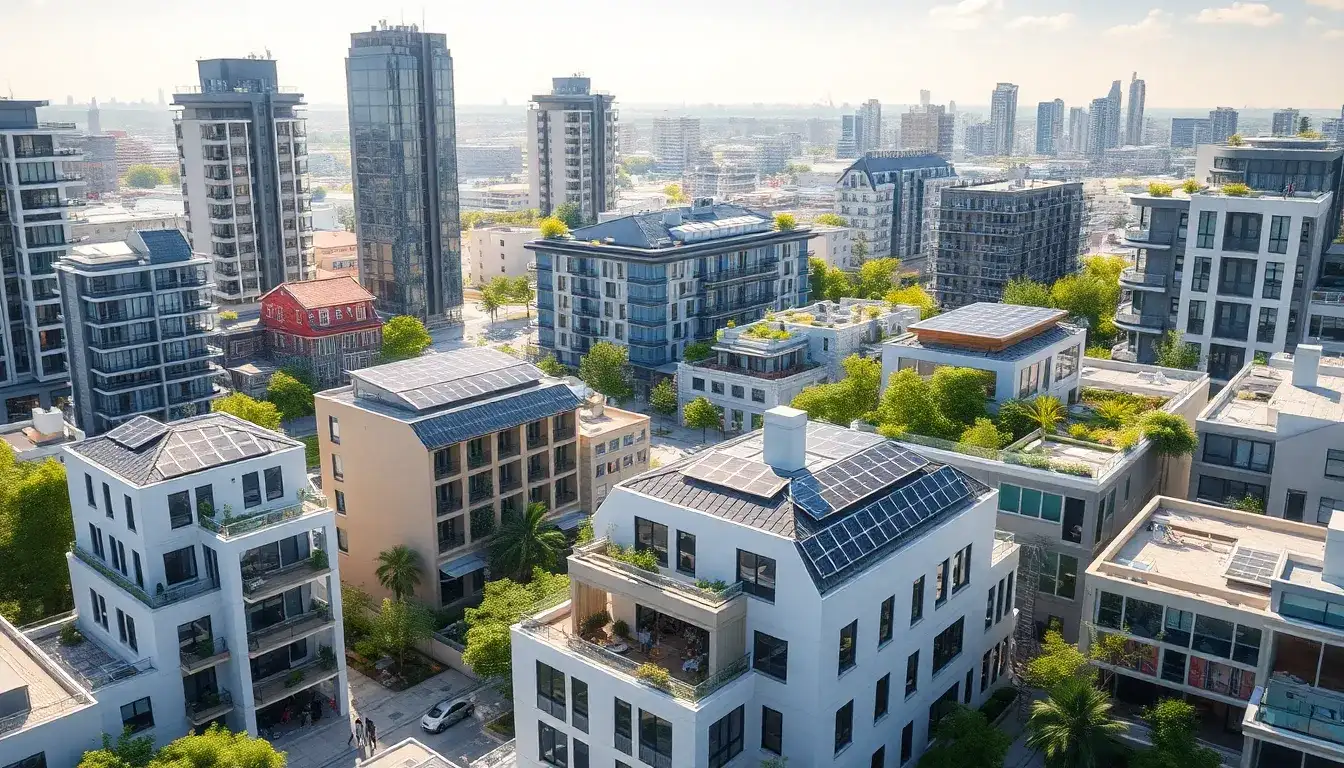
Flexible solar panels can indeed be integrated into existing building designs, offering a versatile and innovative solution for incorporating solar energy generation into architectural elements. This integration can happen either through retrofit applications on existing structures or by incorporation into new construction designs, thanks to their lightweight, thin, and bendable characteristics.
How Flexible Solar Panels Integrate into Buildings
- Building-Integrated Photovoltaics (BIPV): Flexible solar panels are well-suited for BIPV, where they replace or become part of building materials such as roofing, façades, awnings, or canopies. These panels can conform to the contours of buildings, including slightly curved or irregular surfaces, without requiring heavy mounting systems or structural reinforcement. This makes retrofitting existing buildings easier and aesthetically pleasing while generating electricity on-site.
- Architectural Compatibility: Because flexible solar panels are thin and pliable, they can be seamlessly blended with architectural features. They can cover curved roofs, curved facades, or even be laminated onto surfaces that traditionally cannot support rigid panels. This allows architects and designers to maintain design intent and aesthetics without sacrificing solar capacity.
- Ease of Installation: Flexible panels simplify installation on existing buildings since they don’t need bulky mounting racks or heavy infrastructure. They can be attached using specialized adhesives or mechanically fixed depending on the surface, reducing labor cost and complexity, and enabling DIY options in some cases.
- Durability and Warranty: Modern flexible panels, including semi-flexible BIPV modules, offer warranties comparable to traditional panels (e.g., 25 years), with high reliability and minimal degradation over time. This makes them a durable choice for long-term building integration, even in retrofit scenarios.
- Energy Efficiency Considerations: Although flexible panels generally have slightly lower efficiency (typically 10-18%) compared to rigid crystalline panels (15-22%), their ability to cover unconventional or irregular surfaces can compensate by maximizing the available solar collection area on buildings that otherwise could not host rigid panels.
Practical Examples of Integration
- Semi-flexible BIPV solar modules are designed to attach smoothly to existing building envelopes with adhesives that conform to curves and contours while maintaining a clean, recognizable aesthetic.
- Architects install flexible panels on building façades, awnings, and curved roofs to create integrated solar energy solutions that do not interfere with the building’s architectural style.
- Ultrathin, fabric-like solar cells developed for flexible applications can be laminated onto various surfaces in a minimally intrusive manner, suitable for retrofitting existing buildings without major alterations.
Summary
Flexible solar panels provide a highly adaptable solution for integrating solar power into existing building designs. Their lightweight, thin, and bendable nature enables installation on curved, uneven, or delicate surfaces where rigid panels cannot be used. Through BIPV approaches, they act both as building materials and power generators, preserving architectural aesthetics while delivering clean energy. Although they have somewhat lower efficiency than traditional panels, their ability to cover previously unusable surfaces often results in significant practical advantages for retrofitting and innovative building design integration.
Thus, flexible solar panels represent a promising and increasingly practical technology for enhancing the solar capacity of existing buildings with minimal structural impact and maximum aesthetic versatility.
Original article by NenPower, If reposted, please credit the source: https://nenpower.com/blog/can-flexible-solar-panels-be-integrated-into-existing-building-designs/

