

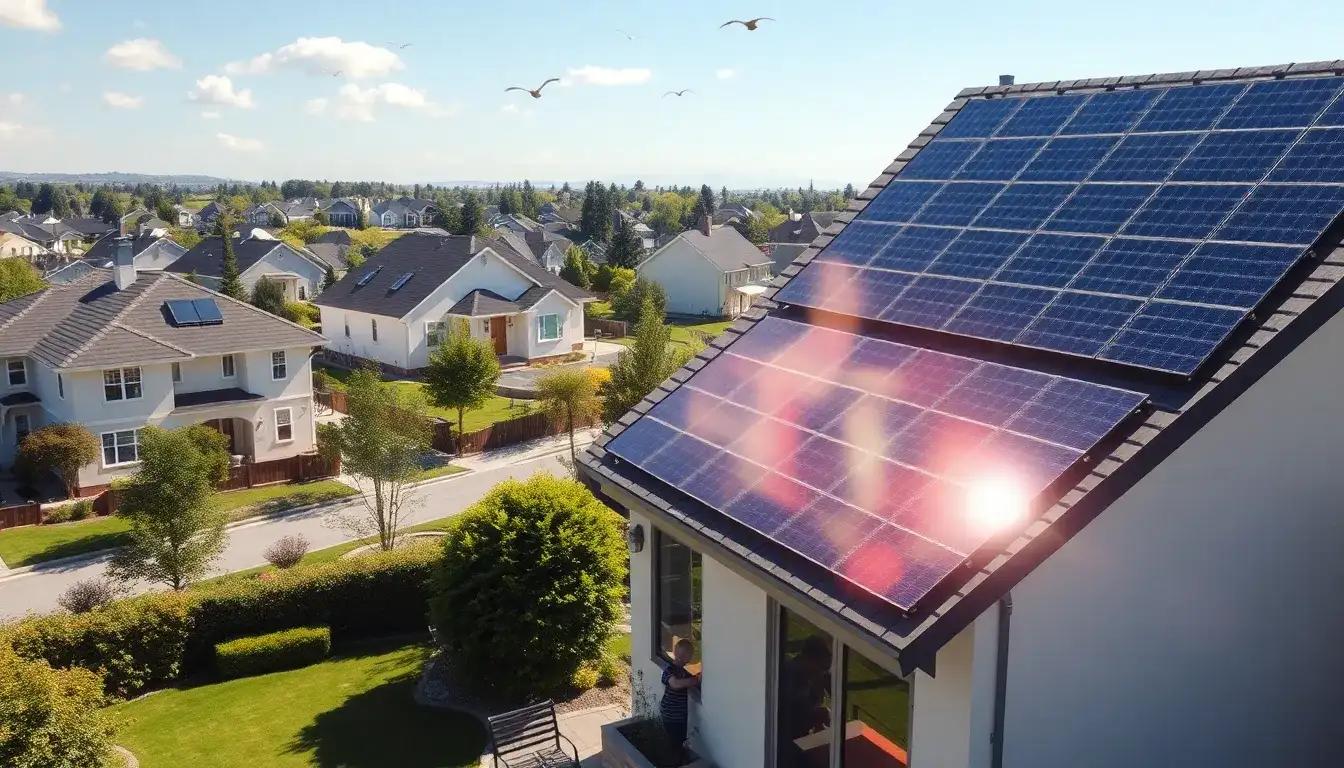
Bifacial solar panels can be used effectively in residential settings, but their suitability and efficiency strongly depend on the installation type and environment.
Effectiveness in Residential Settings
Ground-mounted systems are the most effective residential application for bifacial solar panels. When installed elevated above the ground, the panels can capture sunlight on both the front and rear sides, with reflected light from the ground boosting energy generation. For example, studies have shown bifacial panels in ground mounts can produce around 11% more energy than traditional monofacial panels, and with solar trackers, this can increase up to 27%.
Rooftop installations of bifacial panels, however, are generally less effective and thus not recommended. The back side of rooftop panels faces the roof surface, which blocks reflected light. Since sunlight mostly comes from one direction on roofs, the bifacial advantage is largely lost. Moreover, rooftops’ dark or non-reflective surfaces reduce the potential light reflected to the panel’s rear, diminishing effectiveness.
Other Residential Applications
Bifacial panels work well on freestanding solar structures such as pergolas, carports, or awnings, where both sides of the panel can receive light without obstruction from a roof or other structures. These installations can combine functionality—providing shade or shelter—with increased solar energy production.
Environmental and Installation Factors Influencing Efficiency
- Reflective surfaces: Light-colored or reflective ground surfaces such as sand, snow, or gravel enhance bifacial panel performance by increasing reflected sunlight captured on the back face.
- Space and panel elevation: Panels must be spaced and elevated sufficiently to avoid shading on the backside and allow light to reflect.
- Orientation and tilt: Angling panels to maximize exposure and using tracking systems can significantly increase efficiency gains.
Cost Considerations
Bifacial panels tend to be more expensive due to additional materials and installation complexity. While they can produce 5-30% more energy under optimal conditions, the increased upfront cost may not always justify their use in typical residential rooftop settings where the bifacial advantage is minimal. Ground-mounted or free-standing applications, where the conditions favor bifacial technology, can provide better value.
Summary Table
| Aspect | Residential Ground-Mount / Freestanding | Residential Rooftop Installation |
|---|---|---|
| Bifacial panel effectiveness | High – captures front and rear light | Low – rear side blocked by roof surface |
| Energy gain over monofacial | 11% to 27% (with trackers) | Minimal to none |
| Suitable environments | Light-colored ground surfaces, open space | Limited by roof type and shading |
| Cost-effectiveness | Potentially favorable if space available | Generally not cost-effective |
| Typical use cases | Ground arrays, pergolas, carports | Not recommended for most rooftops |
Conclusion
Bifacial solar panels can be used effectively in residential settings primarily when installed as ground-mounted arrays or on free-standing structures that allow sunlight to reach both sides. They are generally not practical for traditional rooftop solar installations due to shading and lack of reflected light on the backside. Homeowners with sufficient space and reflective surfaces supporting ground-mounted or pergola-style installations may benefit from bifacial panels’ higher efficiency to maximize their solar energy production.
Thus, bifacial technology is a promising option for certain residential solar projects but is not broadly suitable for standard rooftop solar systems.
Original article by NenPower, If reposted, please credit the source: https://nenpower.com/blog/can-bifacial-solar-panels-be-used-effectively-in-residential-settings/

