

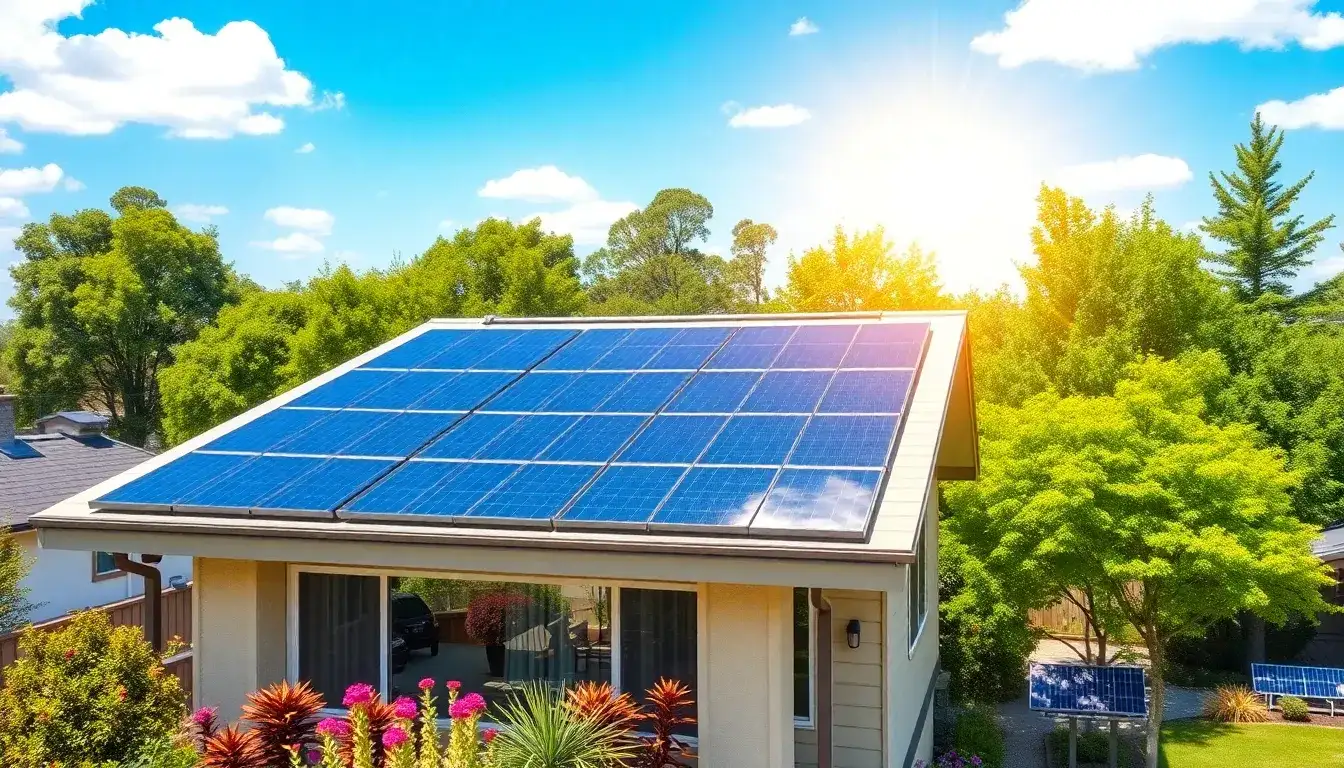
Bifacial solar panels can be used effectively in residential rooftop installations, but their performance and benefits greatly depend on specific conditions and installation considerations.
Advantages of Bifacial Solar Panels on Rooftops
- Increased Energy Production: Bifacial panels can generate up to 30% more energy than traditional monofacial panels by capturing sunlight on both their front and back sides.
- Better Low-Light and Diffuse Light Performance: They can capture reflected and diffused sunlight, which can extend operational hours and improve performance during less sunny periods.
- Durability: Typically built with double-glass construction, bifacial panels are more resistant to environmental damage and may have a longer lifespan.
- Versatility: They can be installed in various orientations and angles, enabling adaptation to different roof designs.
Challenges and Limitations for Rooftop Use
- Limited Rear-Side Light Reflection on Roofs: Rooftop installations usually position panels close to the roof surface, which blocks reflected light from reaching the panel’s back, significantly reducing the bifacial gain.
- Space Constraints: Residential rooftops offer limited space and height above the surface, restricting the ability to create the necessary conditions (such as spacing and reflective surfaces underneath) to maximize bifacial panel performance.
- Cost Premium: Bifacial panels are generally more expensive than monofacial ones and on typical rooftops may not produce enough additional energy to justify this cost.
- Reflective Surface Requirement: To fully benefit from bifacial technology, surfaces below the panels should be reflective (light-colored roofs, snow, sand, etc.). Dark or non-reflective roofs reduce the effectiveness of the rear-side capture.
When Bifacial Panels Are Effective Residentially
- Ground-Mounted Systems: Bifacial panels perform best when mounted with sufficient space underneath to allow reflected light, such as ground mounts or carports, pergolas, and awnings, where both sides receive sunlight.
- Reflective Roofing: If the roof is light-colored and reflective, bifacial panels may yield better results than on standard dark shingles.
- Elevated or Vertical Installations: Panels raised above the roof with adequate spacing or installed vertically to capture sunlight at different times of day can improve bifacial efficiency.
Summary
While bifacial solar panels can be installed on residential rooftops, they rarely achieve their full efficiency potential in typical rooftop settings due to limited reflected light reaching the panel’s rear side and space constraints. For most residential rooftop systems, traditional monofacial panels remain more cost-effective. However, if your roof is light-colored or reflective and the installation allows for sufficient clearance beneath panels, bifacial modules can produce additional energy. They are more suited to ground-mounted residential solar arrays, carports, or pergolas where both panel sides can capture sunlight without obstruction.
In all cases, a professional site assessment is recommended to evaluate if bifacial panels will offer sufficient benefits for your specific residential rooftop installation.
References:
- Bifacial solar panels can be up to 30% more efficient by capturing sunlight on both sides and are adaptable in various installations including rooftops with reflective surfaces.
- Rooftop installations typically limit bifacial gains due to closeness to roof surfaces and lack of reflected light, making them less practical than ground mounts or open-area setups.
- Reflective surfaces, spacing, and elevation are key to achieving bifacial efficiency gains.
- Cost remains a consideration given bifacial panels’ higher price versus marginal rooftop energy gain.
Original article by NenPower, If reposted, please credit the source: https://nenpower.com/blog/can-bifacial-solar-panels-be-used-effectively-in-residential-rooftop-installations/

