

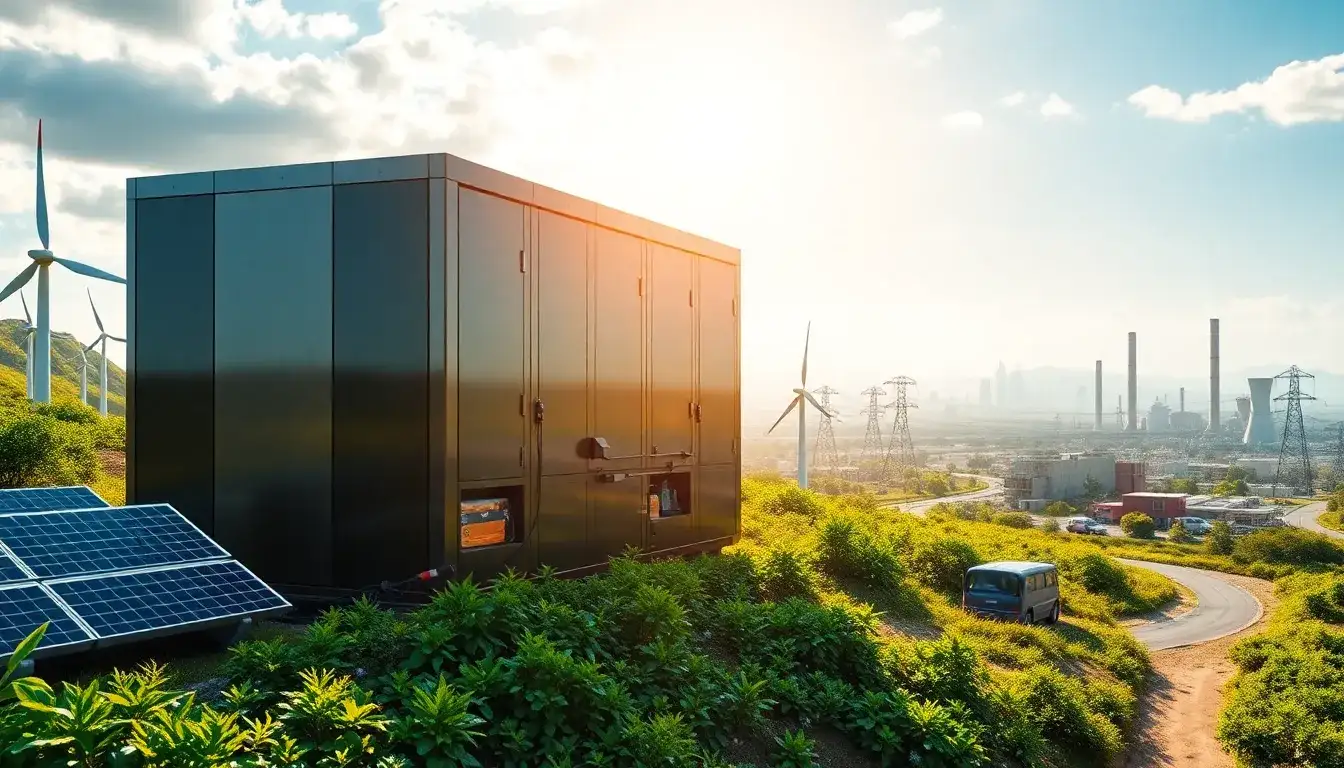
Battery energy storage systems (BESS) play a crucial role in reducing reliance on fossil fuels for peak power generation by addressing the intermittency of renewable energy sources like solar and wind. Here’s how BESS can help:
- Storing Renewable Energy: BESS can store excess energy generated from solar and wind during off-peak hours and release it during peak demand periods. This ensures that renewable energy can meet peak power needs, reducing the need for fossil fuel-based peaker plants.
- Grid Stability and Resiliency: By strategically placing batteries near areas of high energy demand, BESS can help stabilize the grid and reduce transmission congestion, making it more resilient against power outages and blackouts.
- Reducing Peak Demand Costs: Charging batteries during off-peak hours when electricity prices are lower and discharging them during peak hours reduces electricity costs and grid strain, further minimizing the reliance on expensive peaker plants.
- Promoting Clean Energy Transition: The integration of BESS supports the transition to a clean energy future by facilitating greater use of renewable energies, reducing greenhouse gas emissions, and creating economic benefits through job creation and tax revenue.
Overall, battery energy storage systems are critical in enhancing the efficiency and reliability of renewable energy systems, thereby lowering the dependence on fossil fuels for peak power generation.
Original article by NenPower, If reposted, please credit the source: https://nenpower.com/blog/can-battery-energy-storage-systems-help-reduce-the-reliance-on-fossil-fuels-for-peak-power-generation/

