

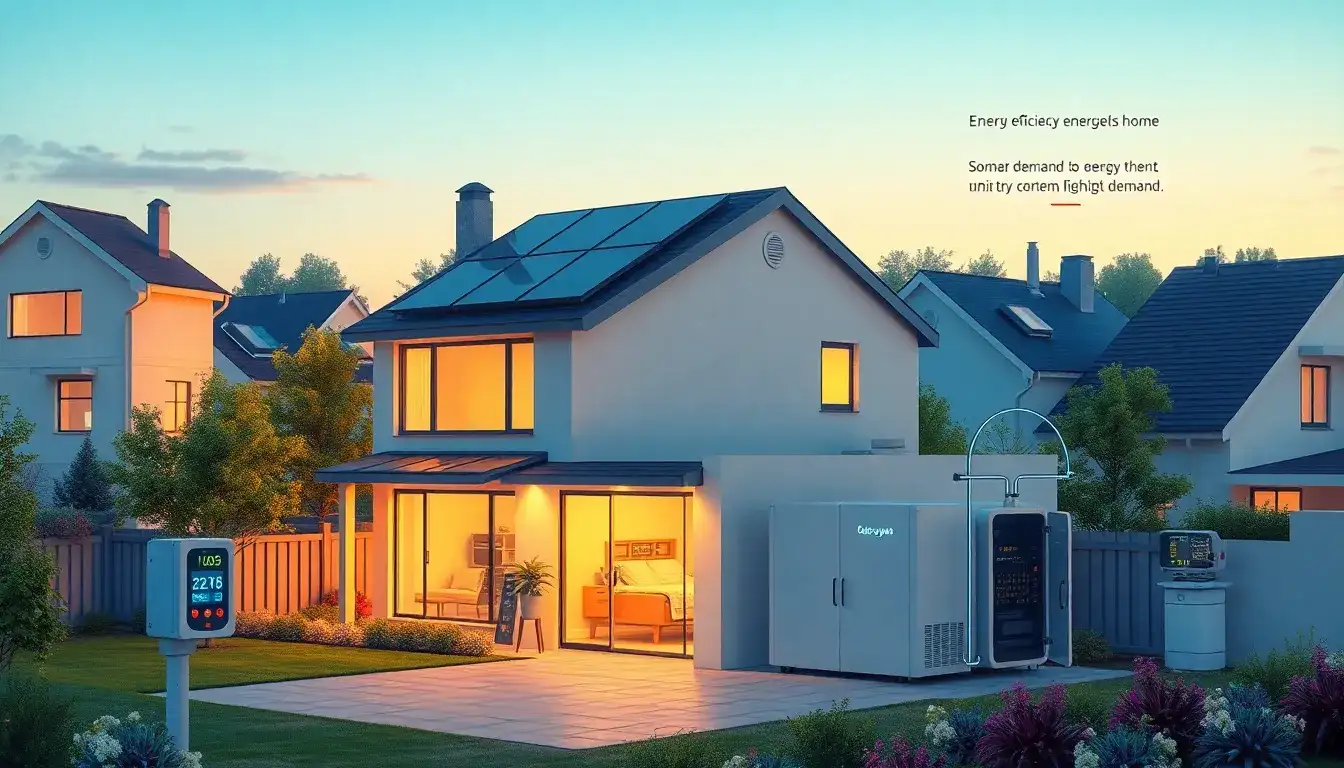
Yes, battery energy storage systems (BESS) can help reduce demand charges for residential customers, although their impact and economics differ compared to commercial customers.
How Battery Storage Reduces Demand Charges
Demand charges are fees based on a customer’s highest power demand (kW) during a billing cycle, often measured over a 15-minute interval. These charges compensate utilities for providing enough capacity to meet peak power use. Battery storage can reduce these charges by:
- Charging the battery during off-peak times when demand and electricity prices are low.
- Discharging stored energy during peak demand periods to reduce the power drawn from the grid.
- This process, known as peak shaving, smooths out demand spikes and lowers the peak power recorded by the utility, thus reducing demand charges on the bill.
Residential Customers and Demand Charges
Traditionally, demand charges have been more common and significant for commercial and industrial customers because they generally have higher peak loads and can face demand charges exceeding $15/kW. However, some utilities have introduced residential rate plans that include demand charges, or peak-use fees based on highest consumption during certain hours.
- Examples of such residential demand charge rate plans include Georgia Power’s Smart Usage plan and Cobb EMC’s Smart Choice plan.
- Home batteries like Tesla Powerwall or Enphase IQ10 can be used by residential customers to control peak demand and reduce monthly demand charges under these plans by discharging stored energy during peak periods.
- Case studies show that residential customers using batteries strategically under demand charge or time-of-use rate plans can save from 8% to 32% annually on their electricity bills, with savings amounts roughly from $160 to $425 per year depending on usage and battery size.
Limitations and Considerations for Residential Use
- Demand charges for residential customers are generally much lower than for commercial customers, so the absolute savings are smaller.
- The upfront cost of residential batteries (around $11,500 for a 13.5 kWh system) means that solely using a battery to save on demand charges may not be financially attractive unless combined with other benefits such as backup power or solar self-consumption.
- The potential savings depend on the specific rate structure, battery capacity, and customer load profile. Fully offsetting peak demand requires a battery with sufficient power and energy capacity and good timing control.
Summary
| Aspect | Commercial Customers | Residential Customers |
|---|---|---|
| Prevalence of demand charges | Very common, often > $15/kW | Increasingly offered in select rate plans |
| Magnitude of demand charges | Can be a significant part of bill (up to 50%) | Lower, but rising in some areas |
| Battery storage impact | Significant peak shaving potential, large savings | Modest peak shaving potential, smaller savings |
| Economic viability | Often cost-effective due to high charges | Limited standalone financial case, better with solar + backup benefits |
In conclusion, battery energy storage systems can help reduce demand charges for residential customers where utilities have implemented demand charge rate plans for homes. Although the scale and financial savings are typically smaller than for commercial customers, residential batteries can still provide meaningful bill savings through peak demand control and energy arbitrage, especially when combined with solar PV systems.
Original article by NenPower, If reposted, please credit the source: https://nenpower.com/blog/can-battery-energy-storage-systems-help-reduce-demand-charges-for-residential-customers-as-well/

