

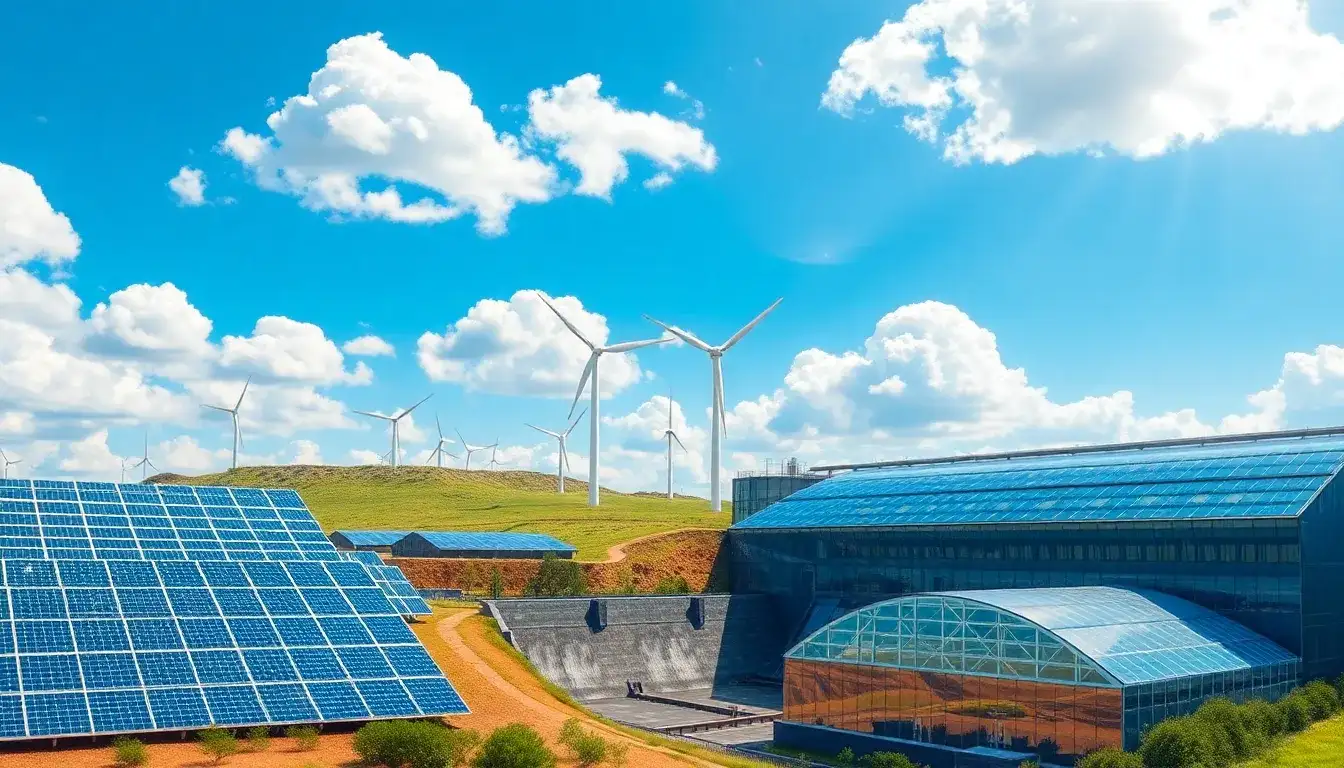
Anti-reflective coatings (ARCs) are primarily known for their application in solar photovoltaic (PV) systems to reduce reflection and increase light absorption, thereby enhancing the efficiency of solar cells and modules. However, the concept and technology of AR coatings can be extended to other types of renewable energy systems where light or electromagnetic wave efficiency is critical.
Application of Anti-Reflective Coatings in Renewable Energy Systems
-
Solar Photovoltaic Systems
AR coatings are widely used on silicon solar cells and the glass surfaces of PV modules to reduce reflectance from over 30% (bare silicon) down significantly, increasing the amount of light absorbed by the cells and improving overall power output. Recent research demonstrated that applying AR coatings to solar panels can improve electricity generation by about 5.5% and reduce the levelized cost of energy (LCOE) by 2.7% in large-scale PV plants, with the coatings showing excellent durability even under harsh environmental conditions. -
Potential for Other Renewable Technologies
Although the bulk of research and commercial use focuses on solar PV, the principles behind AR coatings—reducing reflection and enhancing light or electromagnetic wave transmission—suggest they could be applicable to other renewable energy technologies that rely on capturing or transmitting light or radiation efficiently. Some possibilities include:- Solar Thermal Systems: AR coatings could be applied to the surfaces of mirrors or absorber tubes to enhance the absorption of solar radiation and reduce reflection losses, which can improve the efficiency of concentrating solar power (CSP) systems.
- Photonic and Optical Devices in Renewable Energy: Components such as sensors, waveguides, and light concentrators used in various renewable energy technologies could benefit from AR coatings to minimize optical losses.
- Perovskite and Emerging Solar Materials: Advanced anti-reflective texturization inspired by natural structures (e.g., moth-eye patterns) can be applied to novel solar materials beyond silicon, improving their efficiency.
- Potential in Other Light-Dependent Systems: While less common, AR coatings may find roles in enhancing efficiency in some bioenergy or hybrid renewable systems where light capture or optical transmission is relevant.
Summary
Anti-reflective coatings are extensively used in solar PV to improve light absorption and power generation efficiency, with proven benefits in reducing costs and maintenance needs. Their underlying optical principles and technological versatility imply that AR coatings can also be adapted for use in other renewable energy systems that rely on efficient light or radiation absorption or transmission. This includes solar thermal systems and emerging photovoltaic technologies, where reducing reflection losses is crucial. Current research trends continue to explore innovative AR structures and materials to expand these applications.
In conclusion, while AR coatings are most established in photovoltaics, ongoing research and technology development support their broader applicability across various renewable energy technologies to enhance performance by minimizing reflective losses.
Original article by NenPower, If reposted, please credit the source: https://nenpower.com/blog/can-anti-reflective-coatings-be-applied-to-other-types-of-renewable-energy-systems/

