

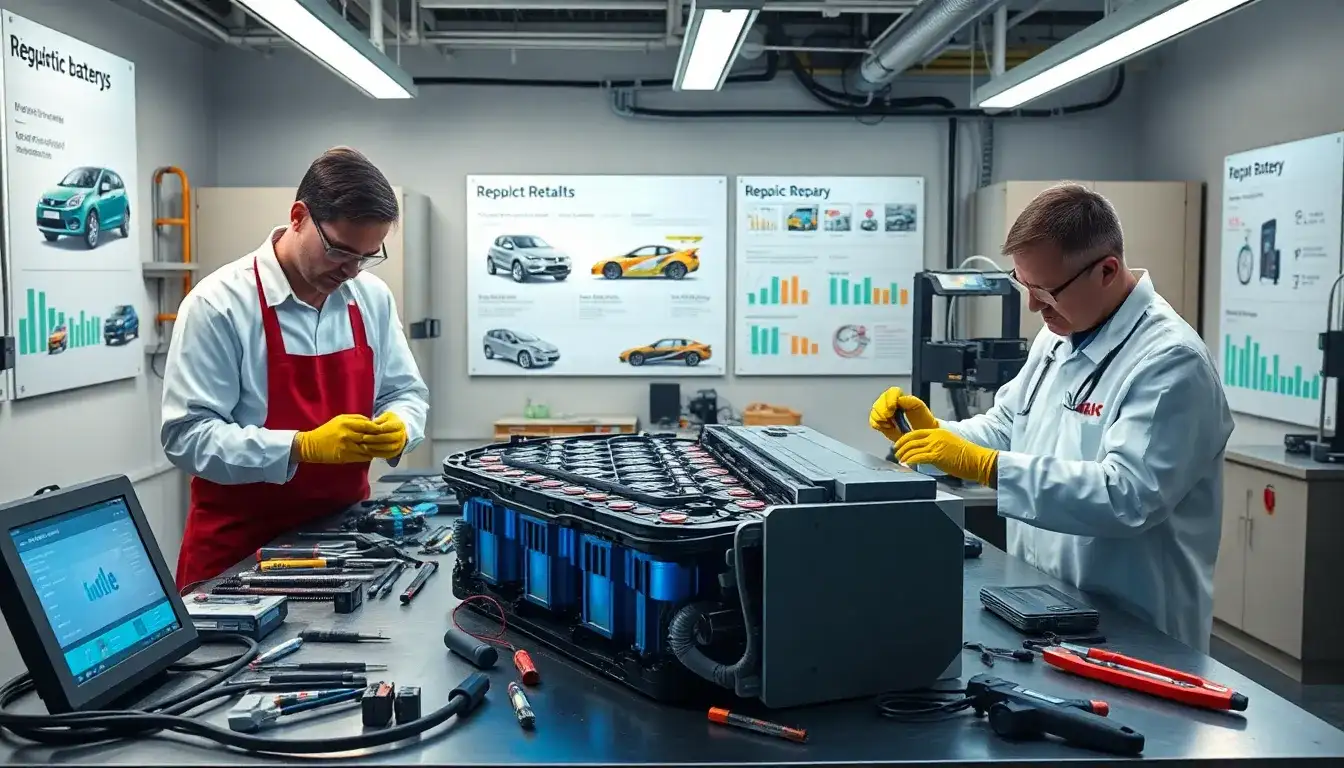
Repairing EV Batteries
Method: Repair involves identifying and replacing weak or defective cells or modules within the battery. This approach can extend the lifespan of the battery without requiring a full replacement.
Benefits:
- Sustainability: Repairing batteries reduces the demand for new battery materials like lithium and the energy required to manufacture them, contributing to a more circular economy.
- Cost-Effectiveness: A refurbished battery is generally about half the cost of a new one, making it a more economical option.
- Environmental Impact: Repairing batteries can significantly reduce waste and lower carbon emissions associated with manufacturing new batteries.
Technical Feasibility:
- Some EV models have modular batteries, making it feasible to replace individual modules or cells if needed. For example, the Chevy Bolt’s battery is modular and can be repaired with the right tools.
- While no EV battery can be restored to its original condition due to irreversible chemical changes during use, replacing weak cells can restore performance to an acceptable level.
Challenges and Considerations:
- Safety: Repairing EV batteries can be dangerous due to the high voltage and specialized components involved.
- Regulations: The EU has directives supporting the remanufacture of EV batteries, allowing refurbished units to be sold if they meet a 90% capacity threshold.
Overall, while replacing individual components can extend the life of an EV battery, it does not restore it to its original condition. Nonetheless, this approach offers significant benefits in terms of cost, sustainability, and reducing waste.
Original article by NenPower, If reposted, please credit the source: https://nenpower.com/blog/can-an-ev-battery-be-repaired-instead-of-replaced/

