

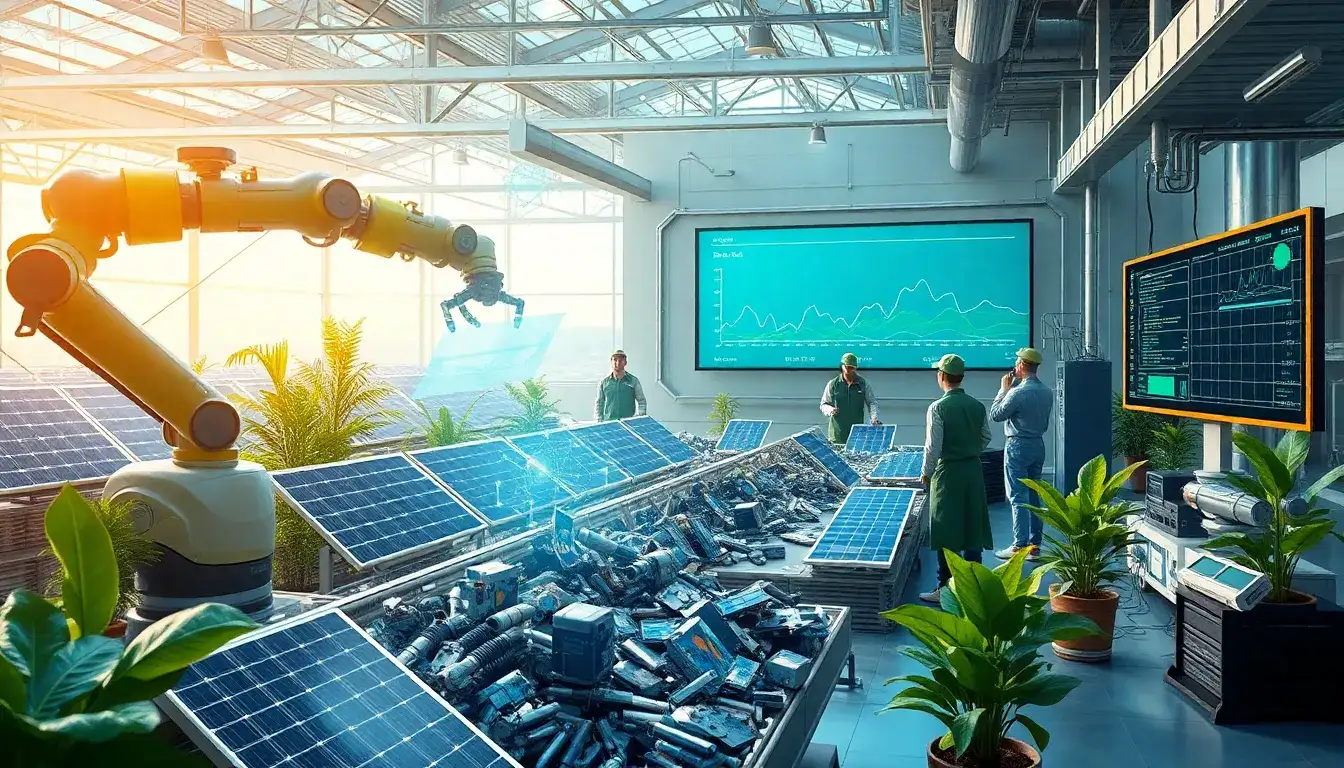
AI vision technology can indeed be integrated with existing solar panel recycling facilities, enhancing their efficiency and material recovery capabilities.
How AI Vision Technology Integrates with Solar Panel Recycling
- Material Identification and Sorting: AI-driven vision systems use advanced image recognition to identify different materials inside solar panels—such as glass, aluminum, silicon, copper, and plastics—based on their visual traits. This precise identification enables robotic systems to dismantle panels accurately and separate components for recycling.
- Sensor-Based Complement: Alongside vision AI, sensor data (e.g., X-ray fluorescence, near-infrared spectroscopy) can be analyzed by AI algorithms to determine the chemical composition of materials, further improving sorting precision and valuable resource recovery from solar panels.
- Automation and Machine Learning: Facilities integrating AI vision benefit from autonomous machine learning systems that continuously optimize the recycling process. For example, solutions like the PV Circulator employ AI vision to scan incoming panels, recognize their make and model from a database, and automatically adjust processing parameters without human intervention.
- Robotics for Dismantling: Advanced robotic dismantling systems powered by AI vision reduce manual labor and improve the speed and accuracy of panel disassembly, facilitating cleaner and more efficient recycling operations.
- Zero Pollution and Traceability: AI-integrated recyclers like PV Circulator achieve total recycling with zero pollution by avoiding chemicals and heat, and also generate immutable clean recycling records via IoT and blockchain technology, enhancing transparency and sustainability.
Practical Examples
- Norway has deployed AI-powered robotic sorting stations that enhance material recovery rates and reduce waste incineration by intelligently sorting industrial waste fractions including solar panels.
- U.S. startup PV Circonomy developed a highly automated solar panel recycling machine (PV Circulator) that uses AI vision to process one panel per minute, mechanically removing frames and junction boxes, and separating materials with airflow technology to preserve material quality for reuse.
- Companies like SUNY GROUP have launched fully automated solar panel recycling equipment integrating vision AI and autonomous machine learning to optimize processes and provide clean recycling records, exemplifying successful integration of AI vision into commercial recycling.
Summary
Integrating AI vision technology into existing solar panel recycling facilities is a practical and increasingly common approach that:
- Improves the accuracy of material identification and sorting,
- Enables automation of dismantling and processing,
- Enhances resource recovery rates,
- Reduces manual handling and chemical usage,
- Supports sustainability goals by minimizing waste and pollution,
- Facilitates data-driven optimization and traceability.
Therefore, existing recycling facilities can upgrade their systems by incorporating AI vision and machine learning technologies to achieve more efficient, sustainable, and scalable solar panel recycling.
Original article by NenPower, If reposted, please credit the source: https://nenpower.com/blog/can-ai-vision-technology-be-integrated-with-existing-solar-panel-recycling-facilities/

