

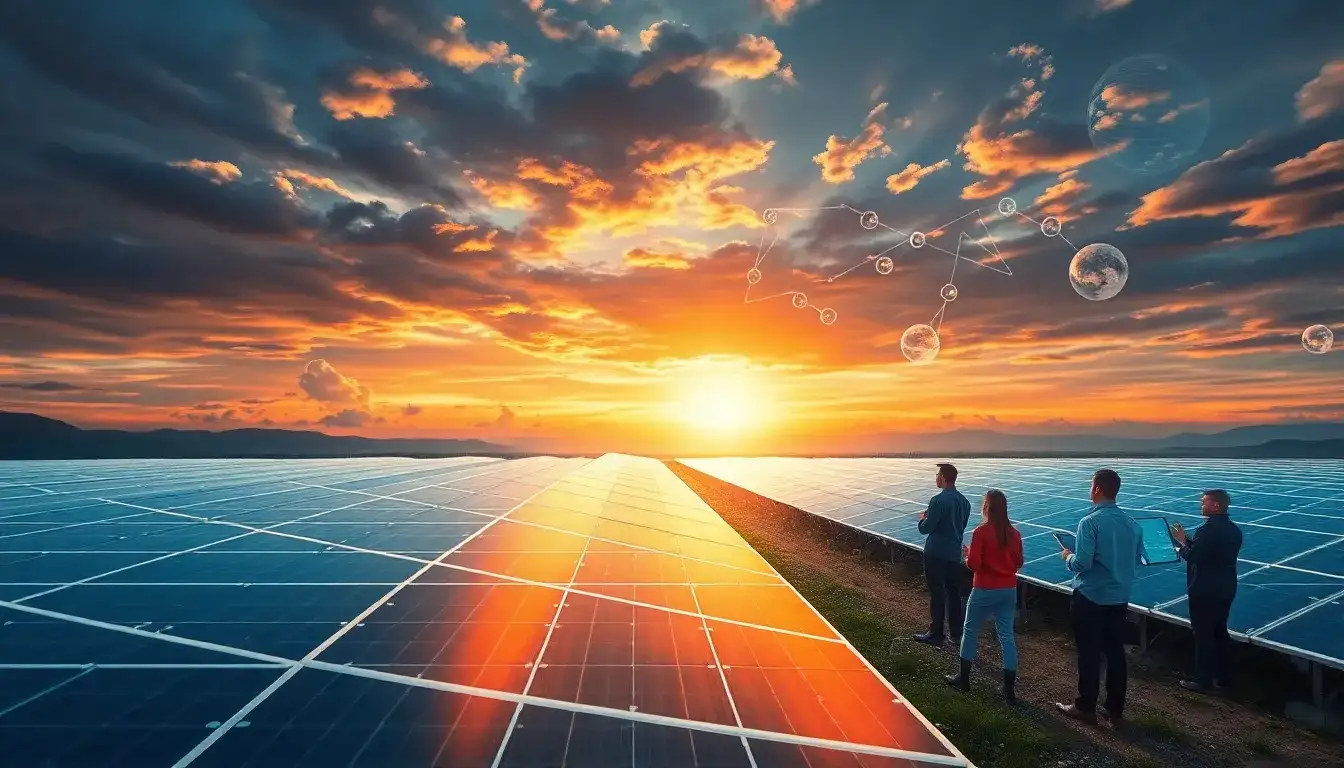
Yes, AI can significantly improve weather pattern prediction accuracy to optimize solar energy production, though challenges remain. Here’s a breakdown:
AI’s Impact on Forecasting Accuracy
AI reduces solar forecasting errors by up to 30% compared to traditional methods like persistence forecasting, which often have error margins of 20-50%. Machine learning models analyze satellite imagery, historical weather data, and real-time cloud movements to predict solar irradiance at granular time scales, from minutes to days ahead. For example, ECMWF’s AIFS model, though still early-stage, already matches traditional models’ accuracy while operating faster and cheaper.
Applications in Solar Optimization
- Grid Stability: AI forecasts help balance supply-demand mismatches by predicting solar output fluctuations, reducing reliance on fossil-fuel backups.
- Energy Trading: Accurate short-term forecasts enable solar operators to sell excess power at optimal prices.
- Panel Efficiency: AI adjusts panel angles in real-time based on predicted cloud cover or irradiance changes.
Challenges and Innovations
- Data Limitations: AI models like ECMWF’s AIFS still exhibit biases (e.g., underestimating clear-sky conditions) and rely on data from traditional numerical models.
- Short-Term Forecasting: While ECMWF’s AIFS operates at a 6-hour resolution, newer systems like cloud nowcasting (updated every 5 minutes) reduce short-term forecast errors by 20% by tracking real-time cloud movements.
- Cost and Accessibility: AI-driven forecasts require 1,000x less computational power than traditional methods, democratizing access for regions lacking supercomputers.
Future Outlook
Projects like Google’s GenCast (ensemble AI forecasting) and Aardvark (observational-data-only models) aim to further reduce reliance on physics-based simulations. While current AI forecasts excel at medium-range predictions, ongoing refinements in resolution and real-time data integration will enhance their utility for solar grid management.
In summary, AI already provides sufficient accuracy to optimize solar production, but hybrid approaches combining AI with traditional models remain necessary for now.
Original article by NenPower, If reposted, please credit the source: https://nenpower.com/blog/can-ai-predict-weather-patterns-accurately-enough-to-optimize-solar-energy-production/

