

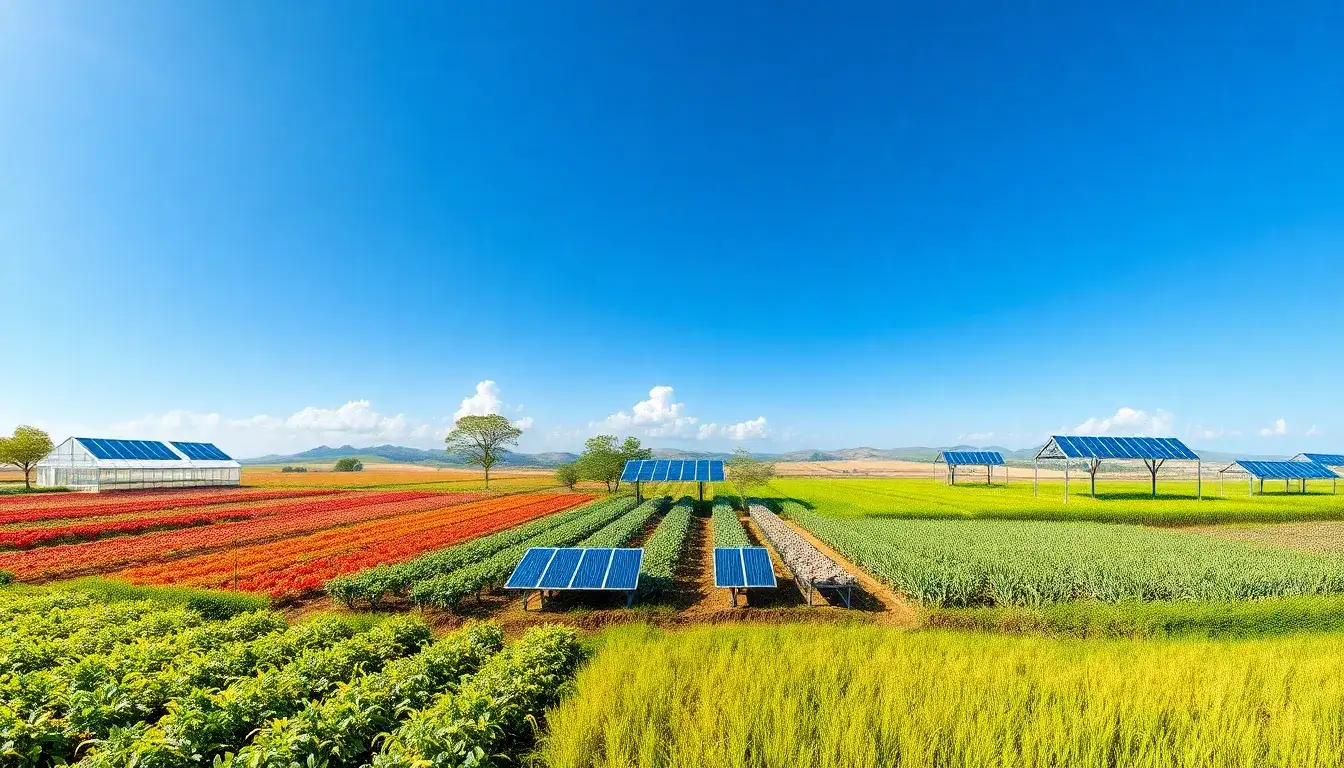
Agrivoltaics, the co-location of solar photovoltaic (PV) systems with agricultural production, can be implemented in a variety of agricultural systems, but its suitability and effectiveness depend on the type of agriculture and specific conditions.
Types of Agricultural Systems Suitable for Agrivoltaics
- Crop Production: Many types of crops can be grown under solar panels, including potatoes, kale, peppers, and broccoli. The solar panels are typically raised to allow machinery, people, and sometimes animals to pass underneath, facilitating crop cultivation. Adjustable-tilt solar panels can also provide beneficial shade, reducing heat stress on crops and protecting plants from frost, which improves crop resilience in some climates.
- Livestock Grazing: Agrivoltaic systems can accommodate livestock grazing, where animals can graze under and around the solar panel arrays, thus combining energy production with pasture use.
- Pollinator Habitats: Some agrivoltaic systems integrate pollinator habitats with solar arrays, supporting biodiversity alongside energy and agricultural production.
Limitations and Considerations
- Crop Types and Growth Conditions: Not all crops may benefit equally from the shade or microclimate created by solar panels. Some crops may require adaptations in watering or cultivation methods to thrive under the partial shading conditions.
- System Design Adaptations: The installation must be tailored to the specific agricultural system, requiring careful design around panel height, orientation, and spacing to ensure adequate sunlight and operational space for farming activities.
- Economic and Environmental Factors: Agrivoltaics can diversify farm income and improve land-use efficiency, especially in dryland or semi-arid regions where shade can reduce water stress and evapotranspiration. However, it may not be universally economically feasible or beneficial for all farms or crop types without site-specific evaluation.
Conclusion
Agrivoltaics can be implemented in many—but not necessarily all—types of agricultural systems, including various crop productions, livestock grazing, and pollinator-friendly habitats. Successful implementation depends on adapting system design to the specific agricultural use, crop requirements, and local environmental conditions to optimize both agricultural yields and solar energy production.
Original article by NenPower, If reposted, please credit the source: https://nenpower.com/blog/can-agrivoltaics-be-implemented-in-all-types-of-agricultural-systems/

