

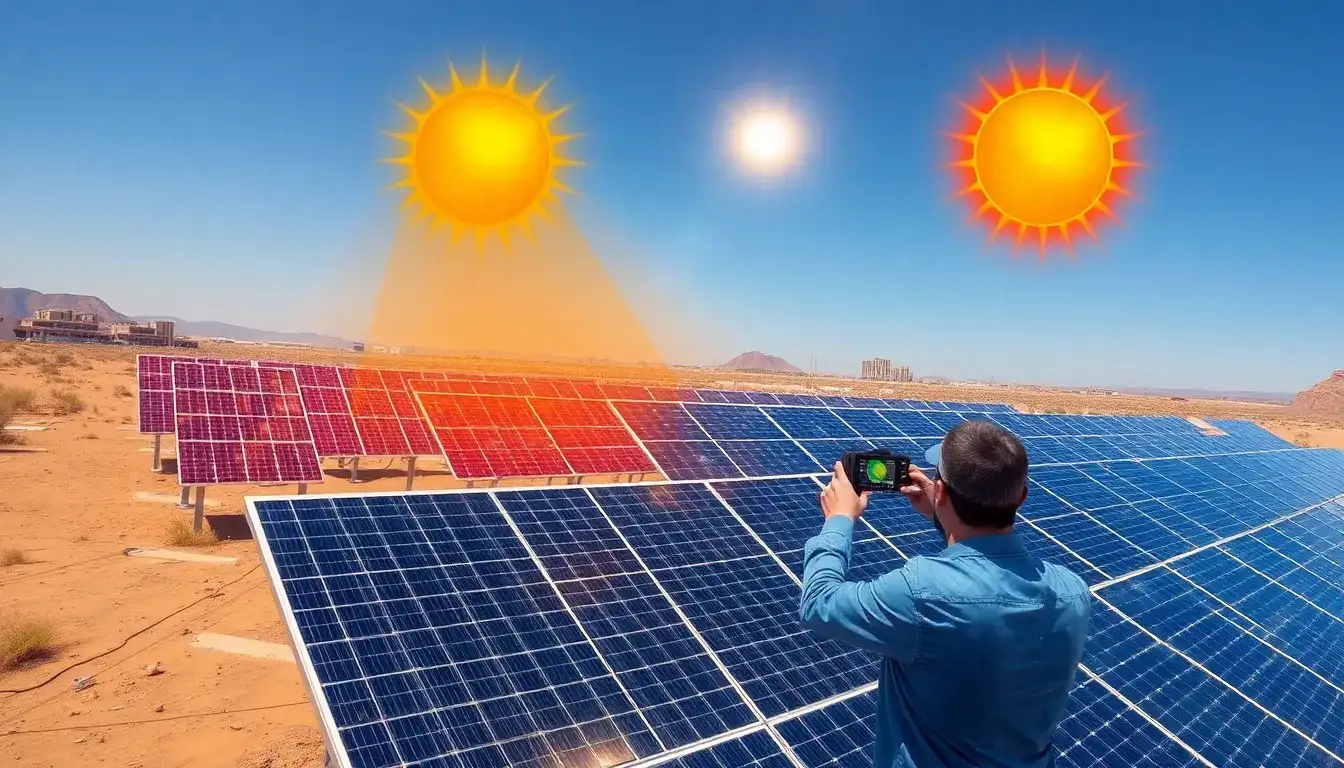
Adjusting the tilt of solar panels can help mitigate the effects of high temperatures to some extent, but its impact is limited compared to other factors such as air circulation and panel material selection.
How Tilt Affects High Temperature Mitigation
- Air Circulation: Increasing the tilt can enhance air circulation beneath the panels, which helps to dissipate heat. However, this benefit is more substantial when combined with proper airflow and spacing between panels.
- Thermal Stress: Research indicates that higher tilt angles can delay thermal failures in solar panels, particularly above 30 degrees. This could reduce thermal stress and potentially lower panel temperatures.
Other Factors in Mitigating High Temperature Effects
- Material Selection: Choosing solar panels made from materials with a lower temperature coefficient (e.g., polycrystalline or thin-film panels) can help minimize efficiency loss due to heat.
- Proper Installation: Ensuring sufficient space for airflow, using heat-resistant mounting materials, and avoiding obstructions are crucial for maintaining optimal panel performance in high temperatures.
In summary, while adjusting the tilt can contribute to better air circulation and slightly reduce thermal stress, it is part of a broader strategy that includes appropriate material selection and installation practices to effectively mitigate the effects of high temperatures on solar panels.
Original article by NenPower, If reposted, please credit the source: https://nenpower.com/blog/can-adjusting-the-tilt-of-solar-panels-help-mitigate-the-effects-of-high-temperatures/

