

Solar-Powered Charging Innovation for Electric School Buses in California
=========================================================================
The sun-drenched Central Valley of California has taken a significant step towards cleaner transportation. The Turlock Unified School District (TUSD) has launched a pioneering solar-powered charging depot for its expanding fleet of electric school buses. This initiative, supported by a coalition of public and private partners, including The Mobility House and Schneider Electric, marks a landmark achievement for both student health and air quality, serving as a compelling example of sustainable transport infrastructure.
### A Ribbon-Cutting with Purpose
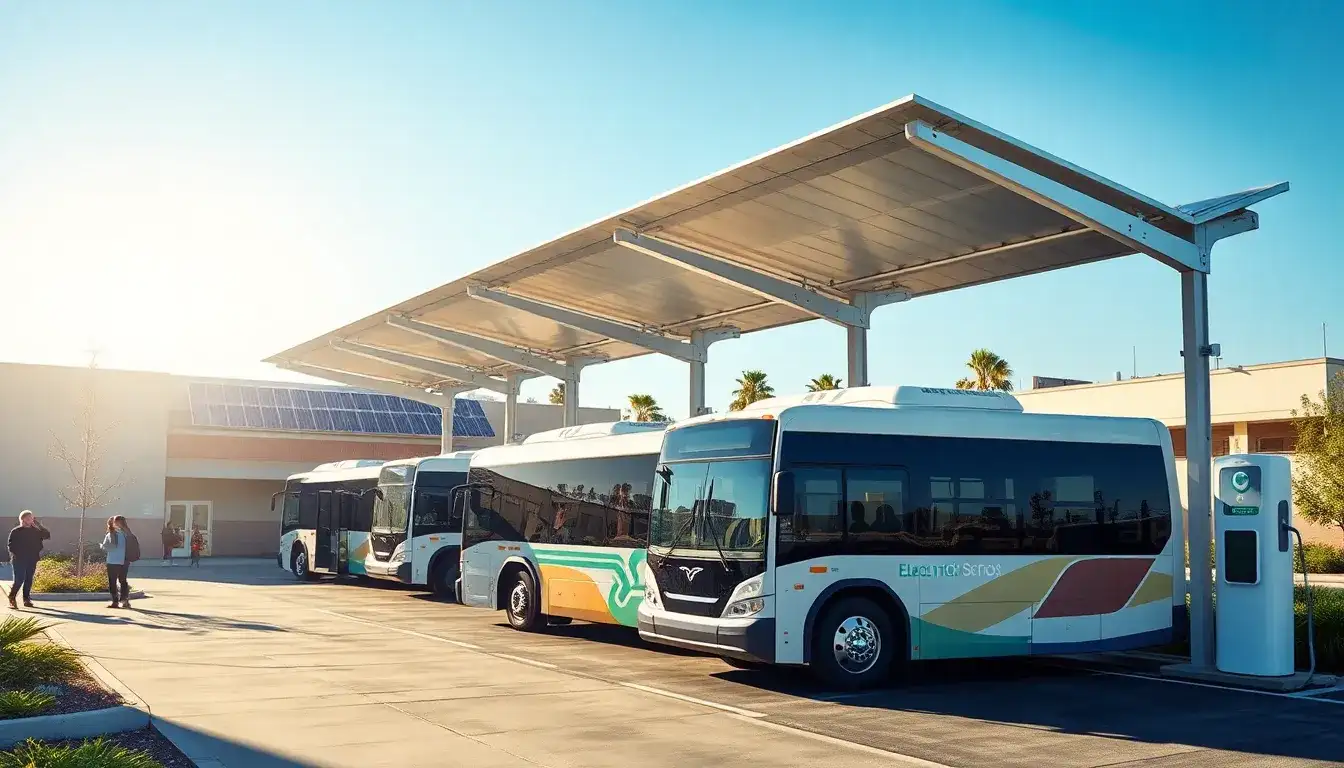
The celebration featured nine brand-new electric Blue Bird buses showcased under solar canopies during the official ribbon-cutting ceremony. Attendees included representatives from TUSD, Schneider Electric, The Mobility House, Turlock Irrigation District, A-Z Bus Sales, Valley Air District, and NV5. The atmosphere was filled with pride and determination. This project focuses not just on electrification but on doing it intelligently. The buses utilize a combination of AC and DC fast chargers, but what truly distinguishes this initiative is the integration of advanced charge management software from The Mobility House. This system optimizes the use of on-site solar energy while minimizing peak electricity costs, prioritizing renewable energy for each bus.
Greg Hintler, CEO of The Mobility House North America, expressed his enthusiasm: “I am so proud to congratulate Turlock Unified School District for this important step towards zero emissions transportation, powered by zero emissions energy. Solar energy and electric buses are complementary technologies that provide a vision for the future of sustainable school transportation.”
### Smart Charging, Smarter Economics
The innovation lies in the system’s ability to play the long game. Instead of merely plugging in the buses, TUSD employs charge management logic that adapts in real time. By synchronizing bus charging schedules with solar generation peaks, the district not only lowers its electricity costs but also decreases its dependency on grid energy, which may be sourced from fossil fuels. This level of sophistication is where The Mobility House excels, currently managing over 2,500 electric vehicle fleet charging facilities globally and coordinating the charging of hundreds of thousands of EVs.
### Public-Private Partnerships Lighting the Way
This initiative isn’t the first collaboration between The Mobility House and Schneider Electric. The two have previously worked together on electric bus infrastructure projects in Stockton and Modesto, with more deployments planned for later this summer, strengthening California’s leadership in sustainable transportation. Schneider Electric’s Elliott Feldman emphasized the significance of these efforts: “California school districts like Turlock are leading the way towards our electric future. Their ambition and drive to implement sustainable solutions is a testament to the role they play in their community.”
### Health, Climate, and Costs
Electric school buses are not merely a checkbox for sustainability; they represent a vital resource for the children who ride them and the communities they serve. Traditional diesel buses emit a range of pollutants that can worsen asthma and hinder cognitive development. By transitioning to zero-emission buses, TUSD is prioritizing health and equity. Moreover, the on-site solar charging allows the district to avoid fluctuating energy prices, particularly during California’s notorious heatwaves, acting as a safeguard against rising utility costs.
### Solar Canopies and Load Management
The solar canopies serve a dual purpose: they protect the buses from the harsh Central Valley sun, thereby extending battery life, while simultaneously generating clean energy that feeds into the depot’s energy management system. Coupled with bidirectional smart chargers, this infrastructure transforms from being passive hardware into a dynamic asset. This innovative design is not only clever but also scalable, as increasing federal and state funding for school bus electrification could make such infrastructure standard across the U.S.
### A Glimpse into Tomorrow
The Turlock installation is more than just a singular achievement; it serves as a model for the future. The district aims to convert its entire fleet to electric by 2035, laying a solid foundation for this transition. The broader implications are significant. As more districts adopt similar initiatives, economies of scale will emerge, technology costs will decrease, and the grid will become greener with each mile traveled.
### Powering Progress
By investing in solar-powered charging infrastructure, Turlock Unified School District isn’t merely fulfilling a sustainability requirement; it’s transforming the paradigm. With benefits that include healthier communities, reduced operational costs, a more resilient grid, and a smaller carbon footprint, the impact is both profound and lasting. It’s not every day that a school district emerges as a climate champion, but Turlock is leading the way. California has once again illuminated the path forward, and other regions would do well to follow suit.
Original article by NenPower, If reposted, please credit the source: https://nenpower.com/blog/california-school-district-launches-solar-powered-charging-depot-for-electric-buses/

