

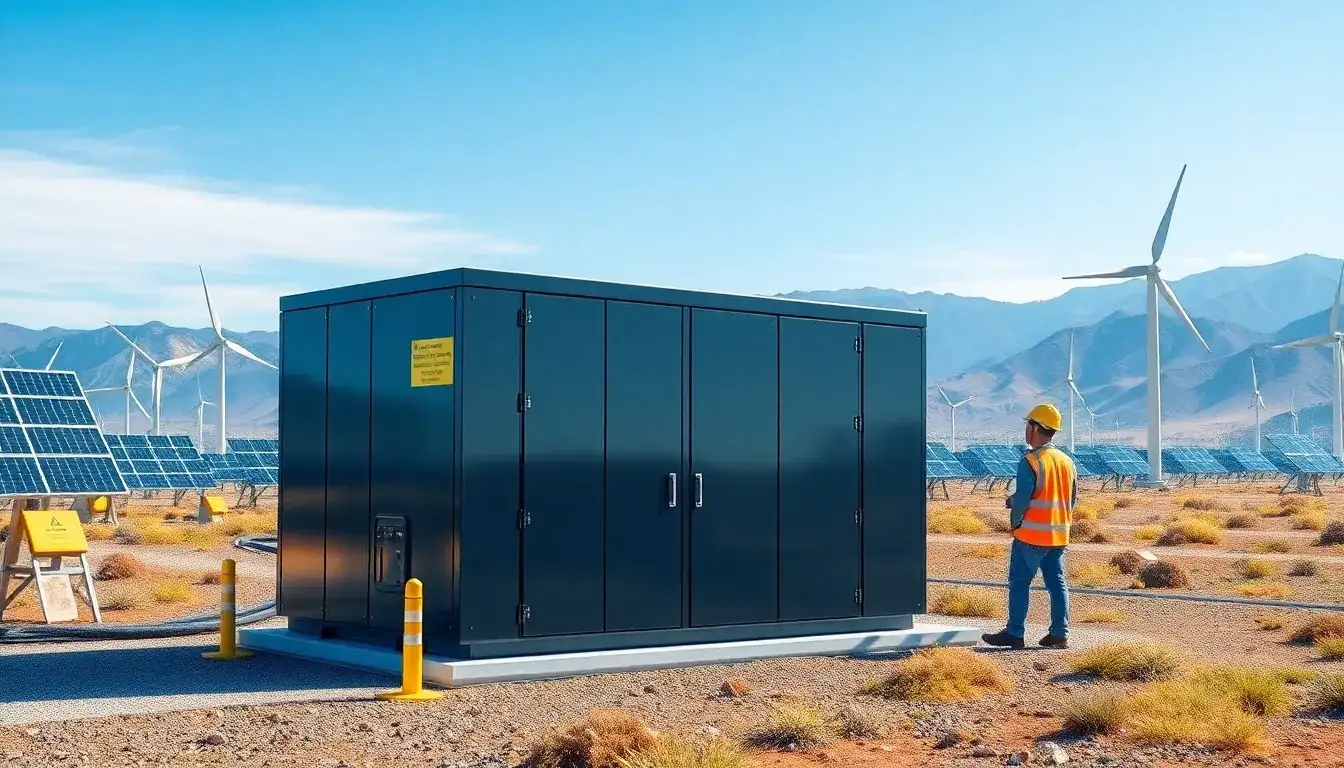
California is currently evaluating several legislative proposals aimed at enhancing the safety of battery storage systems. As part of its commitment to clean energy, California has set a goal for 100% of its electricity to be sourced from renewable and zero-carbon resources by 2045, with interim targets of 60% by 2030 and 90% by 2035. To achieve these ambitious objectives, effective energy storage solutions for solar and wind power are essential, as these sources generate energy only when conditions allow.
In 2024, California made substantial strides by adding over 7,000 megawatts of clean energy and more than 4,000 megawatts of new battery storage capacity to its grid. Currently, battery storage systems account for more than 20% of the state’s peak energy demand, while future projections estimate that California will need around 52,000 megawatts of battery storage capacity by 2045.
Since 2022, the California Energy Commission (CEC) has been granted temporary authority to approve certain renewable energy projects, including those involving battery storage facilities capable of holding 200 megawatt-hours or more, through its Opt-In Certification Program established under AB 205. This program allows project developers to obtain permits from the CEC instead of dealing with local and most state permitting processes. As of now, there are eight projects awaiting approval under this program.
The recent fire incident in January 2025, which damaged a segment of the 300-megawatt Moss Landing energy storage facility near Santa Cruz, has intensified scrutiny regarding safety regulations in storage facilities. As a result, three bills have been introduced this legislative session: AB 303, AB 434, and SB 283, each proposing distinct standards for energy storage safety.
### AB 303: Battery Energy Safety & Accountability Act
Introduced by Assemblymember Dawn Addis, AB 303 seeks to remove energy storage facilities from the CEC’s Opt-In Certification Program and transfer land use authority back to local agencies. The bill would impose restrictions on the locations of new energy storage facilities, prohibiting construction in high fire and flood zones, and requiring a setback of 3,200 feet from sensitive sites such as homes, schools, hospitals, and prime agricultural land. Although AB 303 would not affect existing facilities, it aims to enhance safety for future installations. As of early June, this bill has become a two-year bill due to its failure to advance to the Senate by the deadline.
### AB 434
Introduced on February 5 by Assemblymember Carl DeMaio, AB 434 also seeks to exclude energy storage facilities from the CEC’s Opt-In Certification Program. This bill would further prevent public agencies from authorizing new storage facilities until January 1, 2028. It mandates that the State Fire Marshal adopt guidelines and minimum standards for constructing energy storage facilities by that date. After January 1, 2028, any new facilities would be required to comply with the standards set by the State Fire Marshal or stricter guidelines as determined by local agencies. Similar to AB 303, AB 434 has also become a two-year bill as it did not progress to the Senate in time.
### SB 283
Introduced on February 5 by Senator John Laird, SB 283 mandates that new energy storage facilities adhere to the National Fire Protection Association (NFPA) 855 standards for battery storage safety and hazard mitigation. Additionally, before submitting applications for new facilities, developers would need to consult with local fire authorities to discuss facility design, evaluate potential risks, and incorporate emergency response plans. As of this writing, SB 283 is currently under consideration in the Assembly and will be reviewed by both the Energy, Utilities and Communications and Local Government committees.
These proposed bills reflect California’s ongoing efforts to enhance the safety of energy storage systems while continuing to transition towards a sustainable energy future.
Original article by NenPower, If reposted, please credit the source: https://nenpower.com/blog/california-introduces-new-safety-legislation-for-battery-storage-systems-amid-energy-transition-challenges/

