

California Energy Commission Approves 4.6GWh Solar-Storage Project
================================================================================
After months of careful deliberation and analysis, the California Energy Commission (CEC) has granted approval for the **Darden Clean Energy Project (DCEP)**, marking the first initiative assessed under its opt-in certification scheme. This unanimous decision was made during a regular business meeting last week, where all five commissioners endorsed the project proposed by Intersect Power.
“This project exemplifies a community-focused approach that advances the state’s energy goals while creating benefits for local workers and residents,” stated CEC Commissioner **Noemí Gallardo**.
### Project Overview
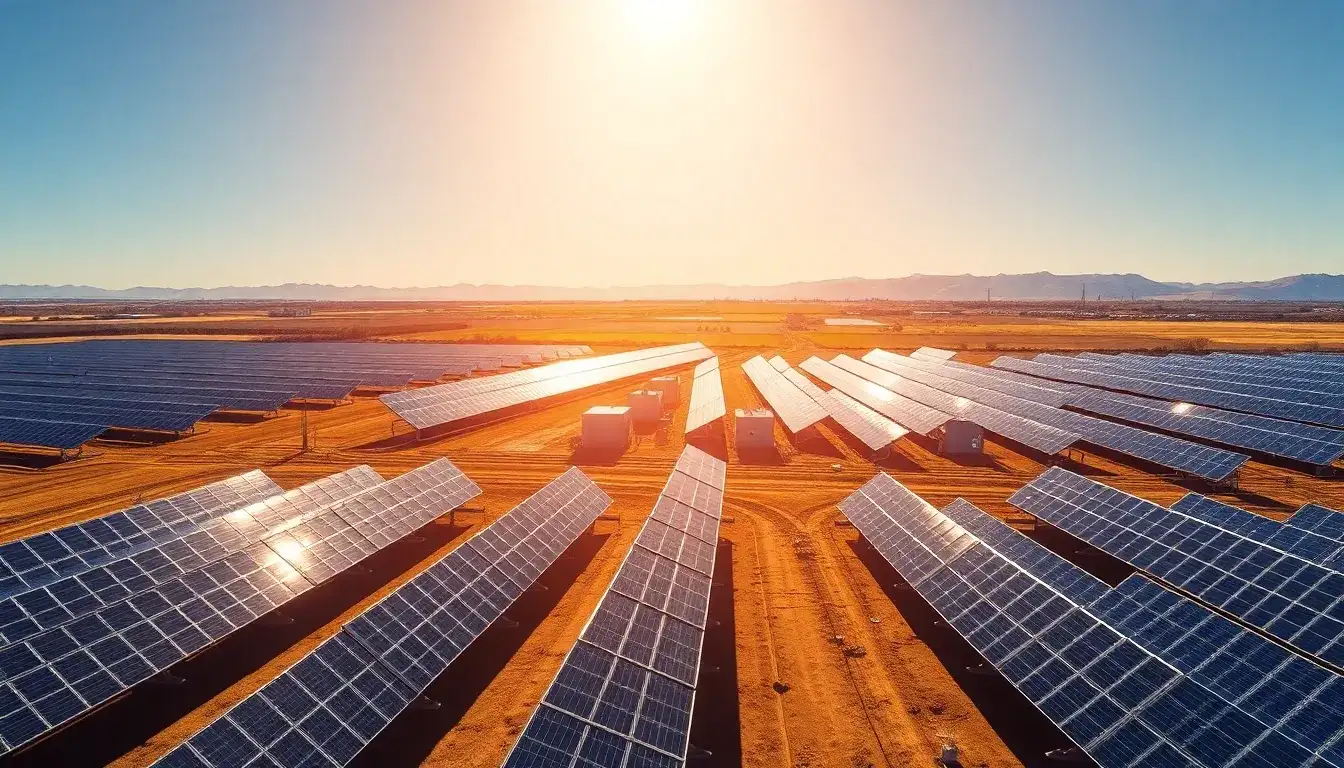
The Darden Clean Energy Project will consist of a **1.15GW/4.6GWh Battery Energy Storage System (BESS)** paired with a **1.15GW solar PV farm**, to be situated on **9,500 acres** of land in Western Fresno County. Initially, the project was planned to include up to **800MW** of electrolyzer capacity, positioning it as California’s largest green hydrogen producer. However, Intersect Power decided to abandon these hydrogen plans late last year.
Upon announcing the project’s approval on **June 12**, the CEC claimed that the BESS at DCEP will become the largest in the world. Nevertheless, since construction may take up to three years, it is unlikely to hold the title for long. Recently, **AES Corporation** completed the first **500MW** phase of its **Bellefield Solar and Storage** project in Kern County, which will reach a total capacity of **4GWh** when fully operational. Other independent power producers, such as **NextEra Energy Resources**, are also developing large-scale BESS projects in California.
### Concerns Regarding the Opt-In Scheme
Permitted under California Governor **Gavin Newsom’s Assembly Bill (AB) 205**, the opt-in certification scheme expanded the CEC’s permitting authority in 2023 to include BESS projects exceeding **200MWh**. While the CEC engages with local communities during the review process, the final decision rests with the state energy regulator, leading to some discontent among various stakeholders.
A standalone BESS proposal from **Engie**, currently under CEC review, has faced significant opposition, with a recent informational meeting lasting over five hours and filled with negative public comments. Some California lawmakers, including **Assemblymember Dawn Addis**, attempted to pass legislation to remove the CEC’s authority over BESS projects entirely. This initiative gained attention due to the recent battery fire at the **Moss Landing Energy Storage Facility**, located in Addis’s district. Despite the media spotlight, the proposed **Battery Accountability and Safety Act** did not advance past its first reading.
### CEC’s Thorough Examination
During the recent meeting, CEC Executive Director **Drew Bohan** discussed how staff members had conducted an “exhaustive examination” of the project over the past nine months. Following multiple site visits and community engagement meetings, CEC staff concluded that “all impacts [of DCEP] can be mitigated to a less than significant level.” The comprehensive analysis, exceeding **1,000 pages**, also affirmed that the project met all requirements outlined in AB 205.
**Marissa Mitchell**, Head of Environmental Permitting at Intersect Power, expressed her gratitude to the CEC staff for their rigorous analysis and commitment to the tight schedule set by AB 205. After deeming Intersect Power’s application complete in September of the previous year, the CEC had only **270 days** to decide on the project’s approval.
### Fire Mitigation Payments in Fresno County
The **Fresno County Fire Department (FCFD)** recently introduced a series of “fire mitigation payments” aimed at developers of solar and BESS projects. These payments, both annual and upfront, are intended to fund additional equipment necessary for addressing potential fire risks associated with such projects. Given the scale of DCEP, Intersect Power is expected to face substantial costs, including upfront payments of **$10.35 million** and an additional **$120 million** over the project’s lifetime.
During the CEC meeting, **Assistant Chief Andy Cosentino** of FCFD clarified that the pricing structure was not intended to single out Intersect Power but was based on a “holistic approach” considering all proposed projects in Fresno County. Although the CEC initially approved FCFD’s funding proposal for Darden, Senior Information Officer **Stacey Shepard** later indicated that it had changed its stance, proposing binding arbitration as an alternative method for determining mitigation.
Cosentino urged the commissioners to modify the approval documents to require Intersect Power to fund additional firefighting equipment. He emphasized that the project is being developed in an area with extended response times and limited water supply, yet the project benefits from the resources of FCFD at a fraction of the cost.
Mitchell stated that approximately **$40 million** would be allocated to FCFD, though this figure would depend on final tax calculations by the local assessor.
Original article by NenPower, If reposted, please credit the source: https://nenpower.com/blog/california-energy-commission-approves-major-4-6gwh-solar-storage-project-in-fresno-county/

