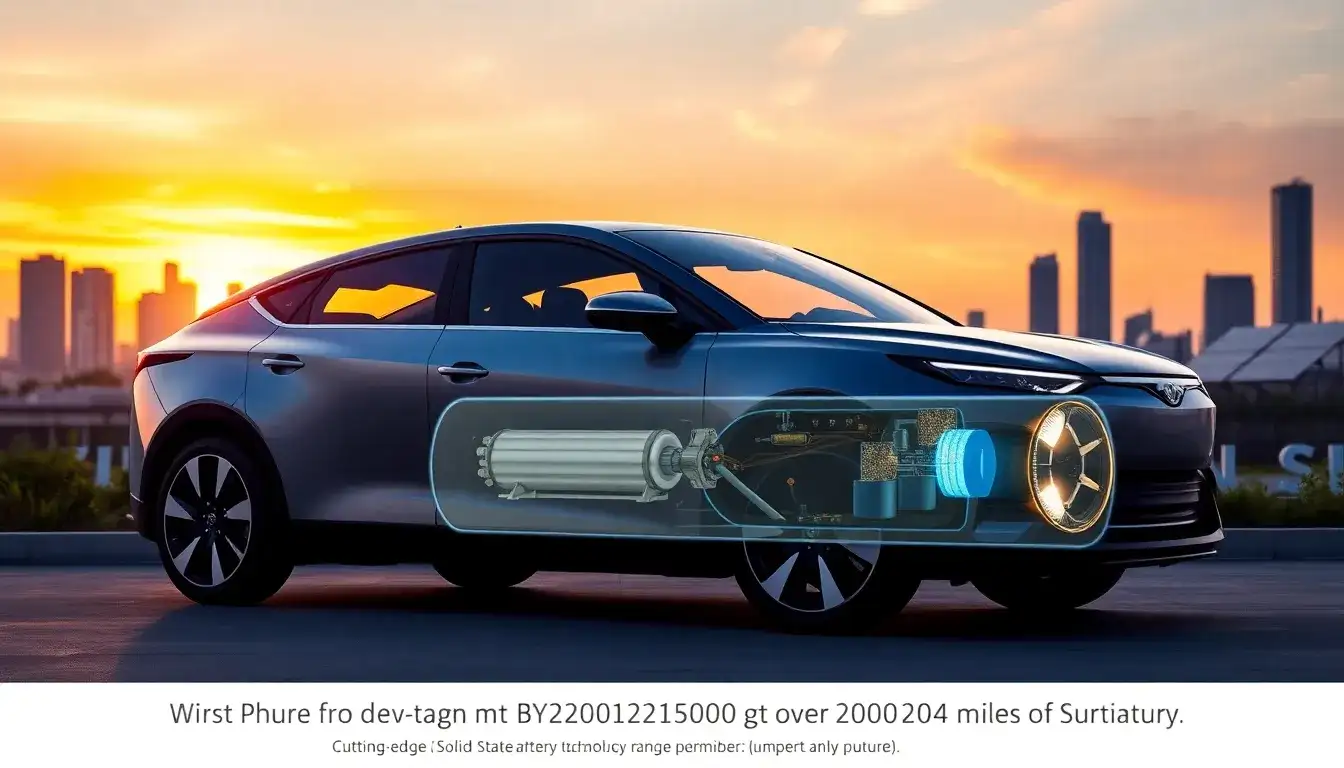
BYD is currently testing solid-state electric vehicle (EV) batteries in its Seal sedan, which is designed to compete with the Tesla Model 3. Early results indicate that this innovative battery technology could enable a remarkable driving range of nearly 1,200 miles (1,875 km).
The journey towards solid-state batteries began over a decade ago when BYD initiated research and development into this promising battery technology. Last year, the company reached a significant milestone by testing its first solid-state battery cells with capacities of 20 Ah and 60 Ah. In early 2023, Sun Huajun, the CTO of BYD’s battery division, confirmed that the company plans to launch its first vehicles equipped with solid-state batteries by 2027. At the recent 2025 China All-Solid-State Battery Innovation and Development Summit, Sun announced that BYD has officially installed these batteries in the Seal EV and is now conducting road tests.
Once testing concludes, expected by 2027, BYD aims to begin integrating solid-state batteries into its production vehicles. Initially, production will be limited for the first two years, from 2027 to 2029, but the company plans to ramp up to mass production by 2030. BYD has also stated that it anticipates the costs of solid-state batteries will align with those of current liquid lithium-ion batteries by the end of the decade. The Seal, as the first EV to feature solid-state batteries, is set to hit the market in 2027, followed by additional models in 2028 and subsequent years.
The energy density of BYD’s solid-state batteries is impressive, reaching 400 Wh/kg—almost double that of conventional lithium-ion batteries. Local reports highlight that during testing, these batteries achieved a record range of 1,500 km (932 miles) after just 12 minutes of charging. It’s important to note that this test charged the battery to only 80%, suggesting that the total EV range could exceed 1,875 km (1,165 miles). However, the figure reflects the China Light-Duty Vehicle Test Cycle (CLTC), and when adjusted to the EPA scale, the range would be closer to 1,300 km (808 miles), which remains significantly more than sufficient for most users.
Currently, the BYD Seal starts at approximately 175,800 yuan in China, equating to about $25,000. However, the price is expected to rise when the vehicle launches with solid-state batteries in 2027.
BYD is already a dominant player in the global EV market, having recently surpassed Tesla in monthly registrations in Europe and the UK for the first time, signaling potential for further growth. The company is also focused on developing new battery technologies, ultra-fast chargers, smart driving features, and advanced platforms to support its expansion in the coming years. In addition, BYD is known for its affordable vehicles, such as the Seagull (also known as the Dolphin Surf in Europe), which retails for under $10,000 in China.
As the market evolves, BYD will face competition from major players like CATL, Mercedes-Benz, Volkswagen, Stellantis, and Nissan, all of whom are also preparing to launch their first EVs featuring solid-state batteries around 2027 or 2028. Recently, Nissan’s director of product planning in Europe, Christop Ambland, confirmed their timeline with Auto Express, stating, “We will be ready for SSB (solid-state batteries) in 2028.”
Original article by NenPower, If reposted, please credit the source: https://nenpower.com/blog/byd-tests-solid-state-batteries-in-seal-ev-promising-over-1200-miles-of-range/