

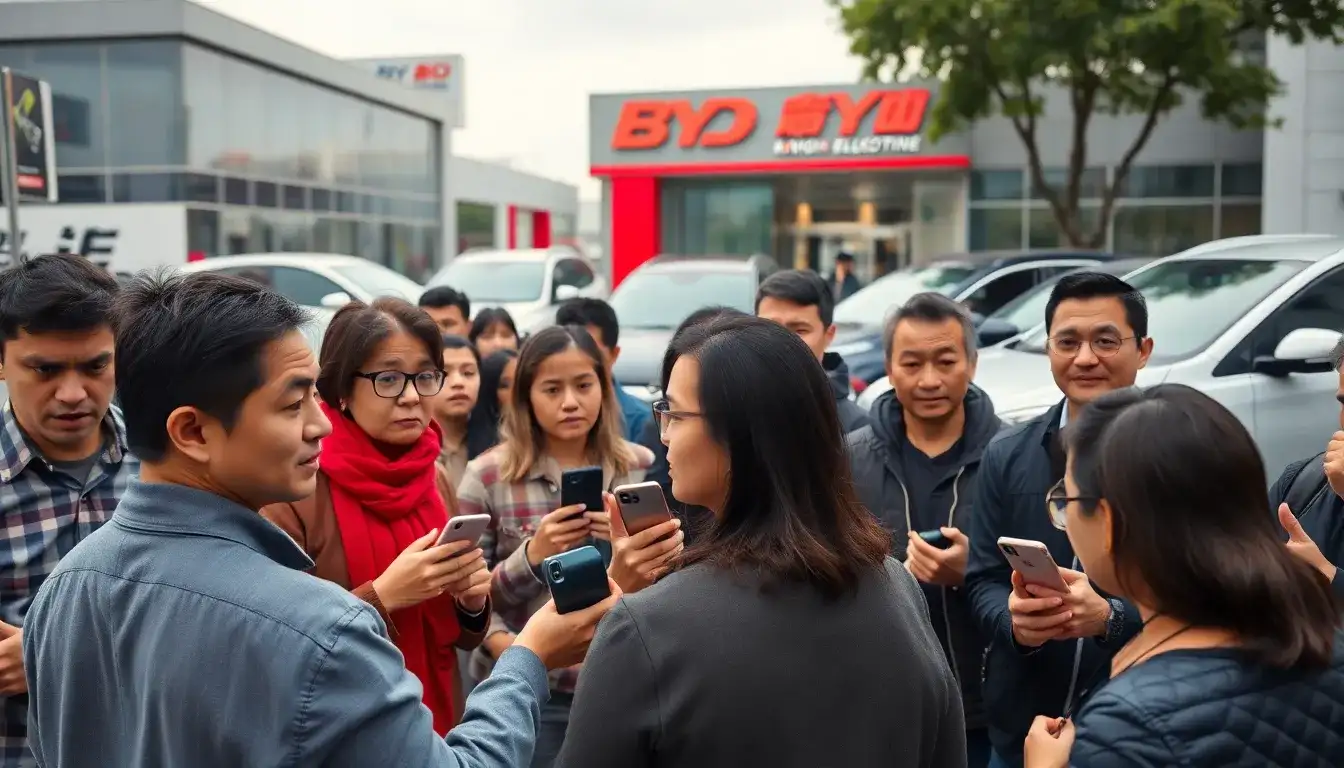
Seven days after the national subsidy for new energy vehicles was canceled, BYD unexpectedly announced a “technical upgrade” for its vehicles, which has sparked strong dissatisfaction among owners. Some have even described it as a “fatal blow.” Is this a strategic foresight from BYD or a risky gamble?
The cancellation of subsidies has already brought a chill to the new energy vehicle market, and BYD’s actions have only added fuel to the fire, leaving consumers feeling even more confused. It’s akin to a meticulously planned “Double Eleven” shopping festival, where just as you are excitedly purchasing your desired items, the retailer suddenly announces a price increase on all products. This abrupt shift can be quite disheartening, a sentiment that many can relate to. BYD’s recent move has touched upon the most sensitive nerve of consumers—profits.
With the removal of subsidies, an increase in vehicle prices is an inevitable trend. However, BYD chose this critical moment to announce a technical upgrade, hinting at future improvements in product performance. To consumers, this can be interpreted as confirmation of the notion that “purchasing an older model means losing out.” Many consumers feel disheartened to learn that the products they just invested in are now deemed “outdated” before they even had a chance to enjoy them. This sense of disappointment is challenging for any consumer to accept, manifesting not just in price but also in the management of consumer expectations.
The rapid development of the new energy vehicle market, coupled with the swift pace of product iteration, has led consumers to desire the latest and best products. Yet, BYD’s announcement appears to suggest that “buying early means losing out,” which could severely undermine consumer confidence. If consumers are worried that their newly purchased vehicles will soon be rendered obsolete by technical upgrades, how willing will they be to invest in new energy vehicles? This concern could directly impact overall sales in the sector.
Some critics have accused BYD of “exploiting consumers.” While this assertion may seem extreme, it reflects the genuine sentiments of a portion of the consumer base. As a leading enterprise in the new energy vehicle sector, BYD boasts significant technological strength and brand influence. However, in the context of subsidy cancellations, the company’s recent actions appear to lack consideration for consumer sentiments. Rather than viewing it as a technical upgrade, one might see it as a tactical marketing maneuver capitalizing on market conditions. So, is BYD’s strategy a success or a failure? The answer remains uncertain.
In the long run, increasing investment in research and development to enhance product competitiveness is undoubtedly a sound strategic direction. BYD has consistently prioritized technological innovation as its core competitive edge, and this recent upgrade aims to reinforce its leading position in the industry. However, in the short term, this decision could deter consumer purchasing intentions and may even push some consumers toward alternative brands.
Data from the China Association of Automobile Manufacturers indicates that the growth rate in the new energy vehicle market significantly slowed in the first half of 2023. Following the removal of subsidies, while overall sales remain on the rise, the growth rate has fallen short of expectations. Although BYD continues to lead in sales, it too has experienced a downward trend in growth, indicating that consumer confidence in the new energy vehicle market is waning and that they are now more price-sensitive.
Moreover, BYD faces increasing market pressure as more automotive companies enter the new energy vehicle sector, intensifying competition. To maintain its competitive edge, BYD must continually enhance its technological capabilities, making technical upgrades one of its strategies to cope with market competition. However, the implementation of such strategies requires greater caution and a more profound consideration of consumer experiences. Neglecting current consumer interests in pursuit of long-term growth could backfire.
From a market perspective, BYD’s actions also highlight a common phenomenon in the new energy vehicle market: rapid technological iteration and short product lifecycles. Consumers often face the dilemma of “buying new versus buying old” when purchasing new energy vehicles. The industry must collectively strive to establish a more comprehensive market mechanism, such as implementing standardized trade-in policies and extending product warranty periods to bolster consumer confidence and stabilize market expectations.
From another angle, BYD’s “technical upgrade” might also be interpreted as a form of “expectation management.” By announcing future technological directions in advance, BYD can guide consumer expectations and enhance its brand premium. This is a common marketing strategy but must be based on positive consumer experiences. If consumers feel deceived or left in the dark, such strategies are unlikely to succeed and could even be counterproductive.
There are lessons to be learned from successful companies in this regard. Many tech companies focus on communicating with users when launching new products, providing previews of new features, and offering corresponding discounts to alleviate user anxiety regarding product iterations. As a leading player in the industry, BYD should invest more effort in improving communication with consumers and building trust.
In conclusion, BYD’s “technical upgrade” strategy following the cancellation of subsidies for new energy vehicles is a double-edged sword. While it could enhance BYD’s long-term competitiveness, it may also impact consumer confidence in the short term. BYD needs to reassess its relationship with consumers, placing greater emphasis on their experiences and perceptions to establish a more stable market position. This concern transcends BYD and is crucial for the healthy development of the entire new energy vehicle industry.
In the future, similar incidents may occur, necessitating collaborative discussions among industry stakeholders and government departments to find solutions. After all, the healthy development of the new energy vehicle market relies heavily on consumer confidence, which requires the concerted efforts of all participants to achieve.
Ultimately, the authenticity and accuracy of data are paramount; only through accurate data analysis can informed decisions be made to avoid similar controversies in the future. Transparent communication and honest business practices will be key in winning consumer trust going forward.
Original article by NenPower, If reposted, please credit the source: https://nenpower.com/blog/byd-faces-backlash-from-car-owners-after-announcing-tech-upgrades-following-subsidy-cuts/

