

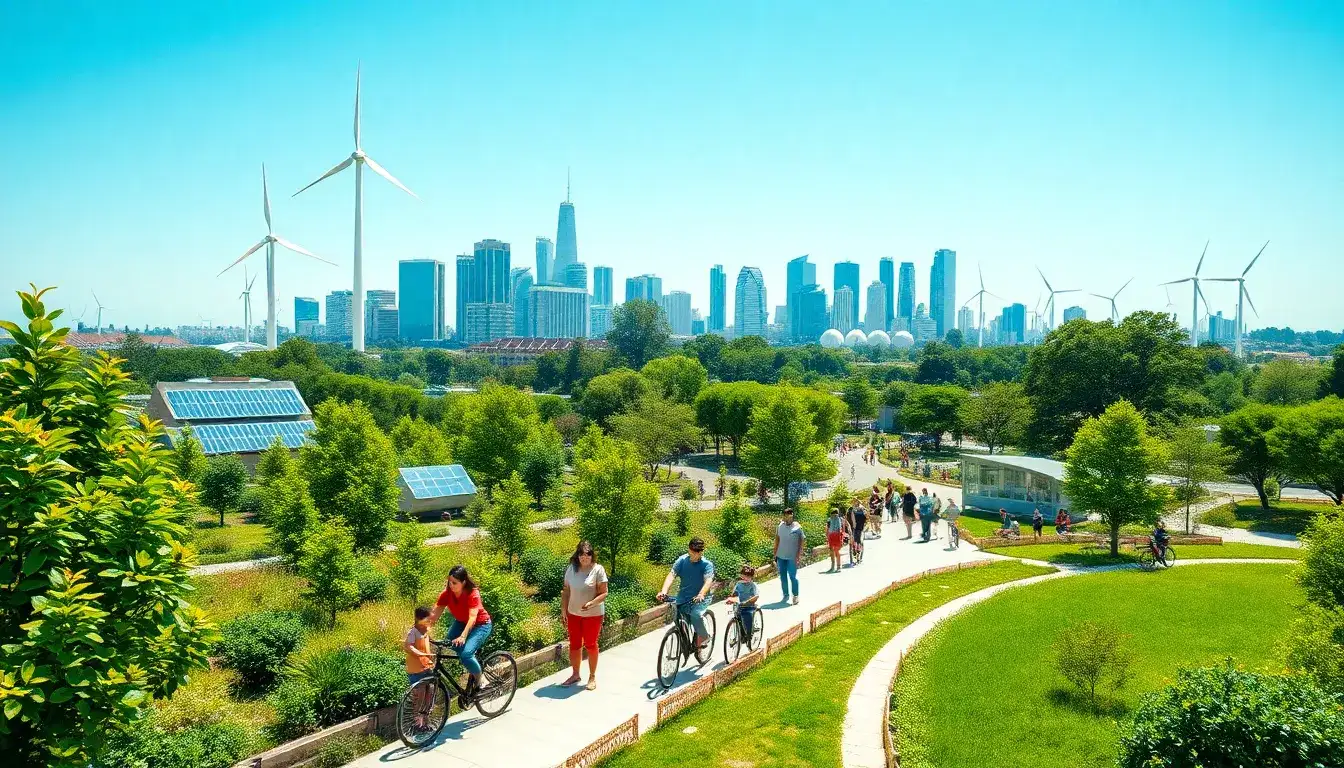
Together for a Clean, Beautiful, and Sustainable World
On April 23, 2025, Chinese President Xi Jinping delivered a speech at the Climate and Just Transition Leaders Video Summit, which sparked enthusiastic responses from the international community. Leaders from various countries highlighted that President Xi’s address emphasized the importance of adhering to multilateralism, deepening international cooperation, promoting a just transition, and strengthening practical actions, providing clear direction for global climate governance.
In his speech, President Xi articulated China’s green development philosophy and announced the country’s climate action plan, showcasing China’s commitment and determination to collaboratively build a clean, beautiful, and sustainable world.
“What we see is the leadership that the world urgently needs today,” said Putra Adiguna, Executive Director of the Indonesia Energy Transition Institute. “China’s efforts to respect the diverse needs of different countries and share the benefits of green development have been warmly welcomed by many nations.”
According to Wang Xiaojun, Executive Director of the Asia Climate Action Network, “President Xi’s speech illustrates the pressing need for leadership. Denying climate change or pretending it does not exist is not an option. It is more crucial than ever for countries to unite in tackling climate change. True leadership stems from a genuine concern for building a community with a shared future for humanity, backed by unwavering resolve.”
Janaina Kamala da Silveira, Editor-in-Chief of the Brazilian news site “Radar China,” noted that the four key points raised by President Xi are of significant practical importance. This year’s UN Climate Change Conference will be held in Belém, Brazil. The ideas presented in Xi’s speech align with Brazil’s perspectives and provide strong support for the conference. Both Brazil and China place a high priority on addressing the climate crisis, indicating a broad consensus among global South countries that are moving toward sustainable development goals.
Mamon Mryda, former Secretary-General of the Bangladesh-China Chamber of Commerce and Industry, remarked that the initiatives proposed by President Xi are timely and commendable. Climate change is a global challenge that no single nation can tackle alone. The emphasis on promoting a just transition is particularly relevant for developing countries like Bangladesh, which must balance economic growth with environmental sustainability.
Maaya Majuran, Co-founder of the “Belt and Road” initiative in Sri Lanka, stated, “President Xi’s foresight and leadership provide direction for global climate action.” China not only emphasizes its own green development but also collaborates with partner countries under the Belt and Road Initiative to promote green cooperation, showcasing its irreplaceable leadership role. This gives hope to island nations like Sri Lanka, which are vulnerable to climate change. “Only through cooperation can we build a sustainable and resilient future.”
President Xi highlighted, “China is a steadfast advocate for green development and an important contributor.” He announced that prior to the UN Climate Change Conference in Belém, China would declare its 2035 nationally determined contribution targets, covering all sectors of the economy and encompassing all greenhouse gases.
Following the summit, UN Secretary-General António Guterres held a press conference on April 23, where he praised the latest climate proposals presented by President Xi, calling them “extremely significant” for global climate action. He noted that leaders from multiple countries have committed to submitting ambitious new climate action plans, sending a strong signal of international solidarity in addressing climate change. “As we heard today, the world is making rapid progress. No country or interest group can halt the clean energy revolution.”
According to Gareth Redmond-King, International Program Director of the UK NGO “Energy and Climate Information Group,” “The commitments of countries to achieve new nationally determined contribution targets indicate that despite setbacks and some countries stepping back, the multilateral process continues… International cooperation remains vibrant.”
Renato Balderrama, a researcher at the Mexican Center for Economic Teaching and Research, stated that President Xi’s commitment to announcing the 2035 nationally determined contribution targets demonstrates China’s firm commitment and responsibility in global climate governance. China currently holds a leading position in the global supply of green technologies and products in areas such as photovoltaics, wind energy, electric vehicles, and energy storage.
Clifford Cobb, Deputy Director of the U.S.-China Postmodern Development Institute, commended China’s efforts in addressing climate change. He noted that China is a global leader in renewable energy production and is taking effective measures to reduce carbon emissions, improve industrial production, and enhance transportation efficiency. Successful case studies like the ecological restoration project on the Loess Plateau can be applied to global desertification and soil improvement efforts, aiding the international community in combating issues related to global warming.
Atna Supriatna, Director of the Climate Change Research Center at the University of Indonesia, underscored that China’s experiences in pollution control and low-carbon development—especially in transforming heavily polluted cities into clean ones—are valuable lessons for countries like Indonesia. China’s ecological restoration initiatives have enhanced carbon sink capabilities, contributing to global climate governance.
The Guardian reported that President Xi pointed out, “China has built the world’s largest and fastest-growing renewable energy system and established the most comprehensive new energy industry chain,” emphasizing that “China’s actions to address climate change will not slow down.” The report stated that China’s participation in this summit is crucial, positioning the nation as a stable and predictable partner on the global stage, especially for developing countries.
President Xi emphasized, “Regardless of changes in the international situation, China’s actions to address climate change will not waver, nor will our efforts to promote international cooperation weaken. Our practice of building a community with a shared future for humanity will not cease.”
Thong Chai Sin, Director of the China-ASEAN Research Center at Chulalongkorn University in Thailand, noted that President Xi’s insistence on upholding multilateralism and fostering an open and inclusive approach to overcome barriers and conflicts stands in stark contrast to the unilateralism and disregard for international norms exhibited by some major powers.
Shierk Kolzhumbayev, Editor-in-Chief of the Kazakhstan Industry News, stated, “The more complex global challenges become, the more collective efforts are needed. In addressing the global climate crisis, it is crucial to uphold the principle of common but differentiated responsibilities and maintain multilateralism. True multilateralism ensures cooperative win-win outcomes; it cannot be a zero-sum game.”
Lu Yaoqun, Director of the Institute of Governance and Sustainable Development at the National University of Singapore, remarked that President Xi’s speech at the Climate and Just Transition Leaders Summit is significant, especially at a critical juncture when some major economies are backtracking on their commitments to sustainable development. Currently, multilateral cooperation is vital for promoting climate transition, with developing countries actively addressing climate change but requiring support from developed nations to better manage their responsibilities in mitigation and adaptation. China plays an important role in urging all parties to take robust climate action and build a better world.
Philip Clayton, Director of the American Institute for Ecological Civilization, asserted that countries must join forces to tackle the global crisis of climate change. Nations with advanced technologies should develop and share green technologies with developing countries. The global market serves as the fastest and most effective platform for promoting green technologies and products, and imposing high tariffs and trade barriers is counterproductive. “Only by making green technologies accessible to as many people as possible can we overcome the climate crisis. China’s relevant initiatives are driving this goal forward.”
Xi Kun Ben Weilai, a senior diplomat from Laos, acknowledged that China demonstrates an open mindset in technology sharing and green investment. China is not only a steadfast practitioner of the Paris Agreement but also aids developing countries, including Laos, in enhancing climate resilience and green development through technology sharing, capacity building, and project collaboration. This pragmatic and efficient South-South cooperation model injects new momentum into global climate action.
Nanda Kumar Janardan, Deputy Director of the Climate and Energy Department at the Japan Earth Environment Strategy Institute, emphasized that maintaining multilateralism, promoting a just transition, and sharing green innovation are crucial for achieving a secure and prosperous future. Only by working together can countries build a resilient Earth home.
Original article by NenPower, If reposted, please credit the source: https://nenpower.com/blog/building-a-clean-beautiful-and-sustainable-world-together-xi-jinpings-vision-for-global-climate-action/

