

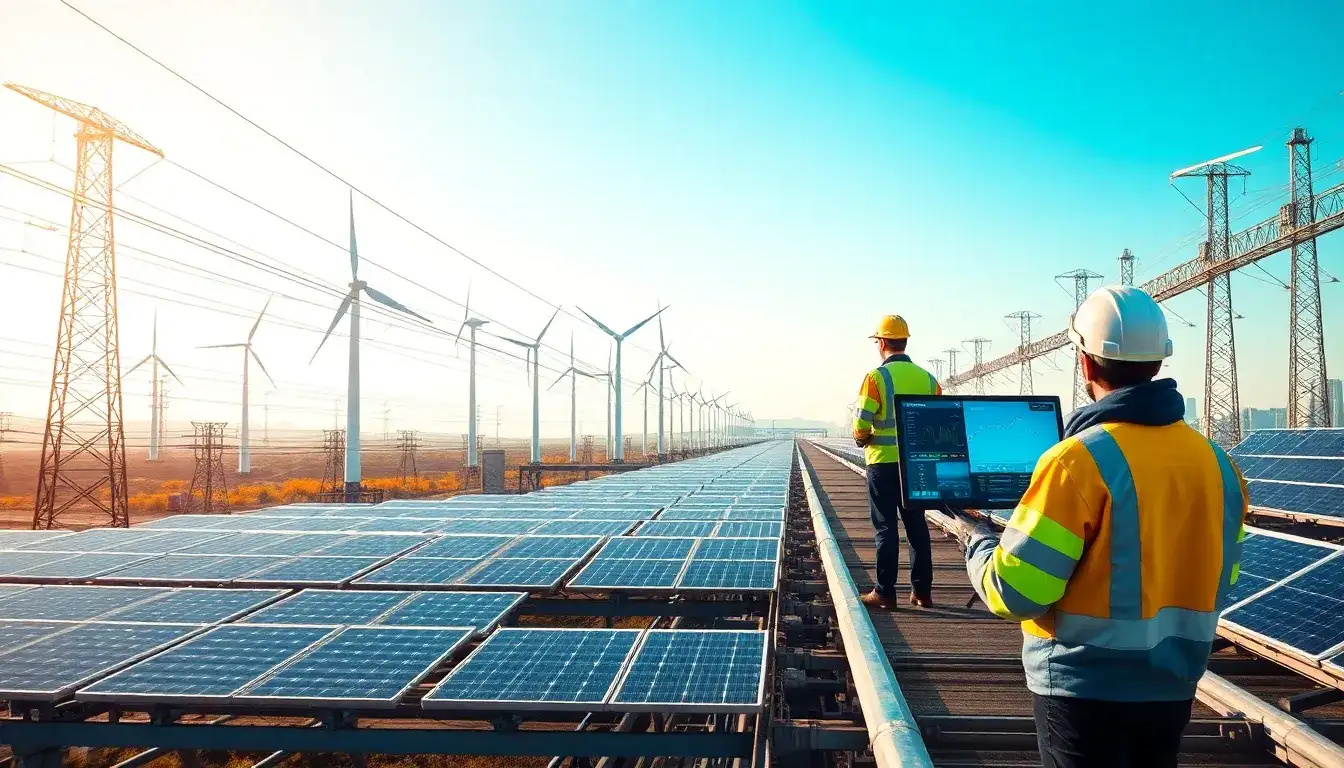
Grid Stability at Risk: Tech Investment Must Catch Up with Renewable Growth
—
It is essential for utilities, network operators, local governments, and other decision-makers in the power sector to evaluate their risks of blackouts and proactively address potential issues with grid reliability through critical infrastructure upgrades.
As global investment in renewable energy sources such as solar and wind continues to rise, so does the risk of power outages. Regions like California and the PJM (Pennsylvania-New Jersey-Maryland) interconnection are already facing significant grid stability challenges due to the high penetration of inverter-based resources and increased load demands. With summer upon us in the U.S. and peak demand for air conditioning, utilities are under pressure to prepare.
The integration of clean energy sources into the electric grid—the world’s largest synchronized machine—is advancing faster than the necessary technological investments required to maintain a reliable and stable grid. With mounting pressure on the grid, it is crucial for utilities, network operators, local governments, and other power decision-makers to assess blackout risks and stay ahead of potential grid reliability problems through critical infrastructure updates.
### The Inertia Challenge
To comprehend the challenges of grid stability, one must consider how power grids function. Traditional power grids rely on large, spinning generators fueled by fossil fuels or nuclear energy, which provide inertia—a physical property that stabilizes the grid by resisting sudden changes in frequency and voltage. Inertia acts like a shock absorber, smoothing out fluctuations and maintaining the delicate balance between supply and demand.
Renewable energy sources lack this inherent inertia. Their outputs fluctuate with weather conditions—the sun does not always shine, and the wind does not always blow—leading to unpredictable power swings that can strain the grid’s stability. Recent incidents, including large-scale blackouts worldwide, underscore this risk. When there is a surge in solar and wind output that overwhelms grid controls, widespread outages can occur. Restarting a grid after such failures—known as a “black start”—is a complex and slow process that requires a carefully sequenced restoration of power, making it difficult for utilities to prepare adequately.
### Investment Lagging Behind Renewables
While substantial funds are being directed towards building new renewable energy capacity, investments in grid management technologies are lagging behind. Utilities and regulators often prioritize visible infrastructure, such as solar panels and wind turbines, while neglecting the equally important but less visible software and hardware systems that are vital for grid stability. This technological gap presents significant risks. Without advanced enterprise grid management software and additional equipment like sensors and meters, operators face challenges in forecasting renewable output, balancing supply and demand, and detecting instability early.
Advanced software applications, such as power flow analysis, can simulate potential grid failures before they occur, allowing for proactive measures that could avert blackouts.
### The High Stakes of Instability
Although blackouts represent the most apparent symptom of grid instability, the repercussions extend far beyond the loss of power. Prolonged outages can cost billions in lost economic productivity—Hurricane Sandy’s power failures alone resulted in approximately $19 billion in losses in New York City—and the disruption of critical services like hospitals and emergency responders can endanger lives. Moreover, persistent grid instability can hinder the energy transition. Utilities may hesitate to approve new renewable projects if grid capacity is uncertain or poorly managed, fearing that the grid may become unreliable.
### Looking Forward: Securing a Reliable Renewable Future
To address the energy reliability challenges, the following strategies are critical:
– **Balanced Generation Mix**: Maintain a strategic combination of renewables and traditional power plants (such as gas and hydro) that provide necessary inertia while leveraging additional technologies for grid stabilization.
– **Digital Technology Investment**: Utilities must invest not only in grid hardware but also in advanced software platforms that offer real-time grid modeling and visibility, forecasting, automated control, scheduling, and optimization. Certain systems can enable utilities to manage and optimize a diverse range of renewable and distributed energy assets based on their capacity and location, aligned with real-time network conditions.
– **Advanced Grid Management Tools**: Integrated software that aggregates sensor data, models scenarios, and guides operations, planning, and engineering functions is essential for anticipating renewable variability. This technology is also necessary for dynamically coordinating supply and demand while planning investments in the appropriate grid assets and locations.
– **Energy Storage and Grid-Forming Inverters**: Battery and inverter technologies that can mimic inertia will complement software solutions to physically stabilize grids with a high proportion of renewables.
– **Regulatory and Funding Alignment**: Policymakers should mandate or incentivize concurrent investments in grid stabilization technology when approving renewable projects, preventing imbalances that create vulnerabilities.
– **Mitigating Interconnection Delays**: Lengthy approval processes and interconnection queues are creating backlogs for clean energy projects. Data and digital technology can help demonstrate a grid project’s value and risk while identifying stable areas of the grid with capacity for additional renewables, thereby reducing delays between interconnection requests and commercial operation.
The transition to renewable energy is vital and inevitable. However, recent blackouts and near-misses serve as warnings that the deployment of renewable energy must be matched by equally sophisticated advancements in grid management technology. By holistically investing in digital tools for grid stabilization alongside physical assets, the industry can avoid instability and blackouts, ensuring a sustainable future powered reliably by clean energy.
The time to act is now. Utilities, governments, and technology providers must work together to build resilient infrastructure and systems that will keep the lights on in the renewable era.
Original article by NenPower, If reposted, please credit the source: https://nenpower.com/blog/bridging-the-gap-ensuring-grid-stability-amid-rapid-renewable-energy-growth/

