

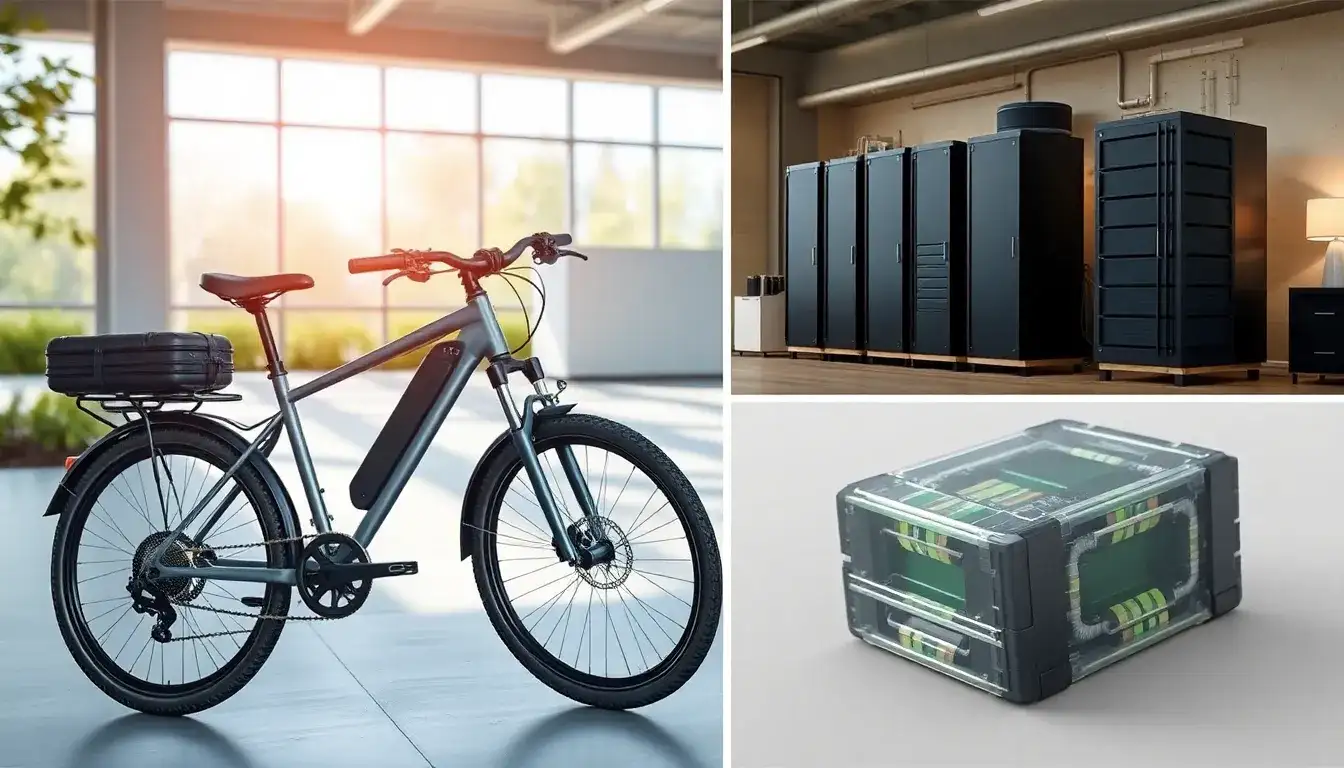
Overview: As the global energy transition and carbon neutrality goals gain momentum, sodium-ion batteries are experiencing unprecedented development opportunities due to their unique resource advantages and technological characteristics. Compared to traditional lithium-ion batteries, sodium-ion batteries offer significant advantages such as abundant raw material reserves (sodium is over 1000 times more abundant than lithium in the Earth’s crust), lower costs (theoretical material costs can decrease by 30%-50%), and enhanced safety (lower risk of thermal runaway).
In recent years, breakthroughs in key technologies related to cathode and anode materials, electrolytes, and others have led to continued improvements in sodium-ion battery performance. The energy density has surpassed 160 Wh/kg, and the cycle life exceeds 3000 cycles, showcasing strong commercial potential in fields such as energy storage, low-speed electric vehicles, and backup power. This article systematically reviews typical application cases of sodium-ion batteries across various sectors, including energy storage, electric two-wheelers, and consumer electronics. Through detailed data and case analysis, it comprehensively demonstrates the technological advancements and market prospects of sodium-ion batteries, providing reference points for technology selection and industry layout in related sectors.
Sodium-Ion Cell Application Cases
According to incomplete statistics from the Battery Trading Network, there are currently six brands that feature sodium-ion cells, primarily focusing on electric two-wheelers or vehicles. These brands include Aima, Bluetti, China Academy of Sciences, Elecom, JAC, and Yadea. The following is a detailed look at the products, listed in alphabetical order by brand.
Aima
On April 2, at the 2024 Gaogong Sodium Battery Industry Summit, Xia Gang, Chairman and General Manager of Zhongna Energy, delivered a keynote speech titled “Product Renewal and Upgrade: Leading the Way in Large-Scale Delivery.” Zhongna Energy, in collaboration with major automotive companies Aima and New Day, introduced new sodium-powered models. The Aima Aiqi and New Day Liyue DQ5 sodium models will simultaneously launch globally in Suzhou, Zhenjiang, Taizhou, and Xuancheng.
The Junna 1 battery features an NFS-A1 soft pack cell with a capacity of 48V 24Ah and a cycle life exceeding 1500 times, operational in a temperature range from -20°C to 55°C. Compared to traditional lead-acid batteries, this product exhibits breakthroughs across multiple dimensions: its cycle life at room temperature can reach over three times that of lead-acid batteries; its low-temperature capacity retention exceeds 85% at -20°C, which is 1.5 times that of lead-acid batteries; it supports 2C fast charging technology, allowing a 90% charge in just 30 minutes, resulting in a fivefold increase in charging efficiency; and its energy density reaches 122 Wh/kg, three times that of lead-acid batteries. Environmentally, the product is free of precious metals such as copper, nickel, and vanadium, and it has passed rigorous safety tests for overcharging, over-discharging, punctures, and more, ensuring no smoke, fire, or explosion during use, showcasing excellent safety and environmental features.
Bluetti
At CES 2022 on January 5, Bluetti, a global leader in solar product manufacturing, launched the world’s first home photovoltaic energy storage product with sodium-ion batteries, the NA300. The new NA300 sodium-ion solar generator is based on the latest sodium battery technology developed by the company, along with a compatible battery pack, the B480. This sodium-ion battery exceeds the safety of lithium-ion batteries, ensuring it will not catch fire or explode under extreme conditions, and offers greater durability and environmental friendliness. The NA300 is designed for a lifespan of 12 years, equipped with Bluetti’s independently designed sodium-ion BMS, which can extend the battery’s lifespan to over 10,000 cycles and allows it to charge and discharge in temperatures as low as -25°C. The NA300 is touted as the fastest charging solar generator, capable of charging from 0 to 80% in 30 minutes, thanks to its 6000W AC+PV dual charging technology and low-resistance connectors that minimize current loss.
China Academy of Sciences
On the occasion of the 90th anniversary of the China Academy of Sciences, the first sodium-ion battery low-speed electric vehicle was demonstrated within the academy’s campus. This vehicle was launched by Zhongke Haina Technology Co., Ltd., which was established based on sodium-ion battery technology from the Academy. Low-speed electric vehicles, often referred to as “national cars,” have significant market demand in third and fourth-tier cities, rural areas, and developing countries. In March 2018, the Ministry of Industry and Information Technology released guidelines that included low-speed electric vehicles as part of the new energy vehicle category, signaling a golden opportunity for market development. Currently, over 90% of low-speed electric vehicles rely on lead-acid batteries, which, while cost-effective, have a lifespan of only 1-2 years and pose environmental pollution issues when disposed of. For long-term development, it is essential to develop battery technologies with better overall performance and environmental friendliness.
Elecom
Elecom has launched the DE-C55L-9000 series power bank with a capacity of 9,000mAh, supporting USB Power Delivery (USB PD) and PPS (Programmable Power Supply) charging technologies. Its USB Type-C port delivers a maximum output of 45W and can automatically adjust voltage and current based on the connected device, making it compatible with smartphones like the iPhone and tablets like the iPad, as well as laptops. As per Elecom’s specifications, this sodium-ion power bank has several unique advantages. Firstly, it uses sodium-ion batteries, which are more environmentally and human-friendly than the rare metals like cobalt and lithium used in traditional power banks. This not only addresses human rights and environmental issues related to metal mining but also helps stabilize the supply chain for sustainable resource utilization while significantly reducing potential impacts on the environment and human health. Secondly, this power bank has excellent environmental adaptability, functioning well in extreme conditions, from hot deserts to cold mountains, with an operating temperature range from -35°C to 50°C. It provides reliable power even in harsh low-temperature environments. In terms of safety, sodium-ion batteries present a lower risk of thermal runaway compared to standard lithium-ion batteries, offering users greater peace of mind. Additionally, this product meets the technical standards of Japan’s Electrical Appliance and Material Safety Law (PSE) and features Thermal Protection, which continuously monitors and controls temperature rises, alongside protection against overcharging, over-discharging, overcurrent, short circuits, and temperature detection, ensuring comprehensive safety. Furthermore, the sodium-ion power bank boasts an exceptionally long life. While typical lithium-ion batteries have a cycle life of about 500 cycles, this product’s sodium-ion battery offers approximately 5,000 cycles, making it ten times more durable and economically beneficial. For instance, a fully charged 9,000mAh power bank can charge an 1,800mAh smartphone approximately 2.9 times or a 3,000mAh smartphone about 1.7 times, meeting daily usage needs.
JAC Group
On January 5, 2024, JAC delivered the world’s first sodium battery vehicle, the Sodium Version of the Flower Fairy, in Anqing, Anhui. This vehicle is equipped with 32140 sodium-ion cylindrical cells supplied by Zhongke Haina, with a battery capacity of 23.2kWh and a CLTC range of 230km, with energy consumption nearing 10kWh per 100km. JAC Yiwei, a new brand established after the restructuring of the Jiangqi Group’s new energy passenger vehicle sector, plays a crucial role in the group’s strategic transformation into new energy. The sodium version of the Flower Fairy uses the 32140 sodium-ion cylindrical cells with a single capacity of 12Ah and energy density of ≥140Wh/kg, employing a technology route of copper-based layered oxides plus hard carbon. The new vehicle also features a honeycomb battery safety structure, with a total battery pack capacity of 23.2kWh, achieving a CLTC range of 230km and energy consumption close to 10kWh per 100km. Additionally, the fast charging performance allows for a SOC from 10% to 80% in just 20 minutes, and from 30% to 80% in only 15 minutes. JAC Yiwei is also planning to launch a sodium version model with a range of 300km later this year to promote the industrialization of sodium batteries and support the popularization of electric vehicles.
Yadea
On March 17, the “Sodium Leading the Future 2023 Yadea-Huayu Sodium Battery Launch Conference” was held in Hangzhou. Yadea Technology Group, in collaboration with its subsidiary Huayu New Energy Technology Company, announced the establishment of a new company focusing on sodium-ion batteries—Huayu Sodium Battery. They unveiled the first generation sodium-ion battery, “Extreme Sodium 1,” along with the corresponding vehicle, Yadea Extreme Sodium S9. The popularity of sodium-ion batteries has been rising, and market applications are beginning to emerge. Due to the characteristics of sodium-ion battery materials, they theoretically offer greater cost advantages and low-temperature performance, making them suitable for various applications such as energy storage, base stations, electric tools, and low-speed electric vehicles/electric bicycles, to complement and replace lithium-ion batteries. At the launch, it was noted that the performance of the Huayu sodium battery meets the demands of the electric two-wheeler market, with the “Extreme Sodium 1” achieving an energy density exceeding 145Wh/kg while maintaining 85% capacity at -40°C. Representatives from Huayu Sodium Battery indicated that the “Extreme Sodium 1” has passed various tests, including puncture and immersion tests, and is awaiting mass production.
As of early 2025, Yadea continued to make strides by launching four sodium battery electric vehicles: the Yadea Guanneng Q50 sodium version priced at 4299 yuan, the Yadea Q1 sodium version at 3299 yuan, the Yadea DE3 sodium version at 3499 yuan, and the Yadea G30lite sodium version at 3699 yuan. All four models are equipped with a 48V 24Ah sodium battery, claiming a range of 120 kilometers. Consequently, entering 2025, the range of electric bicycles easily surpasses 100 kilometers. The sodium battery electric vehicles utilize the Extreme Sodium battery, supporting high-rate charging and discharging from 1.5C to 3C, allowing for rapid recharging. In just 15 minutes, the battery can reach 80% capacity, translating to a range of 100 kilometers. Users need not worry about voltage drops, and an additional advantage is that sodium batteries are compatible with household 220V voltage, making charging easy without the need for special equipment—just the sodium battery charger suffices.
Conclusion
Through a systematic analysis of sodium-ion battery application cases, it is evident that sodium-ion batteries have achieved commercial applications in various fields, showcasing unique advantages. In the energy storage sector, sodium batteries gradually replace lead-acid batteries in large-scale energy storage stations and home energy storage systems due to their low cost and safety features. In the transportation sector, sodium batteries have been successfully implemented in electric two-wheelers and low-speed electric vehicles, effectively addressing the pollution issues associated with lead-acid batteries and the high costs of lithium batteries. In the communication and backup power sectors, the wide temperature range performance of sodium batteries makes them an ideal choice for base station power supply.
Notably, since 2023, leading companies such as CATL and Zhongke Haina have begun mass production of sodium batteries, marking the technology’s entry into a phase of large-scale application. With ongoing optimization of material systems and improvements in manufacturing processes, sodium-ion batteries are expected to achieve breakthroughs in more application scenarios, becoming an important supplementary technology in the energy storage field and providing new solutions for global energy transition.
Original article by NenPower, If reposted, please credit the source: https://nenpower.com/blog/breakthrough-applications-of-sodium-ion-batteries-from-e-bikes-to-energy-storage-solutions/

