

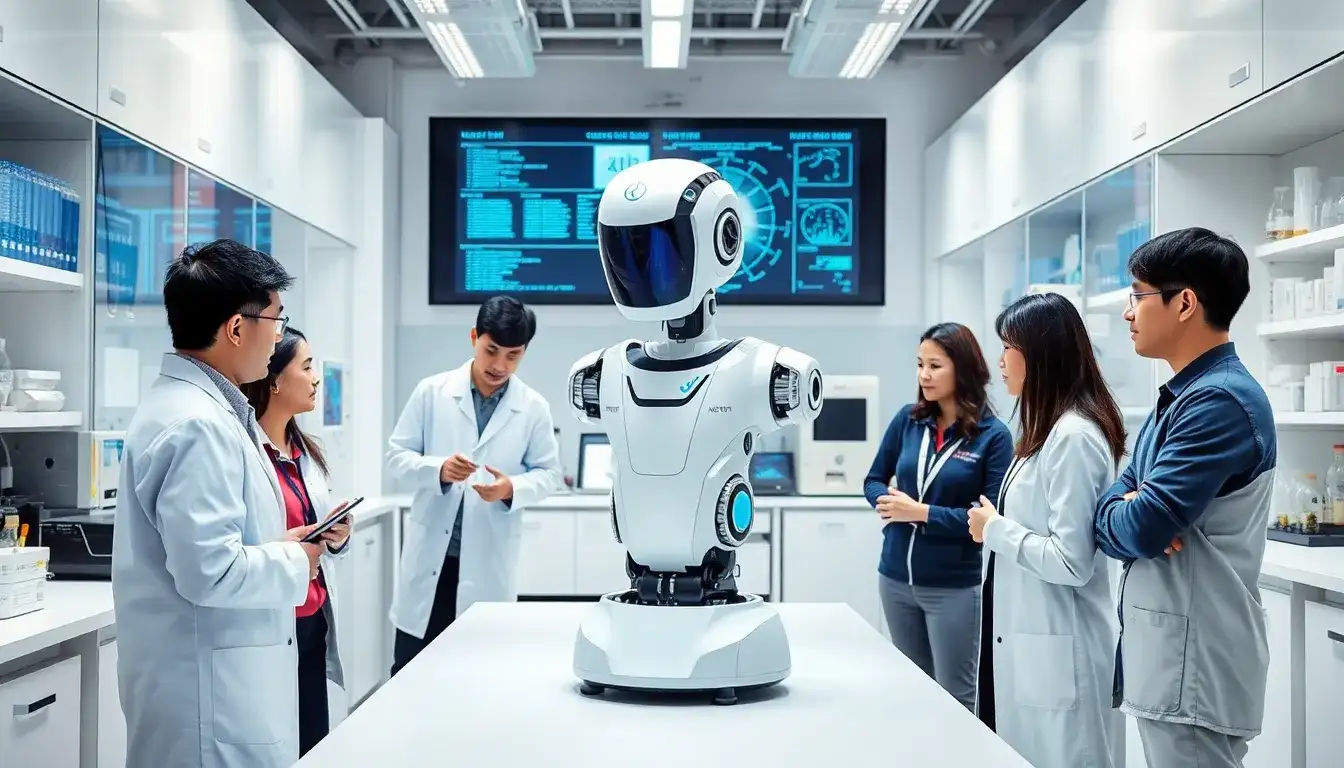
Bing Shuo Biomedical has made a significant contribution to National Tsing Hua University by donating a robot system, reinforcing its commitment to the alma mater and enhancing the development of autonomous medical robots along with industry-academia collaboration.
On March 5, Zhuang Xuecheng, the chairman of Bing Shuo Biomedical, represented the company in a donation ceremony held at the Department of Mechanical Engineering at National Tsing Hua University. The donation consisted of two Stewart Platform robot systems and related data collection and drive module equipment, valued at nearly NT$1.5 million. This contribution aims to support research and the training of high-level engineering talent, showcasing the alumni’s ongoing commitment to giving back to their alma mater and deepening industry-academia collaboration.
The Stewart Platform is a six degrees of freedom parallel mechanism, serving as a critical infrastructure for high-precision positioning control and dynamic compensation technology. It finds extensive applications in aerospace simulation, precision manufacturing, and advanced robotic systems. For surgical robots, its micron-level positioning capability and high stability in dynamic control are essential for ensuring surgical precision and safety.
Zhuang Xuecheng stated, “The development of medical robots not only reflects the competitiveness of the industry but also represents the deep integration of engineering and clinical practice. This donation of the Stewart Platform system is intended to allow students to explore parallel mechanisms and high-precision control technology on a more complete experimental platform, thereby accumulating long-term capabilities for the independent technological development of medical equipment in Taiwan.”
Bing Shuo Biomedical has focused on the development of spine surgery robot technology, aiming to create innovative systems that are highly precise, safe, and meet clinical needs. This donation will also aid in optimizing related control algorithms, dynamic compensation techniques, and research verification of core modules for surgical robots.
Professor Fu Jianzhong from the Department of Mechanical Engineering at National Tsing Hua University emphasized, “The six degrees of freedom parallel mechanism has significant research value in the engineering field. The support from alumni enterprises allows us to further deepen the technological foundations of multi-axis control and precision manufacturing, cultivating students’ abilities in advanced motion control system design. The team will use this platform as a foundational experiment for researching multi-axis precision control and advanced manufacturing, validating performance in stability, repeat positioning accuracy, and dynamic response, while exploring its application potential in precision processes and complex posture control structures.”
As global minimally invasive surgery and robotic-assisted technologies rapidly advance, high-precision positioning and stable control capabilities have become essential competitive advantages. This donation by Bing Shuo Biomedical not only enriches the teaching and research facilities but also demonstrates the company’s commitment to supporting foundational engineering education and forward-looking technology development. In the future, both parties will continue to deepen their exchanges and collaborations in robotic control, system integration, and clinical application technologies, jointly enhancing Taiwan’s international competitiveness in precision machinery and advanced engineering technologies.
Original article by NenPower, If reposted, please credit the source: https://nenpower.com/blog/bing-shuo-biotechnology-donates-robotic-systems-to-tsinghua-university-strengthening-medical-robotics-research-and-industry-academia-collaboration/

