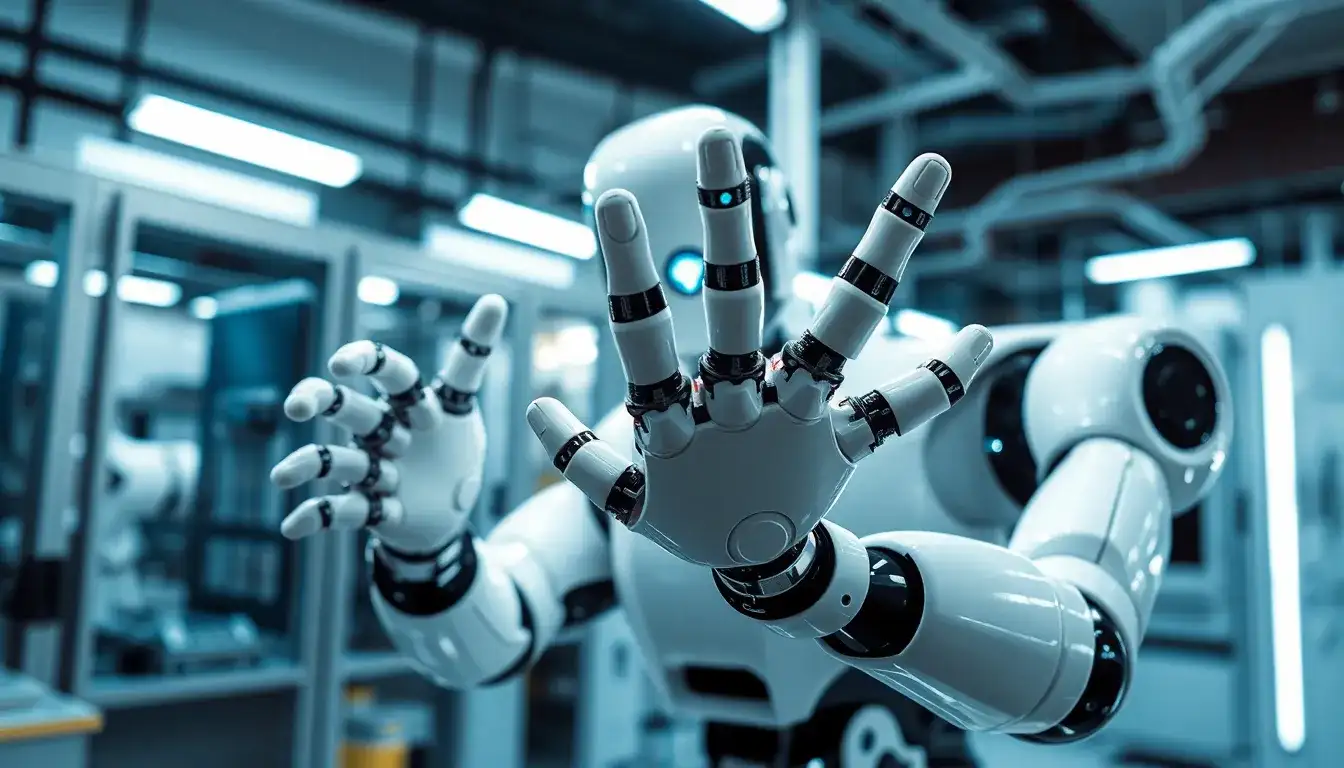
Unicorns worth billions are making a significant move in the humanoid robot sector.
Core Insight: The technology pathways in the field of dexterous hands are still developing. The first company to achieve large-scale delivery will secure a key position in the ecosystem of robotic “hands.”
Hands are the most intricate part of the human body, comprising 54 bones that make up a quarter of the total skeletal structure. However, as humanoid robots strive to replicate this dexterity, the “hand” remains one of the most challenging barriers to overcome. Even Tesla has stumbled in this area. The production plan for Optimus has faced several delays; in the third quarter of 2025, Elon Musk confirmed that the design finalization of the third-generation product would be postponed to the first quarter of 2026. The culprit behind this delay is the hand. According to The Information, during training for package sorting, the lifespan of the dexterous hands is only six weeks, with a single unit costing over $6,000. The short lifespan, high cost, and limited freedom of motion have rendered numerous “strong-bodied” humanoid robots as mere “half-finished products” that cannot perform tasks. This, in turn, has made the dexterous hand a crucial lever for advancing embodied intelligence in the industry.
In February of this year, a domestic company named “Lingxin Qiaoshou” completed a Series B financing round totaling 1.5 billion yuan, achieving a valuation exceeding 10 billion yuan, making it the highest-valued company in the dexterous hand sector. The interest from investors in Lingxin Qiaoshou reflects a broader bet on which company can transition dexterous hands from “custom lab solutions” to standard industrial products. Whether Lingxin Qiaoshou can emerge as a true “invisible champion” will depend on its ability to meet delivery targets in 2026 and whether the humanoid robot industry can scale as expected.
1. Capital Interest in “A Pair of Hands”
The dexterous hand market is becoming a crowded niche within the embodied intelligence supply chain. According to incomplete statistics from Xinchacha, there are currently over 80 companies globally engaged in the research and development of dexterous hands, with more than half based in China. The players in this sector can generally be categorized into three types: independent integrators focused on dexterous hand development, such as Lingxin Qiaoshou and Lingqiao Intelligent; companies manufacturing humanoid robots, such as Tesla; and manufacturers extending from core components to downstream applications, like Pashini Perception.
Investors are backing this sector with real capital. In February 2026, Lingxin Qiaoshou, a leading player in the dexterous hand market, completed a Series B funding round just seven months after its previous round, achieving a tenfold increase in valuation. The founder, Zhou Yong, is a graduate of Huazhong University of Science and Technology. Before establishing Lingxin Qiaoshou, he ventured into entrepreneurship twice, first in gaming and community services, and then in smart outdoor unmanned vehicles. His motivation for engaging in cutting-edge technology stems from childhood dreams inspired by the character Doraemon, who could pull out any tool from a magical pocket, leading Zhou to aspire to recreate the human ability to create through machines—specifically, the hand.
Lingxin Qiaoshou’s preliminary preparations began in 2019, and by 2023, it had become an independent company, launching its first-generation Linker Hand product the following year, along with durable (T10, T20), high-end (Ultra), and entry-level (O7) variants in early 2025, while also seeking financing to support mass production. In addition to Zhou Yong, the founding team includes Chief AI Architect Su Yang, Market Head Zhang Yanbai, former Senior Vice President of ZhiPu Zhou Jiaping, and Product Designer Jia Xiaoyu, who is part of the younger generation born in the 2000s and has previously chaired a tech development company that was an early investor in Lingxin Qiaoshou. Jia’s contributions in the dexterous hand field have earned him a spot on the Forbes 30 Under 30 list in 2025.
Since April 2025, Lingxin Qiaoshou has completed a total of six funding rounds, raising a cumulative sum of several billion yuan. Investment firms include Sequoia, Ant Group, and Zhejiang Innovation Investment. What attracts these institutions is not only the potential of the humanoid robot industry but also the critical role of hands in the overall functioning of these robots. The dexterous hand serves as the robot’s end effector, and its condition directly influences the effectiveness of the robot’s services.
2. Breaking Through Mass Production
As reported by Baobian, Lingxin Qiaoshou is currently processing orders of around 1,000 units per month, primarily supplying universities, manufacturers, and factories. The company employs approximately 300 to 400 staff members, with hundreds focused on various aspects of the dexterous hand. However, the technology is currently not converging on a single optimal path and is instead displaying a parallel approach of tendon-driven, direct-driven, and link-driven mechanisms. Tendon-driven systems offer excellent flexibility and compact structure but can experience “creep” over time, leading to a decline in control precision. Direct-driven systems provide high precision and rigidity but are limited by their size and heat dissipation issues. Link-driven systems are cost-effective and rigid but lack flexibility, making them challenging for complex grasping scenarios.
Unlike other manufacturers, Lingxin Qiaoshou is investing resources across all technological possibilities, adopting a “no betting, all in” strategy that covers all existing technological routes. This strategy is clearly reflected in their product matrix: the Linker Hand L20 uses a link-driven system and is aimed at scientific research and industrial precision assembly; L30 utilizes a tendon-driven system; and L6 employs a direct-driven solution for high-load industrial applications. The rationale behind this approach is that regardless of where technology converges, Lingxin Qiaoshou will not fall behind. However, this also means a dispersion of research resources. If the technology routes do not converge over the long term, this multi-path layout may face pressures from technological iterations and capacity integration. Even if a convergence occurs, Lingxin Qiaoshou may struggle to significantly outpace competitors due to the resources spent on alternative routes.
This comprehensive coverage of technological pathways has resulted in a diverse array of products, with Lingxin Qiaoshou currently offering seven series and over ten models, with prices ranging from 3,999 yuan to 100,000 yuan. The entry-level series includes the O6, released in August 2025, priced at 6,666 yuan with a link-driven system and six degrees of freedom, making it the world’s lightest at 370g, and the O7, priced at 8,800 yuan, with seven degrees of freedom. The primary industrial series includes L6 (19,900 yuan, six degrees of freedom, link-driven), L20 (49,900 yuan, link-driven, 20 degrees of freedom), and L30 (100,000 yuan, tendon-driven, 25 degrees of freedom). Regardless of how technology converges, the final form of the mechanical hand must be at least as flexible as a human hand. A study published in Nature Communications in January 2025 by the University of Science and Technology of China indicates that the human hand possesses 23 degrees of freedom (24-27 if wrist motion is included). Currently, companies that have achieved this level of freedom in dexterous hands include Lingxin Qiaoshou, Tesla, Shadow Robot, Yihai Yuanshi, Lingqiao Intelligent, and Starry Lightyear. Among these companies, Lingxin Qiaoshou has successfully entered mass production, with its best-selling model being the entry-level O6 series. This dexterous hand is priced around 6,666 yuan, while the O6 lite is priced at just 3,999 yuan, significantly lower than Tesla’s dexterous hand.
The ability of Lingxin Qiaoshou to lower the price of dexterous hands stems primarily from China’s extremely low industrial production costs. Su Yang mentioned in a media interview, “Compared to Europe and the US, the costs of industrial components in the Yangtze River Delta and Pearl River Delta are very low. Many people are unaware that even around Beijing, costs are also quite affordable.” Another contributing factor is self-research. Lingxin Qiaoshou’s core components, including motors, reducers, electric cylinders, and sensors, are 100% developed in-house. They have replaced traditional metal reducers with engineering plastics, reducing weight by 30%-40% and material costs from hundreds of yuan to just a few dozen yuan. Achieving mass production first also means gaining a data advantage. As the “only company in the world producing over a thousand high-degree-of-freedom dexterous hands monthly,” Lingxin Qiaoshou can acquire a substantial amount of training data earlier, which is a vital “fuel” for the development of robotic intelligence.
3. Is the “Ceiling” of Dexterous Hands in Others’ Hands?
Lingxin Qiaoshou is ahead in the race, but the path forward is not without challenges. The dexterous hand market faces a fundamental paradox: as the “hand” of the robot, its potential is not only determined by its own dexterity but also by the number of complete humanoid robots produced. If humanoid robots do not generate significant commercial value in the foreseeable future, dexterous hands will only be left to “wish for a better future.” In 2026, Lingxin Qiaoshou has set a delivery target of 50,000 to 100,000 units. This, to some extent, is a gamble on the industry achieving expected growth.
Furthermore, training the hands cannot be done in isolation; operational data from real machines must include tactile feedback and force control information, which can only be collected through the coordinated operation of the body, arms, and hands. Academician Yao Qizhi pointed out at the 2025 Global Developer Pioneer Conference that “the current capabilities of robots in motion and operation remain separate systems. In the future, we need to unify full-body control with fine hand operation planning to support multi-step general skills.” As a component supplier, Lingxin Qiaoshou cannot control the overall motion of the robots (the cerebellum) and faces high costs in directly collecting data from various scenarios, making it objectively constrained by the maturity of the humanoid robot ecosystem.
However, the reality is that there is an extremely limited number of humanoid robots globally, and the cost of collecting real machine data can reach 20 yuan per entry. Even if hundreds of robots are deployed, the daily output may only reach 80,000 to 100,000 entries. Moreover, the real-life environments that robots will face in the future will only become more complex. Data collected through remote manipulation in laboratories often proves ineffective in real scenarios. Currently, Lingxin Qiaoshou is attempting to tackle this issue through the Open TeleDex remote operation system and the LinkerSkillNet multimodal data collection system, but the disconnect between the “hand” and the “brain” remains a significant hurdle for the entire industry. Xiaopeng Motors’ CEO He Xiaopeng has candidly stated that the current stage of humanoid robot development is only equivalent to the initial L2 stage of autonomous driving, and it still needs to overcome “tens of times the capability and difficulty threshold” to reach the commercially viable L3 stage. Before crossing this threshold, Lingxin Qiaoshou must continue this costly venture.
Original article by NenPower, If reposted, please credit the source: https://nenpower.com/blog/billion-dollar-unicorn-ventures-into-humanoid-robotics-with-innovative-dexterous-hands/