Beijing Observation: The Meta Acquisition Faces Obstacles! The Founder of “China’s Version of DeepSeek” is Shockingly Reported to be Under Travel Restrictions, Revealing Beijing’s Strategy of “Locking Talent at the Top and Nurturing New Blood.”
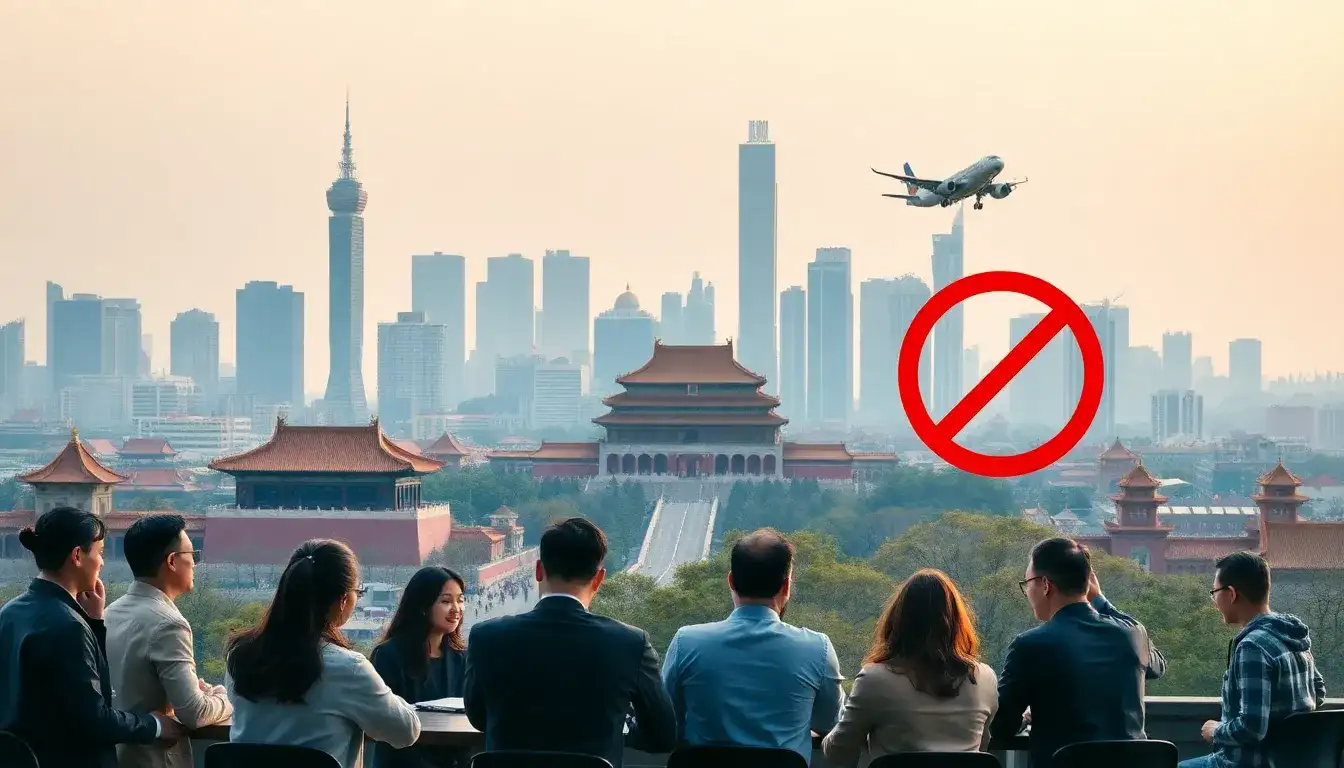
As Meta, the parent company of Facebook, prepared to acquire the Chinese AI rising star Manus for an astounding $2 billion, Beijing intervened unexpectedly. The two co-founders of Manus—CEO Xiao Hong and Chief Scientist Ji Yichao—were summoned by the National Development and Reform Commission (NDRC) and subsequently faced travel restrictions. While they can move freely within China, they are barred from leaving the country.
Simultaneously, a shocking recruitment announcement from Beijing’s private equity firm “Zhi Yu Zhi Shan Investment” surfaced in the financial circles: applicants can be as young as 18 years old with only a high school education, as long as they are knowledgeable about AI and can provide usage experiences and representative cases.
This simultaneous strategy of “locking talent” and “attracting new blood” starkly illustrates China’s AI talent strategy: top talent is not allowed to leave, while new, lower-level talent is encouraged to join as early as possible.
Manus’ Journey from Singapore to Beijing’s Restrictions: $2 Billion Deal Crosses the Red Line
Manus’s story is filled with dramatic twists. Xiao Hong, a graduate of Huazhong University of Science and Technology in 2015, founded Nightingale Technology, which attracted investments from Tencent and ZhenFund. Ji Yichao, a child prodigy, developed the Mammoth browser at the age of 18 and appeared on the cover of Forbes China at 19. In 2022, through connections made by ZhenFund’s Xu Xiaoping, they co-founded Manus, focusing on general AI agent technology—digital employees that can independently break down tasks, call tools, and complete complex work with minimal prompts.
After launching their product in March 2025, Manus was quickly recognized as a phenomenal breakthrough in China’s AI agent field, achieving an annual recurring revenue (ARR) surpassing $125 million in a short time. In December of last year, Meta announced its intention to acquire the company, which had relocated its headquarters to Singapore, at a valuation of approximately $2 to $3 billion, aiming to integrate its technology into products like Meta’s AI assistant. This acquisition was seen as a significant move for Meta in the agentic AI domain.
However, in March of this year, after being interviewed by the NDRC, Xiao Hong and Ji Yichao were informed post-meeting of their travel ban due to regulatory review. The investigation by the NDRC focuses on whether domestic entities have violated foreign direct investment regulations, technology export controls, and compliance regarding capital flow. The Ministry of Commerce and the NDRC are collaborating to review the transaction. A Meta spokesperson stated, “The transaction complies with applicable laws,” and Manus is actively seeking legal and advisory assistance.
The U.S. House of Representatives’ Select Committee on Strategic Competition between the U.S. and China also issued a statement emphasizing that “there are no truly private tech companies in China,” highlighting the Chinese Communist Party’s ability to maintain control through regulatory scrutiny, ownership structures, and direct intervention. Zhang, a company executive developing AI applications for government public sentiment in Beijing, noted that this intervention is unusual, using “people” as leverage to interfere with cross-border mergers and acquisitions, expressing core concerns not about money but about the potential outflow of cutting-edge capabilities like AI agents. If integrated deeply into Meta, this could accelerate the U.S.’s lead in the field of general intelligence.
However, the actions of the NDRC have been humorously referred to as “entrapment-style interviews,” raising speculation about the potential outcomes: the transaction might fall through, the founders may have to relinquish some technology licenses, or they could be forced to conduct a technology split.
Zhi Yu Zhi Shan’s Bombshell Recruitment: High School Graduates Can Apply, AI Skills Are More Important Than Education
In stark contrast to the founders of Manus being “locked up,” the private equity firm “Zhi Yu Zhi Shan Investment” has opened the floodgates for talent. The company recently published a long-term recruitment announcement via its official WeChat account, clearly stating that positions across all chains, including Chief AI Officer, research and operations, risk control, and marketing, are available to candidates born in 2008 or later who are at least 18 years old, regardless of traditional educational and age criteria. The core evaluation focuses on providing detailed AI usage experiences, records, and representative cases, with candidates needing to have their resumes initially assessed by AI.
The company’s general manager, He Li, stated in a media interview that the intention behind this initiative is to scout “genius youth” from elite schools and high schools, believing that “in the AI era, ability outweighs academic credentials.” Upon joining, each individual receives at least ¥50,000 annually for AI tools, with positions in research and operations offering a token budget equivalent to 50% of the base salary, aiming to achieve “token freedom.” The initial version of the recruitment announcement had stated 16 years and above, but after controversy, it was adjusted to 18, with He Li emphasizing concerns about the psychological maturity of younger candidates, noting that the youngest team member was born in 2005.
In the rapidly evolving AI landscape, traditional master’s and doctoral degrees from renowned institutions are becoming insufficient; what is truly scarce are those who have grown up immersed in models like Claude and DeepSeek—what some call “native AI inhabitants.” A 17-year-old high school student from Shenzhen, Chen Guangyu, gained recognition as a co-first author for solving a challenging problem in AI large models and received praise from Elon Musk, making him a living advertisement for this “youth talent hunt.” Many institutions have begun to lay out plans for AI quant, algorithms, and other positions, extending the talent war from elite universities to high schools.
The Parallel of “Locking Talent” and “Attracting New Blood”: The Real Dilemma of Beijing’s AI Strategy
These two seemingly contradictory events actually reflect the same underlying logic. The Manus case highlights Beijing’s stringent control over “existing top talent and technology.” Even though the company relocated its headquarters to Singapore and attempted to “de-China” itself, the core founders and technology are still viewed as strategic national assets that cannot easily flow out. The travel ban sends a clear message: capabilities defined as the next generation of productivity, such as AI agents, must not fall into American hands. In contrast, the recruitment drive at “Zhi Yu Zhi Shan” represents a proactive hunt for “incremental new blood.” In the AI era, where model updates are rapid, the real scarcity lies with young individuals who possess innate sensitivity to AI and practical capabilities. By moving the recruitment timeline to 18 years old, the goal is not only to lower costs but to secure talent at the source, avoiding future occurrences of “Manus-style departures.” This approach of “locking the high-end and nurturing the low-end” reflects China’s anxiety in the context of new productive forces and geopolitical competition: building high walls for technology export and personnel outflow while accelerating the accumulation of high-tech talent through immigration systems and early cultivation.
Taiwan as a Mirror in the US-China AI Talent War
The two founders of Manus—a veteran entrepreneur and a young genius—remind us that AI competition has extended beyond hardware to the deep integration of “people and models.” Beijing’s efforts to prevent outflow while poaching from high schools underscore its determination and the pressure for AI autonomy. Taiwan, with its world-class semiconductor talent and hardware ecosystem, has the potential to leverage the AI agent wave to accelerate the dual drive of talent and tools, possibly carving out a third path in the midst of the US-China competition. Otherwise, as Chinese private equity firms begin to recruit AI natives from high schools, and the top founders face challenges even leaving the country, the next stage in the global AI landscape is uncertain. Who will lead?
Original article by NenPower, If reposted, please credit the source: https://nenpower.com/blog/beijings-talent-strategy-metas-acquisition-blocked-as-founder-of-chinas-deepseek-faces-travel-restrictions/