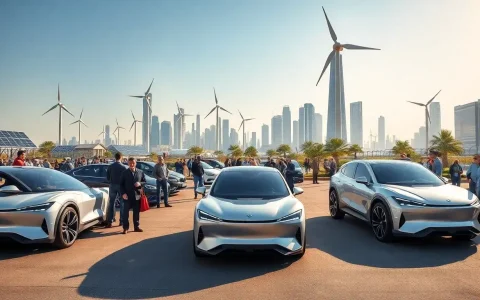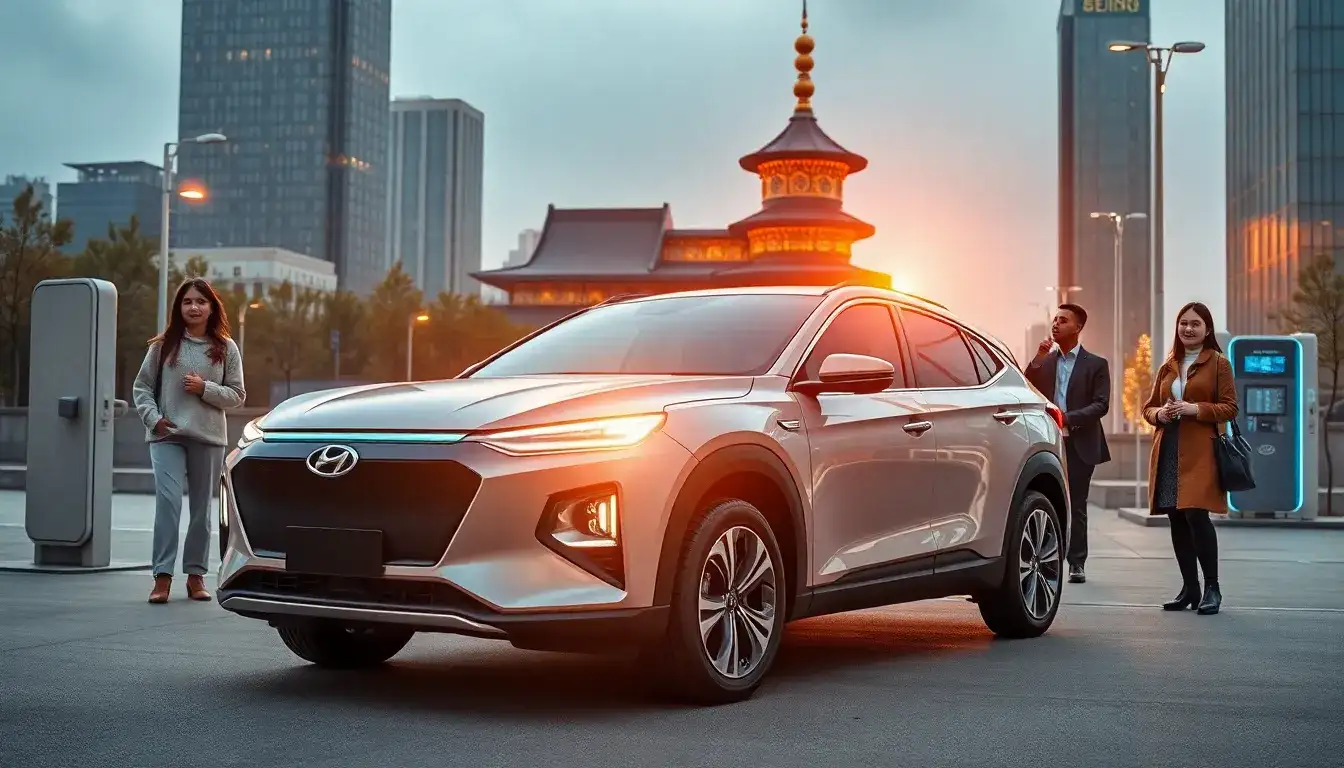
Beijing Hyundai is making significant strides in the new energy vehicle market without boasting about being “far ahead.” With a serious commitment to the Chinese market, both shareholders have invested 8 billion RMB, focusing on localization, smart electric transformation, and expanding overseas markets. The new strategy emphasizes “in China, for China, and towards the world.”
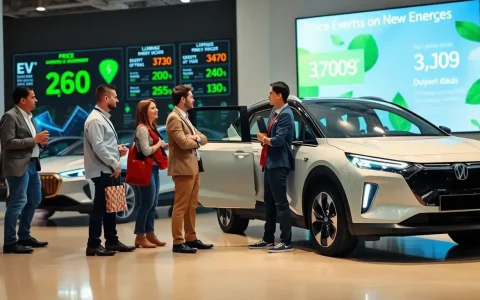
At the “Beijing Hyundai Brand Strategy Communication Conference and Global Debut of the First Pure Electric Platform SUV,” held at Shanghai’s Studio 88 Space, the company showcased its determination to create quality electric vehicles. The pure electric platform SUV, ELEXIO, is a product crafted over five years, representing Beijing Hyundai’s latest advancements in electrification and intelligence.
For decades, Hyundai has been committed to technological innovation and market expansion, aiming to achieve the long-held dream of “urban air mobility.” At CES 2020, Hyundai unveiled its vision for future urban mobility, striving to create vibrant, people-centered cities. The rapid urbanization worldwide has led to significant declines in transportation efficiency and increased social costs related to logistics. In response, Hyundai proposed solutions centered around urban air mobility, personalized vehicle models, and central hubs.
In the future, Hyundai plans to merge the virtual and physical worlds, developing various new robotic technologies that promise to transform human life and mobility. Their ultimate goal is to enable unrestricted movement and rapid advancement for humanity. In 2021, Hyundai established an independent Urban Air Mobility (UAM) company named Supernal, which aims to offer a new mobility experience through advanced air mobility (AAM) and drive societal change.
Hyundai’s AAM division, Supernal, has introduced the concept of its electric vertical take-off and landing (eVTOL) aircraft, S-A2. This aircraft aims to commercialize safe, efficient, and affordable daily passenger air travel, marking a significant milestone for Supernal as it prepares to achieve commercial aviation safety standards and plans to enter the market by 2028.
Hyundai is also innovating beyond traditional transportation, introducing the “Mobility of Things (MoT)” concept. This initiative leverages core robotic technologies to create a new PnD (Plug & Drive) modular platform, enabling mobility for all objects and connecting the metaverse with the real world. Boston Dynamics is heavily involved in developing flexible, highly mobile robots, enhancing workplace safety and efficiency while positively impacting social development.
Hyundai is applying robotic technology across its existing projects to create synergies. The shared foundational technologies among robots, autonomous vehicles, urban air mobility, and personalized vehicle models enhance Hyundai’s long-term potential. The company’s robotic advancements aim to surprise and enrich everyday life while also preparing for future innovations.
Hyundai is a strong advocate for hydrogen energy development, constantly optimizing its goals and policies to lead the charge towards a clean society globally. Driven by the vision of “Progress for Humanity,” Hyundai is committed to advancing technology while creating core values that promote human development.
The NEXO, Hyundai’s hydrogen fuel cell vehicle, represents the cutting edge of hydrogen technology in the automotive sector. With zero emissions, high efficiency, and eco-friendly features, the NEXO is an ideal choice for future mobility. On April 3, 2025, Hyundai launched the second generation NEXO, marking another milestone in hydrogen society development. This updated model achieves rapid refueling in five minutes and boasts a driving range exceeding 700 kilometers. Its innovative exterior design, termed “Art of Steel,” and upgraded comfort features, give it a competitive edge in the mid-size SUV segment.
In 2012, Hyundai, in collaboration with Motional, launched the world’s first RoboTaxi based on its exclusive electric vehicle model, Ioniq 5. Together with the U.S. autonomous driving technology company Aptiv, they developed this robot taxi, applying their joint autonomous driving technology to the vehicle. By 2025, Hyundai announced a partnership with Yandex, a Russian tech giant, to develop an autonomous ride-hailing service, planning to deploy 100 Ioniq 5 SUVs equipped with autonomous driving technology this year.
Original article by NenPower, If reposted, please credit the source: https://nenpower.com/blog/beijing-hyundais-strategic-comeback-in-the-new-energy-vehicle-market/