

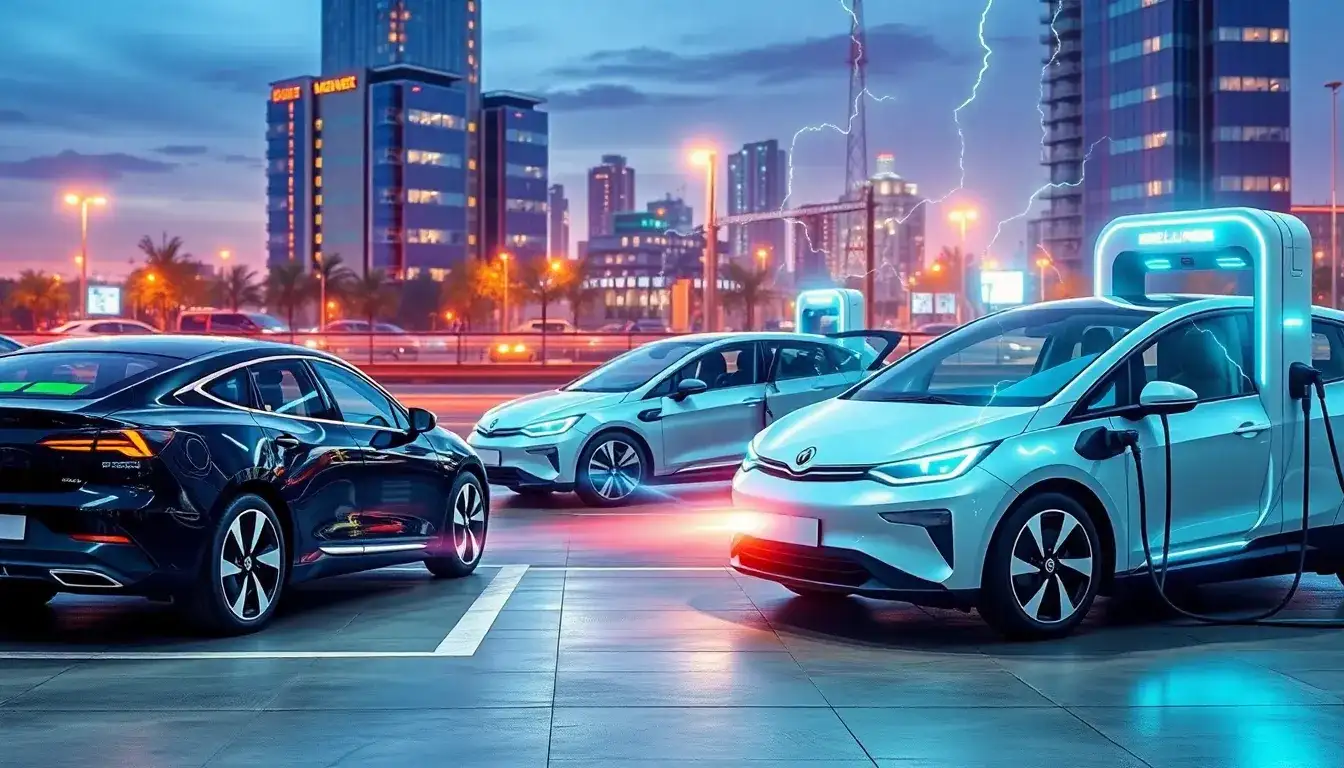
The new energy vehicle industry is currently engaged in a competition over charging solutions, featuring technologies such as BYD’s fast charging and the battery swapping alliance between NIO and CATL.
Wang Chuanfu, chairman and president of BYD, announced that the Han L model equipped with fast-charging batteries can achieve a range of 400 kilometers with just 5 minutes of charging.
However, Luo Lei, vice president of the China Automobile Dealers Association, cautioned that achieving widespread fast charging will require time, as new technologies need supporting infrastructure and a process for widespread adoption.
Currently, less than 5% of charging stations in China provide charging power exceeding 150kW, and infrastructure providers like the State Grid are unlikely to lead the large-scale deployment of supercharging technology.
Experts believe that while the charging time for new energy vehicles should ideally approach that of traditional fuel vehicles, the focus should primarily be on safety rather than merely minimizing charging duration.
In the era of fuel vehicles, refueling a small car took only about 5 minutes. Now, with the emergence of new technologies in electric vehicles, the goal is to achieve “charging in 5 minutes for a range of 400 kilometers.” The competition has intensified, with various automakers promoting their rapid charging capabilities. The question remains: who can truly deliver on the promise of “charging for 5 minutes to gain 400 kilometers of range”?
As Luo Lei mentioned, owning a new energy vehicle necessitates charging, making the importance of efficient refueling clear. The challenge lies in the lengthy charging times, which is a significant drawback for electric vehicles. “Fast refueling allows new energy vehicles to travel further. Meeting the range demands of owners in the shortest time and enhancing post-sale services are vital for companies seeking growth in this competitive landscape,” he stated.
Recently, BYD made a significant announcement in the electric vehicle refueling market: with a 5-minute fast charge, drivers can travel 400 kilometers. Wang Chuanfu revealed that the Han L model, featuring fast-charging batteries, could achieve this impressive range. In the past, refueling a traditional vehicle took about 5 to 8 minutes; now, electric vehicles can reach the same charging times for similar ranges.
According to BYD, this new fast-charging technology has already been implemented in their mass-produced models, the flagship Han L and Tang L, making them among the first globally to feature a “full-domain kilovolt high-voltage architecture” in mass-produced passenger cars. However, Luo Lei also highlighted that fully realizing rapid charging will require time, as new technologies must be supported by adequate infrastructure, which also needs to be developed.
For instance, every major breakthrough in fast-charging technology imposes new requirements on the power grid, and widespread adoption necessitates initial investment, requiring either upgrades or additions to existing public charging facilities.
Automotive industry analyst Zhong Shi noted that while BYD’s newly released megawatt fast charging technology has made significant advancements in specifications, the associated investment costs have also increased, posing similar financial challenges to those faced by the battery swapping model in the past.
Researcher Zhang Xiang from the Automotive Industry Innovation Research Center at Beifang University shared that ultra-fast charging technology primarily serves as a demonstration of advanced technical capabilities for automakers, while operators remain cautious in their deployment strategies. He also provided data indicating that less than 5% of charging stations in China currently exceed 150kW in charging power.
Zhang emphasized that the State Grid and other infrastructure entities are unlikely to lead the large-scale rollout of supercharging technology. Instead, innovative automakers will likely test the waters first by expanding slow charging networks and establishing fast charging stations in select areas. Only when market saturation reaches a critical point and user acceptance achieves a scale effect will operators and other automakers follow suit, adhering to a gradual development model that avoids resource waste and aligns with commercial evolution principles.
However, Zhong also remarked that while it’s appropriate for charging times of new energy vehicles to align more closely with those of fuel vehicles, there should not be an excessive emphasis on achieving the shortest possible duration. “Safety must always be the top priority; overly focusing on a single metric may compromise the most critical aspect—vehicle safety,” he advised.
The competition in refueling technology has begun. When discussing refueling for new energy vehicles, it’s essential to mention another technological approach: battery swapping. Since the rise of new energy vehicles, two main refueling strategies have emerged: one based on charging, which tends to require lower investment and is easier to deploy but has longer charging times; the other is battery swapping, which reduces refueling time but involves significant investment and is challenging to scale.
Luo Lei explained that the charging strategy focuses on using new technology to enable high currents to meet vehicle range requirements in a short time, while battery swapping involves exchanging a vehicle’s depleted battery for a fully charged one at swapping stations. These are fundamentally different service models, and he believes that “the synergistic development of charging and battery swapping is essential to alleviate congestion and provide quality refueling services for vehicle owners.”
On the same day BYD announced its new technology, another significant development in battery swapping came as NIO signed a strategic cooperation agreement with CATL. The collaboration aims to create a battery swapping network covering the entire range of passenger vehicles, standardize industry technologies, deepen capital and business cooperation, and establish the world’s largest and most advanced battery swapping service network. Plans include the construction of 100 green energy battery swapping stations.
It’s important to note that the race in the refueling sector is not limited to BYD and NIO. Since Tesla began deploying supercharging stations nationwide, companies like Xpeng and Li Auto have also been developing their own ultra-fast charging networks. As of March 30, 2025, Xpeng operated over 2,110 self-owned charging stations across more than 420 cities. Meanwhile, as of March 11, Li Auto had launched a total of 1,900 supercharging stations, covering 214 cities and establishing over 10,000 charging piles nationwide.
In the foreseeable future, new technologies continue to emerge. For instance, Zeekr recently announced that it will unveil and implement fully liquid-cooled charging stations and megawatt ultra-fast charging stations at the Shanghai Auto Show at the end of April.
Original article by NenPower, If reposted, please credit the source: https://nenpower.com/blog/battle-for-fast-charging-in-the-new-energy-vehicle-market-who-can-truly-achieve-400-kilometers-in-just-5-minutes/

