

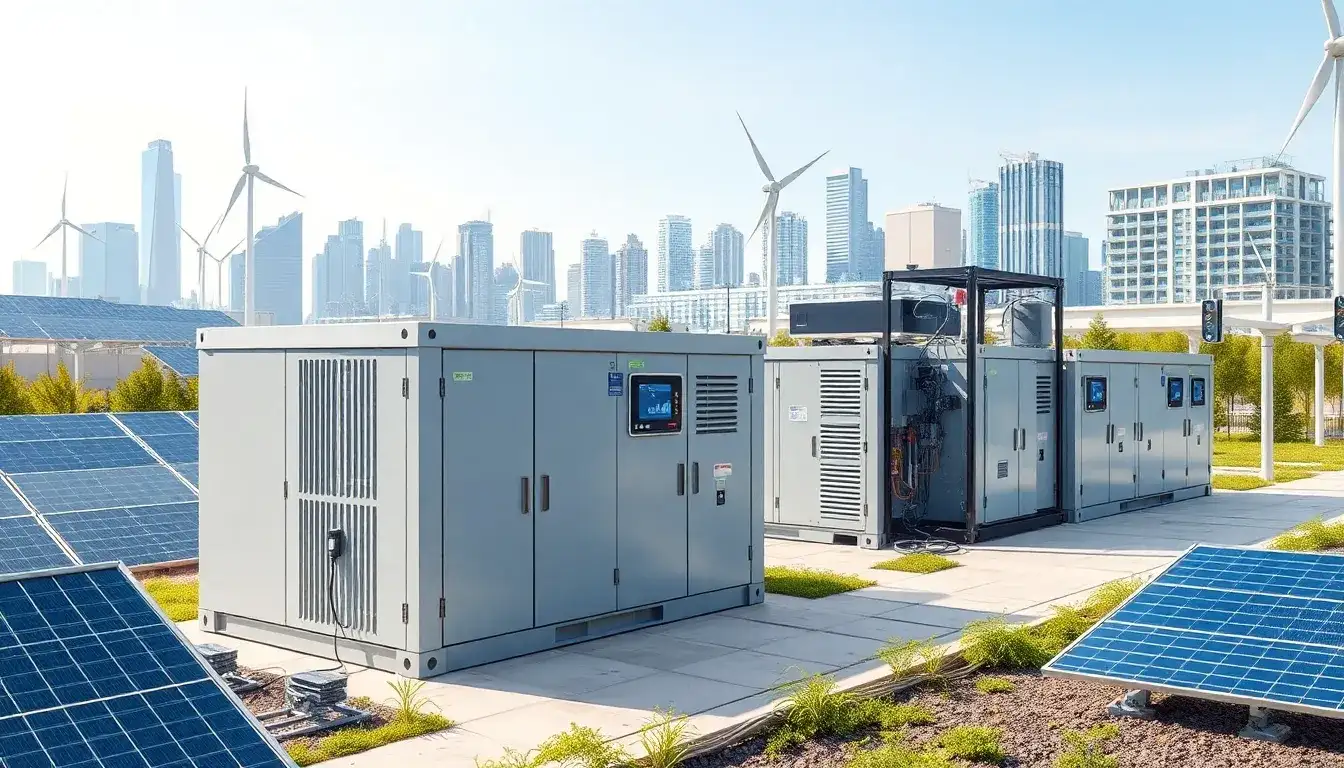
How Battery Energy Storage Systems Are Solving the Grid’s Biggest Problem
It is a common misconception that the electricity grid functions like a vast reservoir, storing energy to deliver on demand. In reality, it operates as a delicate balancing act where electricity generation must constantly align with consumption. This system has been effective for a century, but its lack of storage capacity poses a significant vulnerability, particularly as we shift towards intermittent renewable energy sources. This is where Battery Energy Storage Systems (BESS) come into play. These systems are not just large-scale consumer batteries; they are advanced, utility-scale power assets designed to tackle the core challenges facing the grid. For engineers, they represent a cutting-edge frontier in power management, while for investors, they offer a rapidly expanding market with considerable commercial potential.
### Addressing Grid Challenges
So, what functions do these large-scale batteries serve? Their applications are varied and tackle some of the most urgent issues in the energy sector:
– **Renewable Energy Integration**: BESS can store surplus energy generated by solar and wind farms during peak production periods and release it when sunlight is absent or winds are calm. This capability turns intermittent renewable energy sources into reliable, dispatchable power.
– **Grid Stabilization**: These systems can react within milliseconds to fluctuations in supply and demand, providing frequency regulation and other essential services that support grid stability. This capability diminishes reliance on fossil fuel “peaker” plants and enhances overall grid resilience.
– **Backup Power and Peak Shaving**: For industrial facilities, BESS can function as a substantial Uninterruptible Power Supply (UPS), ensuring that critical operations remain uninterrupted. Additionally, they facilitate “peak shaving,” allowing facilities to draw power from their batteries during periods of high energy prices, significantly lowering electricity costs.
### Market Dynamics and Key Players
The BESS market is a vibrant hub of innovation, featuring both established industrial giants and agile startups competing for market share. For instance, ABB, a leader in automation and electrification, has introduced a “BESS-as-a-Service” model, which lowers entry barriers for industrial clients, enabling them to access energy storage without significant upfront investments. This development is pivotal for the commercial and industrial sectors, making energy resilience and cost savings more attainable.
Companies like Vattenfall are showcasing the capabilities of BESS at the grid level. Their 50-megawatt battery park exemplifies how these facilities can be optimized for strong returns on investment by participating in energy markets and delivering grid services. The innovation extends into the battery technologies themselves. While many systems rely on lithium-ion chemistries, there is a growing emphasis on longevity and safety, often utilizing chemistries like Lithium Iron Phosphate (LFP). Furthermore, companies like Voltfang are leading the charge in using “second-life” batteries from electric vehicles. Recently, they secured €15 million in funding to construct Europe’s largest second-life battery factory, underscoring the economic and environmental benefits of a circular economy approach.
### Investment Opportunities in BESS
For investors, the BESS market presents a compelling opportunity. The global energy storage market is expected to grow exponentially in the coming years, propelled by the decarbonization of the global economy and the increasing demand for grid resilience. The commercial value of BESS lies not only in the hardware but also in the advanced software and control systems that manage battery operations. Companies capable of providing comprehensive, integrated solutions that optimize battery performance and maximize revenue streams will be well-positioned for success.
### Leading BESS Suppliers
Creating a definitive “top 10” list of BESS suppliers can be challenging due to varying metrics, such as market share and system integration versus battery manufacturing. However, based on market presence, integration capabilities, and technological leadership, the following companies are consistently recognized as major players in the global BESS market:
– **Tesla**: A leader in both residential (Powerwall) and utility-scale (Megapack) storage, known for its integrated technology and software.
– **Fluence**: A joint venture of Siemens and AES, one of the largest providers of grid-scale energy storage solutions and services worldwide.
– **Wärtsilä**: A Finnish company focused on energy system integration, providing BESS solutions alongside traditional power generation technologies.
– **Schneider Electric**: Offers a comprehensive range of BESS solutions, including its EcoStruxure Grid and BatteryConnect systems, emphasizing energy management and integration for utilities and commercial clients.
– **Sungrow**: A leading supplier of inverters and energy storage systems, offering a wide array of BESS products for utility, commercial, and residential applications.
– **LG Energy Solution**: A significant manufacturer of lithium-ion batteries and a provider of integrated BESS solutions across various scales.
– **BYD (Build Your Dreams)**: A major player in electric vehicles and battery storage, offering everything from battery cells to complete containerized BESS units.
– **Powin Energy**: A US-based firm providing modular BESS solutions, known for its scalable hardware and sophisticated software platform.
– **Nidec ASI**: An industrial solutions company that has emerged as a leading BESS integrator, executing large-scale projects globally.
– **ABB**: As previously mentioned, a key player offering integrated BESS solutions and services, particularly for industrial and grid applications.
### Global BESS Market Statistics
The global BESS market is experiencing remarkable growth. Here are some key statistics and projections from various market research and energy analysis firms:
– **Market Size**: The global grid-scale battery storage market was valued at approximately $11 billion in 2023.
– **Projected Growth**: The market is expected to expand significantly, with forecasts suggesting it could reach between $120 billion and $150 billion by 2030, representing a compound annual growth rate (CAGR) of over 30 percent.
– **Deployment Growth**: According to BloombergNEF (BNEF), global energy storage deployments reached 42 GW (or 99 GWh) by the end of 2023, with total installed capacity projected to multiply more than 15-fold, exceeding 650 GW / 2,000 GWh by 2032.
– **Key Markets**: The leading markets driving this growth are currently China and the United States, which together are expected to account for over half of all global installations in the coming years. Europe, particularly Germany and the UK, along with Australia, are also significant and rapidly growing markets.
– **Cost Reduction**: A primary factor behind this growth is the declining cost of lithium-ion batteries, which have dropped over 85 percent in price over the last decade, making large-scale storage projects increasingly economically viable.
### A Future Powered by Storage
While a single BESS cannot power an entire nation, a network of these systems is crucial for a modern, resilient, and decarbonized energy grid. They serve as the missing link necessary to unlock the full potential of renewable energy, fostering a more stable and secure power supply for future generations. For the engineers and investors leading this transformation, the future is filled with opportunity.
Original article by NenPower, If reposted, please credit the source: https://nenpower.com/blog/battery-energy-storage-systems-the-key-to-a-resilient-and-sustainable-power-grid/

