

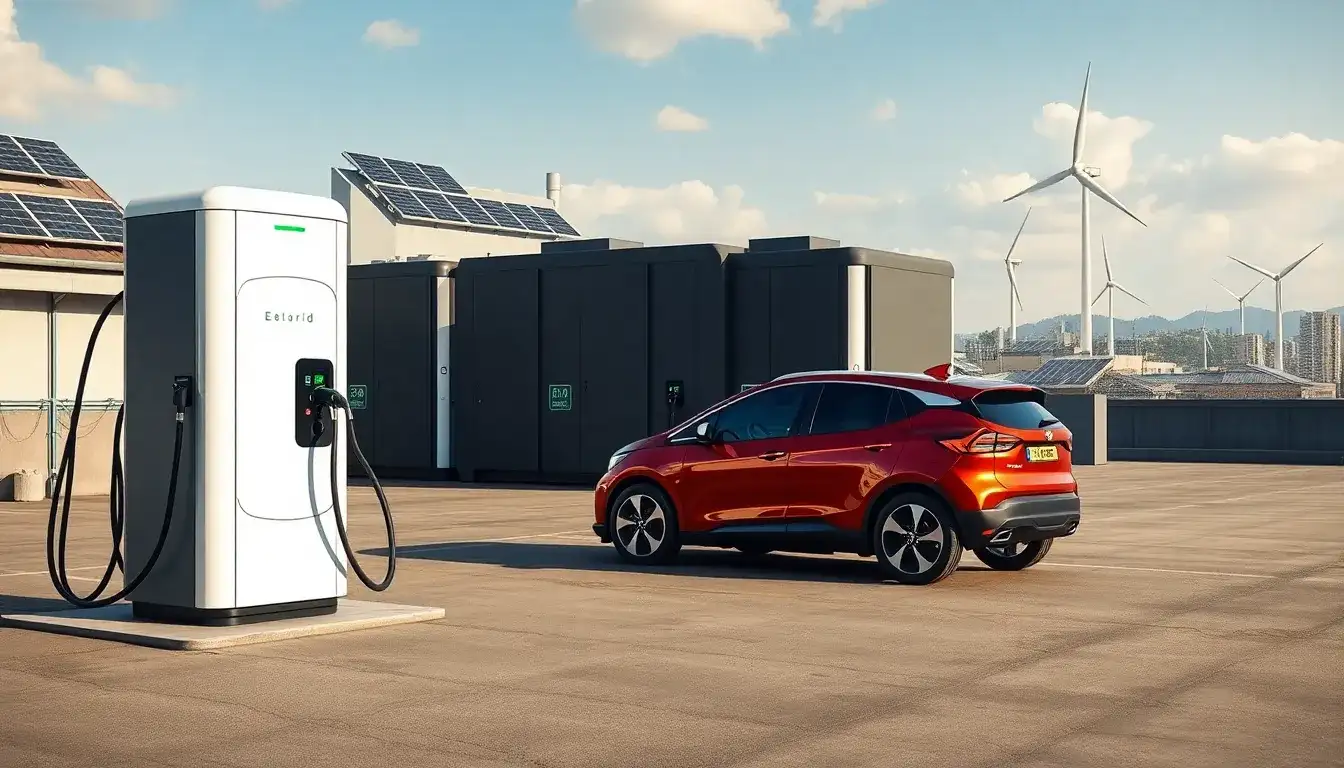
B2G technology is transforming electric vehicles from mere transportation tools into dynamic units for energy network regulation. The establishment of numerous battery swapping stations has not only enhanced the energy replenishment system for new energy vehicles but has also turned these stations into a “buffer” for the power grid. In early April, traditional energy giant Sinopec officially announced its partnership with CATL to create a nationwide battery swapping ecosystem. Together, they plan to build over 500 battery swapping stations this year, with a long-term goal of constructing 10,000 stations.
In March, CATL had already partnered with NIO, declaring their intention to establish the world's largest battery swapping network and promote standardization within the industry. The collaboration between Sinopec and CATL marks a significant shift from a "vehicle manufacturer-level energy replenishment solution" to a "social-level mainstream energy infrastructure". More importantly, CATL's "chocolate battery swapping" ecosystem, combined with B2G (Battery to Grid) technology, is playing a crucial role in balancing the new power system by transforming electric vehicles into dynamic units of energy regulation.

As fuel stations across the country gradually evolve into integrated energy stations, the world's largest distributed energy storage network is expected to take shape rapidly. The electricity load side currently lacks scalable regulation capabilities. In recent years, the high proportion of renewable energy and power electronics has significantly reduced the power system's ability to withstand disturbances and regulate itself. This has resulted in electricity supply shortages during peak periods and ineffective peak shaving during low demand periods, leading to an increasing gap in flexible regulation resources.

The power system is transitioning from a traditional "source-following-load" model to a "source-network-load-storage" model with diverse interactions. However, there is currently no large-scale regulation capability on the load side, as most centralized energy storage resources do not match the distribution of load. Therefore, distributed energy storage on the user side is essential to alleviate pressure on the load side. Currently, user-side distributed energy storage mainly consists of commercial and industrial storage, but the scale remains small and may not be the most effective flexibility regulation resource.

From the types of regulation resources aggregated by virtual power plants in Shanghai and Shenzhen, the largest component is not commercial and industrial storage, but rather charging and swapping resources, which offer stronger scalability and lower regulation costs. Moreover, in terms of safety, the power batteries of electric vehicles have advanced further than commercial energy storage. Essentially, the vast number of electric vehicle batteries can be viewed as individual distributed storage units, and when interconnected, they form a massive distributed energy storage system that can achieve greater value through scale effects.

Basic vehicle-grid interactions are already widely applied at charging and swapping stations, where charging loads are adjusted according to grid demand. However, the more critical aspect is the ability to discharge into the grid through V2G (Vehicle to Grid) technology, which fully unleashes the large-scale regulation capabilities of electric vehicles. The key to transforming massive power batteries into flexible regulation resources for the grid lies in B2G technology.

The main reason V2G has not yet been widely adopted is the lack of a fully developed business model, with challenges including infrastructure development, owner willingness, and market mechanisms. Nevertheless, the development of B2G technology and the swapping network has created a win-win business model, accelerating the construction of the world's largest distributed energy storage system.

CATL's commitment to battery swapping is not just about expanding its advantages across the entire battery supply chain; it is also a significant step towards becoming a green energy provider. The standardization of battery swapping and the creation of a swapping ecosystem effectively turn batteries into a "public energy pool" for the entire industry. Battery swapping stations serve as both energy consumption and storage nodes, transforming massive charging loads from a "burden" on the grid into a "support".

CATL's "chocolate battery swapping" ecosystem breaks down barriers for automakers to build their own swapping systems and promotes standardization in battery swapping, including chassis swapping models, battery size specifications, and unified interface protocols. At the "Chocolate Battery Swapping" ecosystem conference, CATL announced partnerships with major automakers such as Changan Automobile, FAW Hongqi, SAIC-GM-Wuling, GAC, and BAIC to launch new battery swapping models.

By partnering with NIO and Sinopec, CATL is not only aligning with various enterprises on new energy infrastructure planning but also signaling a definitive commitment to the battery swapping industry. Li Bin has repeatedly stated that the battery swapping network is "energy cloud service" and serves as a fundamental infrastructure for the future energy internet. The initial investments will yield significant long-term returns. According to Sinopec’s 2024 financial report, the company is transforming traditional gas stations into integrated "oil-gas-hydrogen-electricity service" sites. Joining CATL’s battery swapping ecosystem will undoubtedly accelerate Sinopec’s transition.

According to CATL's plans, by 2025, they aim to build 1,000 battery swapping stations on their own, collaborating with partners to establish a total of 10,000 stations, with a long-term goal of 30,000 to 40,000 stations. Based on an average stock of 14-30 batteries per station, 30,000 swapping stations would have an energy storage capacity of 33.6 GWh, with the battery swapping network servicing 20 million electric vehicles potentially providing up to 1,120 GWh of flexible dispatch resources to the grid. Currently, the installed capacity of new energy storage systems within the entire power system remains relatively small. The total energy storage capacity of 30,000 swapping stations and 20 million vehicles is nearly seven times the newly installed energy storage capacity nationwide by the end of 2024 (168 GWh).

The vast network of battery swapping stations and their interconnected battery resources may become a core component of user-side energy storage, playing a significant role in balancing the new power system. As the penetration rate of electric vehicles increases, user charging demands are also rising, leading to substantial impacts on the grid due to large-scale charging loads. CATL Chairman Zeng Yuqun stated, "Disordered large-scale charging will further exacerbate the peak-valley characteristics of grid loads, impacting grid safety. Additionally, as the proportion of volatile and intermittent renewable energy generation increases, the grid faces a significant shortfall in flexible regulation capabilities to maintain real-time balance."

The accelerated adoption of high-voltage fast charging technology has heightened these concerns. In proposals made during the 2024 Two Sessions, Zeng suggested that to turn burdens into resources, addressing the two major challenges in transportation and energy, it is vital to explore the essence of vehicle-grid interaction (V2G) and develop a two-way integration (B2G) between batteries and the grid.

In recent years, the government has strongly supported V2G initiatives; however, it has not yet been widely implemented. The large-scale promotion of V2G still faces significant challenges. Beyond profitability concerns, many new energy vehicle owners worry that frequent charging and discharging may impair battery life. However, with proper charging and discharging management strategies, even with increased charging cycles, battery lifespan can be preserved or even extended. This is especially true for electric vehicles that are often idle, as participating in V2G charging and discharging regularly can help prolong battery life.

According to statistics from the State Grid, the vast majority of private vehicles have an average charging frequency of about 50 times per year. Based on a vehicle lifespan of 10 years, the total charging frequency for an owner is approximately 500 times. Even under the lowest cycle standard of 1,000 times for the power battery, there are still 500 charging cycles available, indicating a high level of redundancy. However, cultivating user awareness and habits for participating in V2G is not an easy task. The essence of V2G is B2G; under the battery swapping model, users do not need to worry about battery residual value, and the batteries can receive more professional and orderly charging and discharging management.

B2G technology is crucial for transforming large numbers of electric vehicles into flexible regulation resources for the grid and is a core component of CATL's distributed energy storage strategy. Currently, CATL's Xianyao hybrid battery and "chocolate battery swapping block" both support B2G mode, potentially leading to the formation of an ecosystem that promotes vehicle-grid interaction among more power battery manufacturers, charging pile companies, and terminal automakers. CATL has also stated that all future battery technologies will be applied to "chocolate battery swapping" models.

The widespread adoption of B2G technology could enable electric vehicles to provide large-scale grid regulation capabilities: 100,000 electric vehicles supporting B2G could offer 1 GW of flexible power, equivalent to the output level of a medium-sized gas power plant. During peak electricity demand periods, EV clusters discharging can alleviate regional grid stress and reduce the risk of power restrictions.

CATL's vision is to reshape itself as a green energy supplier and develop large independent energy systems capable of powering a large data center or even an entire city. Zeng anticipates that developing and managing "zero-carbon grids" could potentially be ten times larger than supplying batteries for electric vehicles. "Battery swapping stations will strive to utilize green electricity, becoming key players in stabilizing the grid and absorbing green energy," he declared at the "chocolate battery swapping" ecosystem conference.

By utilizing rooftop photovoltaics at swapping stations to achieve green power generation, storing battery energy in an environmentally friendly manner, and charging vehicles with green power, CATL's "chocolate battery swapping" ecosystem can create a more efficient "integrated light-storage-charging" energy network. This enables swapping stations to act as a "buffer" for regional grids, with the battery swapping network contributing to dynamic power balance.

The construction of a battery swapping ecosystem will also alleviate challenges in absorbing distributed photovoltaic power generation. In recent years, with the surge in distributed photovoltaic installations, many provinces across the country have faced difficulties in integrating this energy into the grid due to insufficient available capacity. Swapping stations may become the bridge that matches large-scale charging loads with regional distributed photovoltaic generation.

Additionally, CATL and NIO plan to jointly build a full lifecycle closed loop for battery research and development, battery swapping services, battery asset management, second-life utilization, and material recycling. From a broader perspective, the centralized recycling of retired power batteries may be the last piece of CATL's zero-carbon system. The biggest challenge in battery recycling is the high channel costs due to dispersed ownership, while swapping stations can facilitate centralized collection of retired batteries. As battery technology evolves and the peak of battery retirements approaches, recycling will become a significant growth area. Especially considering that CATL's battery circular economy is already the largest closed-loop industrial chain in the global lithium battery industry, integrating the swapping network will create a win-win situation in terms of scale and efficiency.

Through its battery swapping initiatives, CATL aims to achieve a zero-carbon closed loop while creating a win-win business model: users gain from the charging and discharging price differences, swapping stations earn from grid interaction, the grid reduces upgrade costs, and companies lower battery recycling costs. This collaborative synergy will further promote the expansion of the battery swapping ecosystem.
Original article by NenPower, If reposted, please credit the source: https://nenpower.com/blog/b2g-technology-transforming-battery-swapping-into-the-worlds-largest-distributed-energy-storage-system/

