

Connecting Global Resources through an Integrated Industrial Ecosystem: AWE Decodes New Momentum for “AI+”
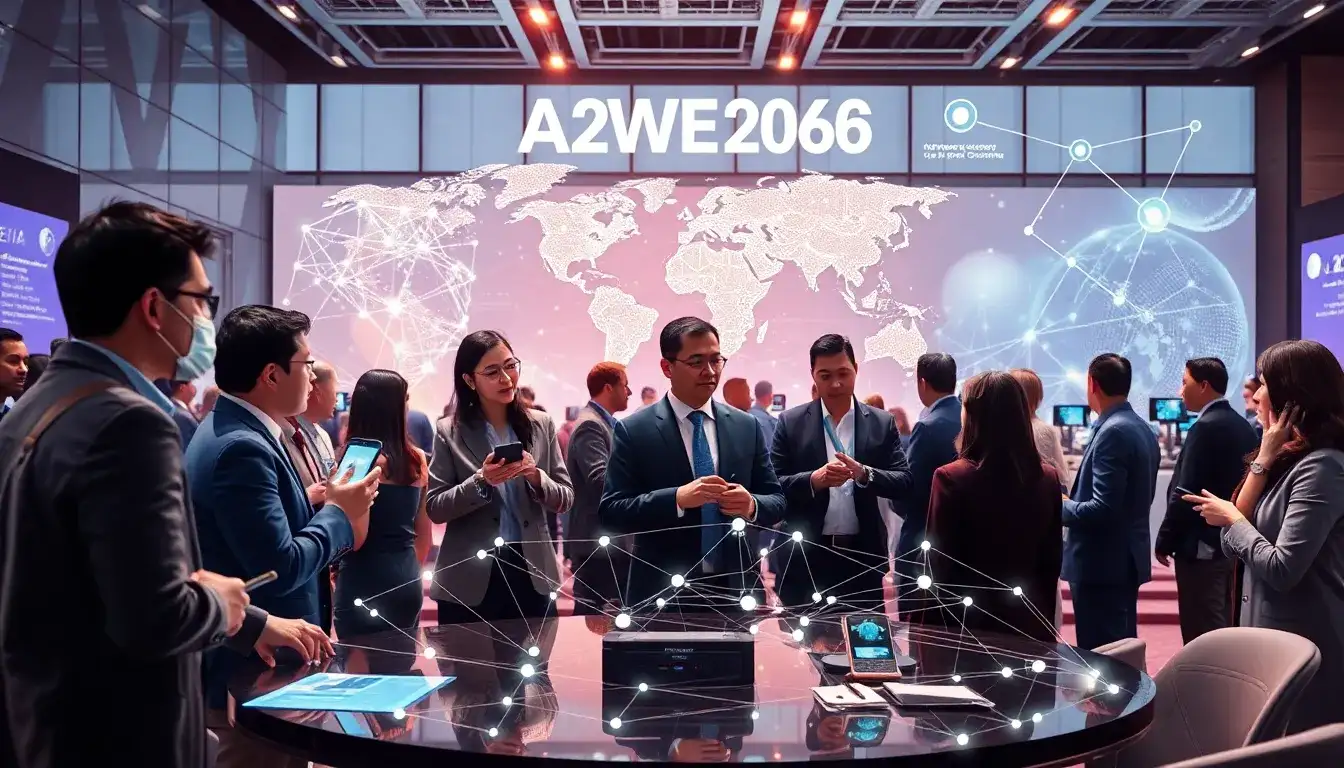
As one of the largest home appliance and consumer electronics exhibitions in China, the 2026 China Household Appliances and Consumer Electronics Expo (AWE 2026) is being held at the Shanghai New International Expo Center and the Oriental Hub International Business Cooperation Zone. Under the theme of “AI Technology, Smart Future”, this year’s event adopts a unique “one exhibition, two zones” model, gathering over 1,200 global companies. Spanning 170,000 square meters, the expo serves not only as a showcase for AI achievements but also as a vivid representation of the high-quality development of the AI industry in Shanghai and China. With an open approach, China is accelerating the transition of AI technology from laboratories to frontline industries.
Accelerated Deployment of AI Achievements Reflects New Strength in “Chinese Manufacturing”
This year’s AWE differs from previous editions, with embodied intelligence and other cutting-edge categories taking center stage, bringing products directly to the market. AWE is becoming an important window for observing the future of China’s consumer electronics technology.
At the booth of Aoshark, which specializes in exoskeleton robots, visitors can experience various scenarios, such as climbing stairs and moving heavy objects, by trying on the products, feeling as light as a feather. In manufacturing, logistics, and warehousing, workers often suffer from occupational diseases like chronic back pain and herniated discs due to prolonged bending and heavy lifting. Zhang Hua, a market partner and director at Aoshark, stated that the company’s lumbar exoskeleton can reduce over 60% of back load, significantly lowering the risk of work-related injuries. These consumer products are also highly effective in outdoor activities like hiking.
“Using technology to liberate manpower and enhance efficiency, the popularity of exoskeleton robots is not coincidental; it aligns with the demands of manufacturing upgrades and an aging society,” Zhang added.
This year’s exhibition showcases breakthroughs in new display technologies that transcend interactive boundaries, becoming vital links between the digital and real worlds. AI smartphones and AI glasses are rapidly evolving into a new generation of personal smart interfaces. The flagship glasses from XREAL demonstrate real-time 2D to 3D conversion through edge computing, allowing video content to transform into immersive 3D without needing re-production.
“The interaction of terminals in the AI era is undergoing a transformation from being screen-centric to screen-free. Glasses are expected to become the best medium for AI to interact with the world,” said Xu Chi, founder and CEO of XREAL.
The breakthroughs in computing power are equally impressive. On March 12, a commercial version of the LightLeap Super Node 128 Card was launched by Shanghai Yidian in collaboration with Xizhi Technology, Birun Technology, and ZTE. It achieved a transition from concept to commercial use in just six months, with transmission delays reduced by over 90% compared to traditional electronic switches.
This achievement is no accident. Shanghai, as a hub for AI and integrated circuits, accounts for nearly 10% of the nation’s computing power and operates the first public service platform for AI training data, with 149 generative AI services registered, providing solid support for breakthroughs in AI technology.
Everyday AI products are also attracting attention. Haier’s AI Smart Lock provides power with light, Hisense’s RGB-Mini LED TV unlocks extreme colors, and SenseTime’s “AI Explanation Brain” adapts to multiple scenarios. These products bring AI into daily life.
“At this year’s AWE, we see AI home appliances continuously upgrading in functionality, proactive services, multi-device interconnectivity, and human-machine interaction, constructing smarter household solutions tailored to human needs,” stated Tao Xiaonian, chairman of the China Household Electrical Appliances Association.
The concentrated display of these achievements reflects that China’s AI industry has transitioned from technology R&D to a phase of large-scale deployment, forming a complete industrial chain encompassing foundational computing power, terminal applications, and scenario implementation, showcasing the hard power of relevant industries in China.
Upgrading Open Platforms to Establish a New Window for Global AI Exchange
As the first large-scale international exhibition following the operational launch of the Oriental Hub, AWE showcases the open advantages of this “globally pioneering, domestically unique” zero-time-difference business district. The area implements an innovative system of “open on the first line, regulated on the second line,” clearing obstacles for cross-border communication in the AI industry.
“Invited personnel from abroad can stay in the area for 30 days without a visa, while overseas exhibits can conveniently enter and return post-exhibition, allowing visitors to access the show just 15 minutes after landing,” explained Zhao Yugang, deputy director of the Oriental Hub Management Bureau. The policy benefits facilitate the rapid aggregation of global AI resources.
From an industry perspective, the dual-zone synergy between the Oriental Hub and the New International Expo Center is a significant reflection of Shanghai’s upgraded open platforms. The former focuses on cutting-edge AI technology, while the latter emphasizes the practical application of smart living, jointly forming a landscape of “high precision and high sophistication leading to widespread adoption.”
This strategic layout underlines Shanghai’s commitment to establishing a global exchange window for AI. Leveraging the open policies of the Oriental Hub, Shanghai is promoting the dual efforts of “bringing in” and “going out” in the AI industry, positioning itself as an ideal venue for global AI technology exchanges and result transactions.
Currently, Shanghai is deeply implementing the “AI+” initiative, strengthening the layout of computing power facilities, industry-specific data, and vertical models. Open platforms like the Oriental Hub are crucial supports for linking global AI resources and promoting the open development of the industry.
“Relying on this new open landmark, the Oriental Hub International Business Cooperation Zone is fully committed to creating three core functions: international business exchanges, professional international exhibitions, and international professional training, providing unique policy soil for cross-border R&D, result transformation, and resource aggregation in the AI industry,” Zhao Yugang stated.
Integrating Industrial Ecosystems to Activate New Momentum for AI Development
From leading companies like Haier, Huawei, and ZhiYuan to numerous small and medium-sized innovative enterprises, the exhibition brought together participants from all segments of the AI industry chain, forming a development pattern of “leading enterprises and collaborative smaller firms.”
“Shanghai’s smart terminal industry has surpassed the 100 billion yuan mark, boasting a complete industrial chain and a vibrant innovation ecosystem,” said Pan Yan, deputy director of the Shanghai Municipal Commission of Economy and Information Technology. Shanghai is committed to building an integrated ecosystem encompassing hardware, software, and services to promote the collaborative development of the AI industry.
The unique advantages of developing the AI industry and smart terminal products in Shanghai lie in the triple integration of scientific innovation, industry, and market. The city gathers a wealth of AI technology talent, with top universities and research institutions like Fudan University and Shanghai Jiao Tong University continuously breaking through key technologies, making the transition from lab to production line a reality.
Policy support is also significant. Shanghai issues over 1 billion yuan in computing power coupons, data coupons, and model coupons each year to encourage enterprises to integrate AI capabilities. Among the major engineering projects in 2026, 62 are technology industry-related, providing strong support for the development of the AI industry.
As a new open landmark in Shanghai, the Oriental Hub is also focused on industrial cultivation, planning to establish a scientific research and development incubator, promoting cross-border collaboration between enterprises and international R&D teams through convenient personnel and cargo policies, and facilitating high-quality imports and high-level exports in the AI industry.
Looking at industry development trends, as Shanghai deepens the implementation of the “AI+” initiative, AI is expected to further empower various sectors. The platform established by AWE will continue to drive the aggregation of industrial resources, aiming to create a globally influential center for technological innovation in Shanghai and inject strong momentum into the high-quality development of China’s AI industry.
Original article by NenPower, If reposted, please credit the source: https://nenpower.com/blog/awe-2026-unleashing-new-momentum-for-ai-integration-and-global-resource-connectivity/

