

Incident Overview: Fire at Avita 06 and the Safety Debate Surrounding New Energy Vehicles
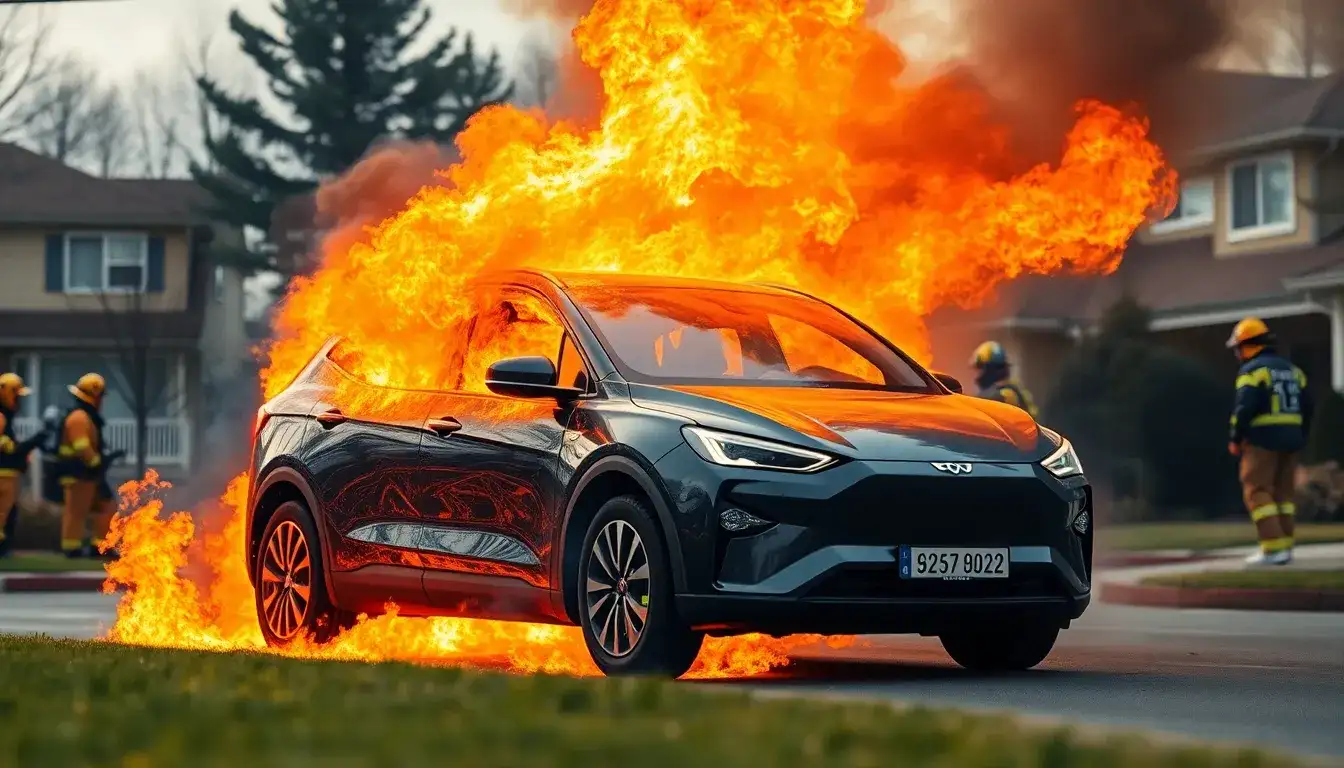
On October 5, 2025, a brand-new Avita 06 spontaneously erupted into flames in a tranquil parking lot in Ningde, Fujian, igniting concerns over the safety of new energy vehicles once again. The fire spread rapidly, engulfing seven nearby vehicles, including luxury brands such as Audi and BMW. The owner had purchased the car just a month and a half prior and had driven it for only about 1,066 kilometers. Eyewitnesses reported that smoke began billowing from the front passenger seat, with the vehicle’s internal temperature soaring to 76.4°C. Fortunately, no injuries were reported, but videos of the incident quickly circulated on social media, fueling public anxiety regarding the safety of electric vehicles. Avita responded promptly, asserting that their batteries meet national standards and that an investigation is underway.
Incident Details: From Calm to Chaos
The fire incident transpired in the seaside parking area of Dongbi Village, Sansha Town, Ningde. At the time, the scene was characterized by a leisurely atmosphere, with cars parked in an orderly fashion. However, this tranquility was shattered when the Avita 06 ignited. According to witnesses, the fire began from the passenger side and quickly spread to nearby vehicles, ultimately destroying seven cars, including models from Audi, BMW, and Aion. The fire department responded rapidly, managing to contain the flames without any casualties. Initial investigations indicate that the fire likely originated inside the vehicle, though the exact cause remains unverified. A video purportedly shared by the car’s owner revealed that the car’s internal temperature had reached an alarming 76.4°C prior to the fire, raising suspicions about potential overheating or electrical system failures.
Official Response: Investigating the Mystery
Following the incident, Avita swiftly released a statement emphasizing that all their vehicle batteries comply with national standards. They indicated that the company is collaborating with fire department officials to thoroughly investigate the cause of the fire. While no definitive conclusions have been reached, preliminary assessments suggest that the focus may shift to potential design or manufacturing defects within the vehicle itself. Notably, this is not the first incident of its kind; electric vehicle fires have been reported globally across various brands, highlighting ongoing challenges in battery management, thermal control, and material durability.
Owner’s Perspective: From Joy to Shock
A woman, believed to be the car owner, shared her emotional account of the event on social media. She expressed her disbelief, stating that she had purchased the Avita 06 only at the end of August and had experienced no issues during its short usage. However, on the day of the fire, she received a high-temperature alert via her mobile app, which indicated that the internal temperature had reached 76.4°C. Shortly thereafter, she witnessed smoke emanating from the passenger seat. She quickly evacuated and called for help, but the fire was uncontrollable at that point. Her experience resonated with many online, prompting widespread discussions about electric vehicle safety and calls for manufacturers to enhance quality control and communication.
Industry Context: Opportunities and Challenges for New Energy Vehicles
New energy vehicles have emerged as a pivotal element in the global energy transition, with rapid growth seen in the Chinese market over recent years. Supported by policies, environmental awareness, and technological advancements, sales have surged, with brands like Avita gaining popularity due to their intelligent designs. However, this fire incident serves as a stark reminder that safety should be the foundation of industry development. Statistics indicate that in 2024, sales of new energy vehicles in China surpassed 10 million units, coinciding with an increase in safety incidents. Common causes include battery overheating, short circuits, and charging issues. Experts stress that while national standards are continually refined, more work is needed to improve battery management systems (BMS) and the durability of materials. For instance, lithium-ion batteries can experience thermal runaway in high-temperature environments, potentially leading to fires. Should the Avita 06 incident be linked to battery issues, it may prompt regulatory bodies to tighten testing standards and require manufacturers to provide more comprehensive safety data.
Deep Analysis: Exploring Potential Causes of the Fire
Based on available information, there are several hypotheses regarding the cause of the Avita 06 fire. First and foremost, battery system failure is a primary suspect. Lithium-ion batteries are susceptible to thermal runaway during overcharging, deep discharging, or exposure to high temperatures. The recorded temperature of 76.4°C suggests that the battery management system may have failed to dissipate heat effectively. Additionally, electrical wiring issues could have played a role, as smoke emanating from the passenger side may indicate a short circuit or aging components. Despite the vehicle being relatively new, manufacturing defects or material problems could lead to premature failure. Environmental factors, such as high temperatures in the parking lot (not uncommon in Ningde during the autumn), may have exacerbated the risk. While electric vehicle battery packs are typically designed with multiple layers of protection, inadequate sealing or cooling system failures could allow external heat to penetrate and cause issues. This incident brings to mind similar cases, such as a 2023 fire incident involving a different brand’s vehicle due to water intrusion into the battery pack. Avita’s assertion that their batteries comply with national standards does not entirely dismiss the possibility of isolated failures. National standards (e.g., GB/T 31467.3) impose strict safety requirements for batteries, including puncture, compression, and overheating tests. However, real-world conditions can be more complex than laboratory settings, necessitating investigations that incorporate data from event data recorders (EDR) and black box data to reconstruct the incident comprehensively.
Consumer Insights: How to Choose and Safely Use Electric Vehicles
This incident serves as a crucial lesson for potential buyers of electric vehicles. First, when selecting a new energy vehicle, it is important to prioritize brand reputation and safety records, seeking third-party assessments and historical accident reports. Additionally, understanding the type of battery and management system is essential; for instance, lithium iron phosphate batteries tend to be more stable than ternary lithium batteries, albeit with lower energy density. During regular use, it is advisable to avoid excessive charging or discharging, check charging equipment and wiring regularly, and pay attention to parking conditions to prevent prolonged exposure to sunlight. Manufacturers should also take on greater responsibility by offering extended warranties, real-time monitoring services, and rapid response mechanisms. Consumers can set temperature alerts through apps or onboard systems to detect anomalies early. Furthermore, in terms of insurance coverage, it is recommended to opt for packages that include self-ignition coverage to mitigate potential losses.
Future Outlook: Industry Transformation and Public Expectations
The fire incident involving the Avita 06 could mark a turning point for the industry. Regulatory bodies are expected to enhance mandatory safety testing for new energy vehicles and push for more stringent data disclosure requirements. Manufacturers may accelerate technological advancements, such as integrating intelligent thermal management systems or fire-resistant materials to prevent similar incidents. In the long run, the adoption of new energy vehicles is irreversible, but safety must remain the top priority. The public is looking for more transparent investigation results and proactive improvements from manufacturers. If Avita can learn from this event and implement upgrades, it may turn a crisis into an opportunity to bolster its brand reputation. Ultimately, the fire in Ningde serves not only as an isolated incident but as a test for the entire ecosystem of new energy vehicles, reminding us that safety should always be the primary driving force in the pursuit of green transportation. Only through technological innovation, strict regulation, and consumer education can electric vehicles become a truly reliable choice.
Original article by NenPower, If reposted, please credit the source: https://nenpower.com/blog/avita-06-fire-incident-raises-new-concerns-over-electric-vehicle-safety/

