

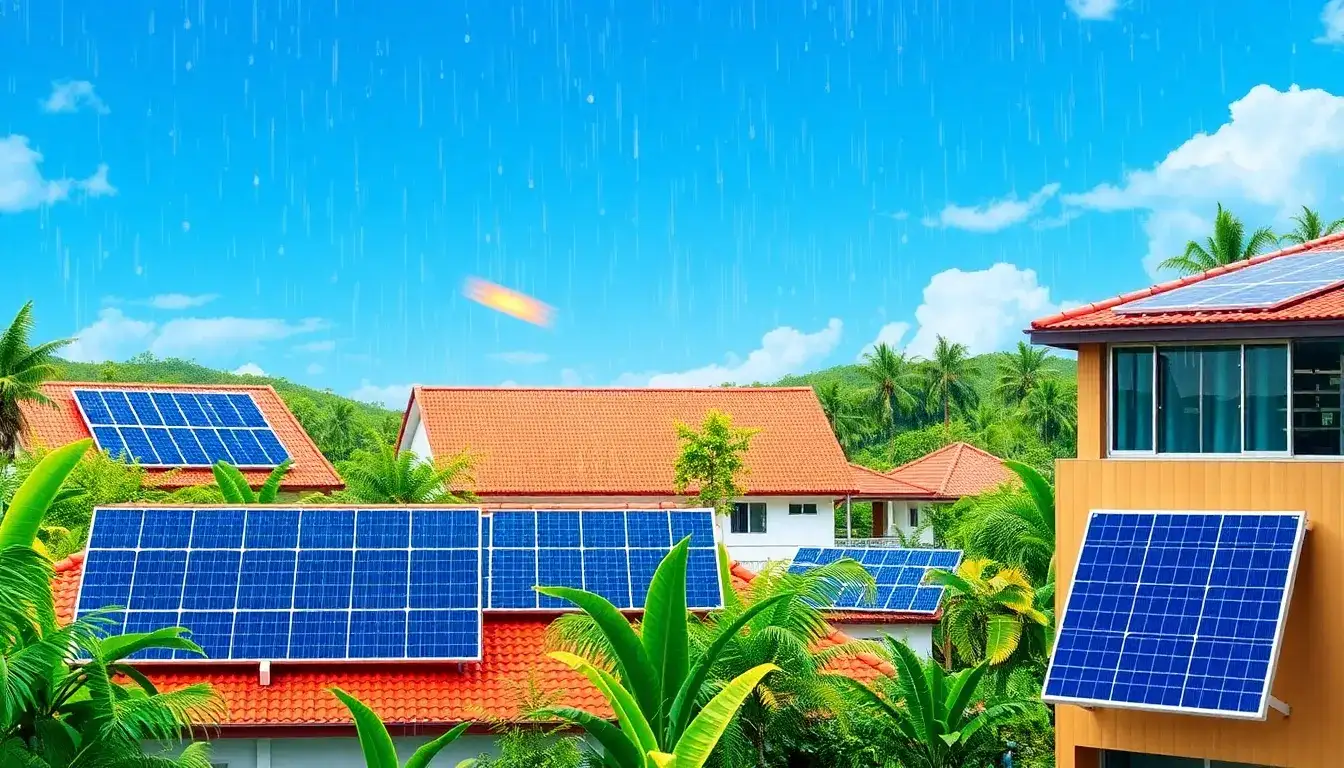
Yes, there are specific types of solar panels that perform better in humid climates. Here are some options:
Solar Panel Types for Humid Climates
- Monocrystalline Solar Panels: These panels are more efficient and durable, making them suitable for humid environments. They offer high performance and robust build quality.
- Thin-Film Solar Panels: While less efficient than crystalline panels, thin-film panels can perform better in low-light conditions and are more resistant to heat and humidity. They are a good choice for adaptability in various weather conditions.
- TOPCon Solar Panels: These panels feature advanced tunnel oxide passivated contact technology, offering enhanced efficiency and durability. They perform well in diverse environmental conditions, including high temperatures and humidity levels. TOPCon panels are particularly advantageous in coastal areas due to their corrosion-resistant materials.
- Bifacial Solar Panels: These panels can generate electricity from both sides, taking advantage of diffused and reflected light present in humid conditions, which increases overall energy output.
- Perovskite Solar Panels: These panels show great promise in humid conditions, maintaining high efficiency and good performance even in the presence of moisture.
Features to Look for in Humid Climates
- High Humidity Resistance: Panels with enhanced sealing and protective coatings can prevent moisture intrusion.
- Corrosion-Resistant Materials: Using materials like anodized aluminum frames and stainless steel fasteners can help mitigate corrosion issues associated with high humidity.
- Hydrophobic Coatings: These coatings can help reduce moisture buildup on the panel surface.
Maintenance Strategies
Regular cleaning and inspections are crucial to maintain efficiency and prevent damage from moisture buildup, mold, and corrosion. Utilizing humidity sensors and weather forecasting tools can also help optimize panel performance in humid climates.
Original article by NenPower, If reposted, please credit the source: https://nenpower.com/blog/are-there-specific-types-of-solar-panels-that-perform-better-in-humid-climates/

