

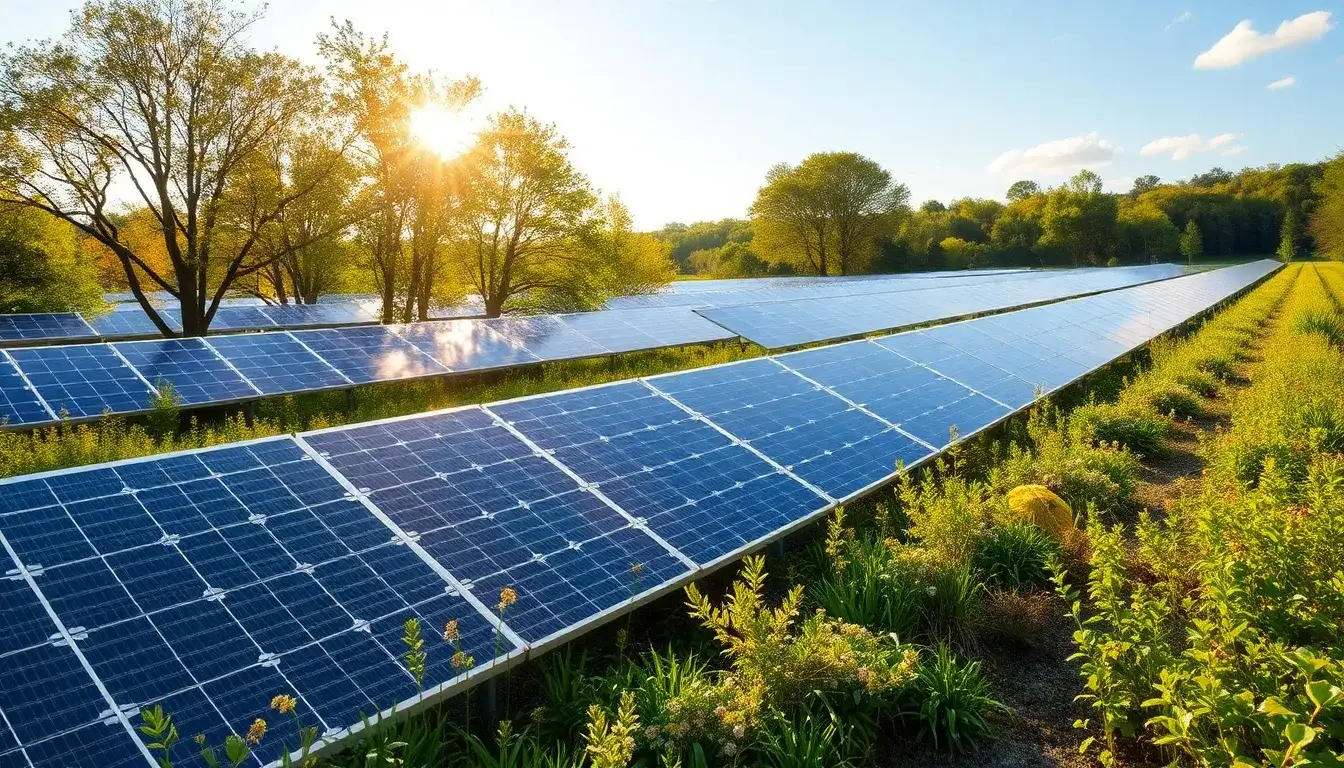
There are indeed specific approaches to solar panel installation and design that can reduce the negative impacts on wildlife and their habitats, though the type of solar panel itself is only one factor among many related to site design and management.
Wildlife-Friendly Solar Panel Practices
- Elevated Panel Placement: Raising solar panels higher above the ground (e.g., 42 inches instead of the industry standard 24 inches) can allow vegetation to grow underneath and preserve habitat for smaller wildlife species. This practice also helps maintain natural ground cover and soil health.
- Increased Panel Spacing and Variation: Spacing solar panels farther apart and varying their arrangement reduces the “lake effect” seen by birds (an illusion caused by a uniform reflective surface), and allows more sunlight to reach the ground, supporting plants and animals below the arrays.
- Maintaining Habitat Connectivity: Incorporating openings in perimeter fences (e.g., 10 inches wide by 7 inches tall) allows for wildlife passage and movement, preventing habitat fragmentation and allowing animals such as desert tortoises or small mammals to navigate through or around solar sites safely.
- Site-Specific Habitat Management: Avoiding widespread vegetation clearing by clipping only what is necessary preserves the natural topography and ecosystem, benefiting local wildlife by maintaining their homes and food sources.
- Minimizing Vehicle and Construction Disturbance: Restricting maintenance vehicles to smaller, slow-moving types and training staff on wildlife awareness reduces direct harm to animals during solar site operations.
Impact of Solar Panel Types on Wildlife
Currently, there is limited information indicating that different types of solar panel technologies (e.g., monocrystalline, polycrystalline, thin film) differ significantly in their direct impacts on wildlife. Instead, the ecological footprint typically depends more on how and where the panels are installed rather than the panel material itself.
Biological Considerations
- Large-scale solar installations can cause habitat loss and fragmentation, which is one of the primary threats to wildlife, including impacts on migration, breeding, and foraging behaviors.
- Solar farms can alter local microclimates, hydrology (stormwater runoff), and attract insects, which indirectly affect wildlife populations and food webs.
- Some solar facilities may create risks for birds and bats due to collisions or habitat disturbance, calling for further research and mitigation strategies tailored to local species.
Summary
While no single type of solar panel is known to be inherently “wildlife-friendly,” the adoption of wildlife-conscious site design and operational practices—such as elevated and spaced panel installation, preserving vegetation, ensuring passageways for animals, and minimizing construction impacts—can greatly reduce the ecological footprint of solar energy facilities. These measures help balance the growing demand for renewable energy with the protection of biodiversity and wildlife habitats.
Therefore, the focus shifts from panel technology to thoughtful planning and adaptive management to make solar energy installations more compatible with wildlife conservation.
Original article by NenPower, If reposted, please credit the source: https://nenpower.com/blog/are-there-specific-types-of-solar-panels-that-have-less-impact-on-wildlife/

