

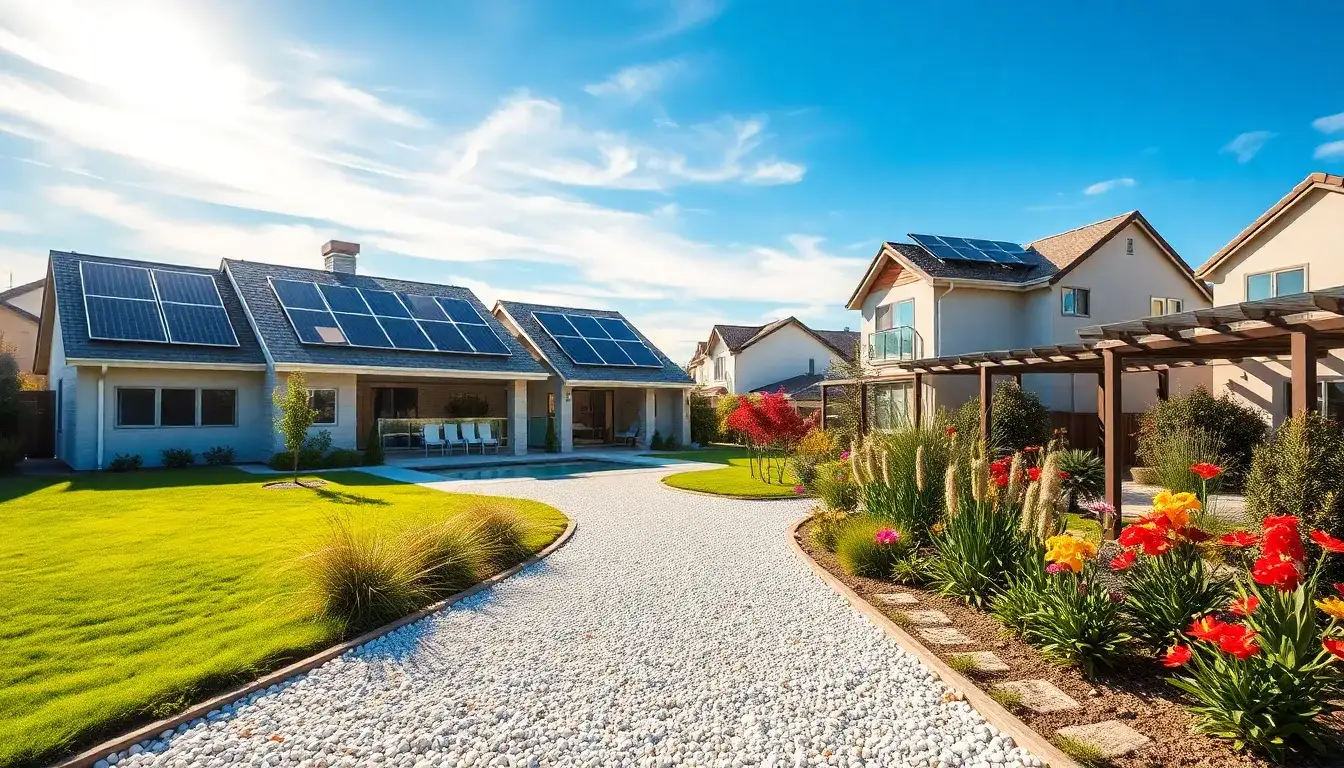
Bifacial solar panels are particularly beneficial in specific residential installation scenarios where their ability to capture sunlight from both the front and back can be fully leveraged to increase energy production. The key types of residential installations that benefit most include:
Ground-Mounted Residential Solar Systems
- Optimal for bifacial panels: Ground-mounted solar arrays allow bifacial panels to be elevated and angled so that the rear side receives reflected sunlight from the ground, significantly boosting energy yield. Studies show bifacial panels can produce 11% more energy than traditional panels in ground-mounted setups, and when combined with solar trackers, efficiency increases can reach up to 27%.
- Reflective surfaces enhance performance: Installing bifacial panels over highly reflective ground surfaces such as light-colored gravel, sand, or reflective coatings can maximize reflected light capture on the backside of the panels.
- Better low-light and diffuse light performance: These installations benefit from bifacial panels’ ability to utilize diffuse and reflected light during mornings, evenings, and overcast conditions, extending the operational hours and improving overall energy generation.
Flat Roof Installations with Reflective Surfaces
- Bifacial solar panels can be effectively used on flat residential roofs if the roofing material is light-colored or reflective, allowing sunlight to bounce up and reach the rear side of the panels. This setup can increase energy output compared to traditional rooftop panels, although it requires ensuring adequate spacing between panels to avoid shading and allow reflected light to reach the backside.
- However, typical sloped residential rooftops are generally less suited for bifacial panels because the house structure often blocks reflected sunlight from reaching the back side, limiting the efficiency gains.
Other Residential Applications
- Carports and pergolas: Bifacial solar panels are suitable for residential carports or pergola-style installations where panels can be installed elevated with reflective surfaces beneath, capturing sunlight on both sides while providing shading benefits.
- Vertical installations: In some cases, bifacial panels can be installed vertically on fences or walls to capture sunlight during early morning and late afternoon hours, times when traditional panels have reduced efficiency. This can be useful for innovative residential designs or space-limited properties.
Summary Table
| Installation Type | Benefit for Bifacial Panels | Notes |
|---|---|---|
| Ground-mounted systems | Enhanced energy capture from reflected light | Highly recommended; best performance with reflective ground surfaces |
| Flat, reflective residential roofs | Increased energy from light reflected off roof surface | Requires reflective roofing, spacing to allow light back |
| Residential carports/pergolas | Energy capture from top and underside; shading benefits | Good use of space, dual-purpose installation |
| Vertical installations | Captures sunlight at sunrise/sunset, less snow build-up | Uncommon but beneficial in certain designs |
| Typical sloped rooftops | Limited benefit due to restricted rear light access | Less effective, often not cost-effective |
In conclusion, bifacial solar panels are particularly advantageous for residential installations that allow sunlight to reach the panel backsides, mainly ground-mounted arrays with reflective surfaces and flat roofs with reflective materials. For common sloped rooftop installations, the benefits are limited, making bifacial panels less practical.
Original article by NenPower, If reposted, please credit the source: https://nenpower.com/blog/are-there-specific-types-of-residential-installations-where-bifacial-solar-panels-are-particularly-beneficial/

