

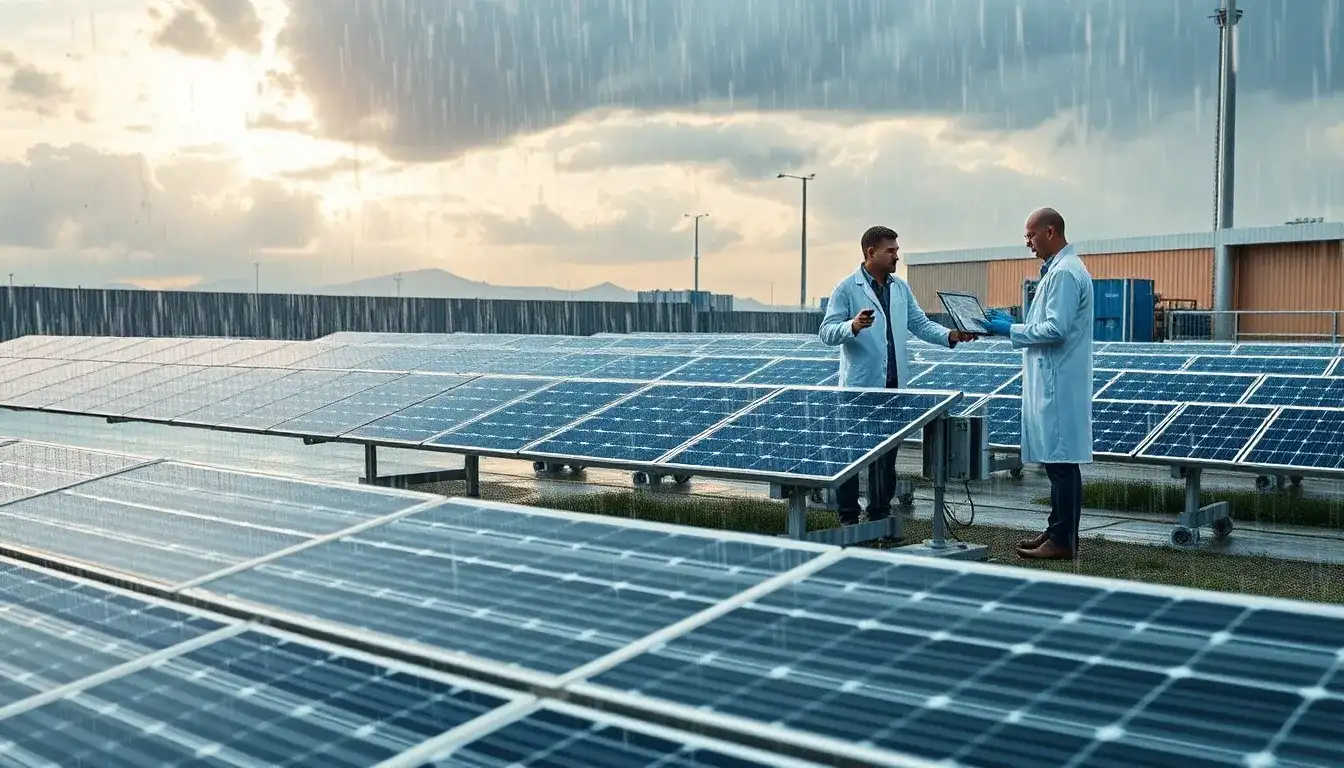
Several technologies and materials specifically mitigate the degradation of solar panels in harsh climates by addressing environmental stresses, material fatigue, and operational factors that cause efficiency loss over time.
Key Technologies and Materials for Mitigating Solar Panel Degradation
1. Advanced Cell and Module Technologies
- Using multi-wire technology helps reduce mechanical failures like cell cracking, common in harsh conditions involving thermal cycling and mechanical stress.
- Gallium-doped silicon wafers reduce light and temperature-induced degradation (LID/LeTID), improving long-term stability in challenging environments.
- Newer photovoltaic materials such as perovskite and thin-film technologies (e.g., cadmium telluride (CdTe) and copper indium gallium selenide (CIGS)) exhibit intrinsic resistance to environmental degradation and show promise in harsher climates.
2. Protective Coatings and Encapsulants
- Shielding coatings that protect against moisture ingress, UV radiation, and temperature extremes help maintain structural integrity and performance.
- High-quality encapsulants prevent moisture and contaminants from penetrating and damaging sensitive photovoltaic cells.
3. Module-Level Power Electronics (MLPEs)
- Devices such as DC optimizers and microinverters attached to individual panels help mitigate power losses due to shading, soiling, or partial panel degradation. By enabling each module to operate independently, these technologies reduce mismatch losses and improve energy yield in environments where shading or partial panel damage may occur frequently.
4. Advanced Monitoring and Predictive Maintenance Systems
- Asset health monitoring platforms leverage AI, sensor data (temperature, voltage, current), and machine learning to identify early signs of degradation. This enables proactive maintenance and timely interventions before performance significantly drops.
- Technologies like drone thermography with thermal imaging sensors detect hotspots and panel faults caused by environmental damage, enabling targeted repairs or cleaning.
Additional Strategies to Address Harsh Climate Effects
- Using more durable materials and manufacturing processes designed to withstand temperature fluctuations, salt mist corrosion (in coastal areas), or high UV exposure.
- Optimizing system design—such as proper stringing arrangements and use of bypass diodes—to reduce power losses due to shading or partial panel degradation.
- Implementing smart cleaning systems based on real-time soiling detection reduces efficiency loss from dust, pollen, and pollution accumulation.
Summary Table of Key Mitigation Components
| Technology/Material | Mitigation Focus | Benefit in Harsh Climates |
|---|---|---|
| Multi-wire cell technology | Mechanical cracking | Enhanced durability against thermal stress |
| Gallium-doped wafers | Light/temperature-induced degradation | Reduced efficiency loss |
| Thin-film solar materials (CdTe, CIGS) | Environmental and UV resistance | Better degradation resistance |
| Protective coatings and encapsulants | Moisture and UV protection | Structural integrity retention |
| MLPEs (DC optimizers, microinverters) | Shading and mismatch loss mitigation | Optimized power output despite partial shading |
| AI-driven monitoring & predictive maintenance | Early degradation detection | Proactive maintenance, minimized downtime |
| Drone thermography | Fault and hotspot identification | Targeted interventions |
| Smart cleaning algorithms | Soiling detection | Maintains performance by reducing dirt buildup |
In conclusion, a combination of advanced materials, robust panel designs, protective coatings, module-level electronics, and sophisticated monitoring technologies effectively mitigate the degradation of solar panels operating in harsh climates, thereby enhancing longevity and energy yield.
Original article by NenPower, If reposted, please credit the source: https://nenpower.com/blog/are-there-specific-technologies-or-materials-that-can-mitigate-the-degradation-of-solar-panels-in-harsh-climates/

