

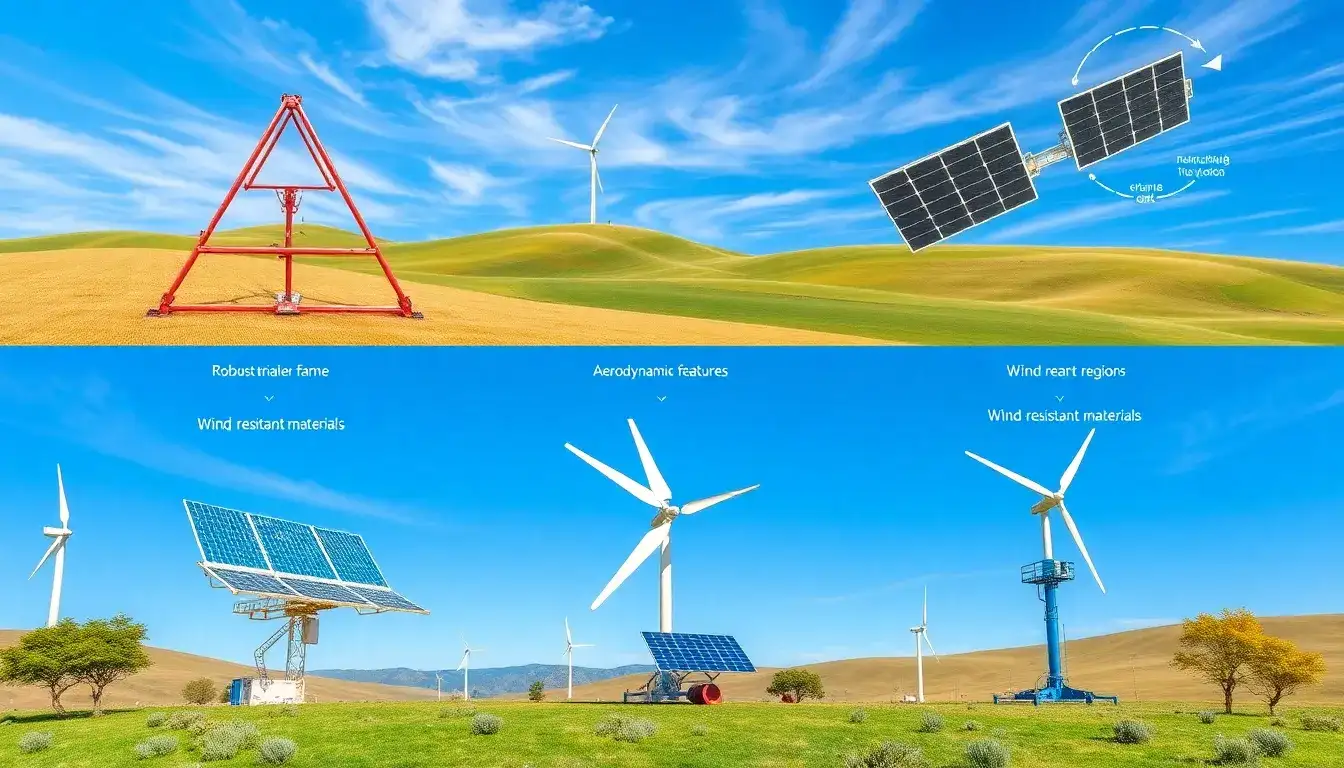
Yes, there are specific solar tracker designs better suited for windy regions. These designs often focus on enhancing stability and resilience against wind forces, which can significantly impact tracker performance and longevity. Here are some key considerations and technologies used in windy environments:
Key Considerations for Windy Regions
- Wind Testing and Analysis: Wind tunnel testing is crucial in the development of solar trackers. This method assesses how trackers respond to various wind conditions, including speed, direction, and turbulence. By understanding these factors, manufacturers can optimize tracker design for specific wind climates.
- Aeroelastic Effects: Solar trackers, especially those with flexibility and mechanical movement, are prone to aeroelastic effects such as resonant vibration and torsional flutter. Designing to mitigate these effects is essential for maintaining stability in windy conditions.
- Structural Reinforcement: Trackers designed for high winds often have reinforced structures with increased rigidity or materials that better resist wind loads and aeroelastic effects. This can include using wind fences or adjusting the tracker’s profile to reduce wind interaction.
- Advanced Materials and Technologies: Utilizing sophisticated materials and technologies can improve tracker performance in windy conditions. This might include using sensors to detect wind variations and adjust the tracker’s position for optimized energy production.
Examples of Wind-Resistant Solar Tracker Designs
- Ideematec’s High-Wind Trackers: These trackers are designed to withstand wind speeds up to 400 km/h, emphasizing robustness and stability in extreme conditions.
- GameChange Solar’s Genius Tracker: This system is designed to handle wind speeds of up to 158 mph, with testing aimed at achieving stability at even higher speeds of 160 mph.
Design Strategies for Windy Regions
When designing solar trackers for windy areas, the following strategies are employed:
- Site-Specific Wind Analysis: Conduct local wind climate analysis using weather station data to determine precise wind conditions and directions for each project site.
- Wind Tunnel Testing: Regularly conduct wind tunnel tests on small-scale models to assess performance under various wind scenarios.
- Structural Optimization: Design trackers with profiles that minimize wind resistance and maximize stability, using reinforced materials when necessary.
By incorporating these strategies, solar tracker designs can be optimized to operate efficiently and safely in windy regions.
Original article by NenPower, If reposted, please credit the source: https://nenpower.com/blog/are-there-specific-solar-tracker-designs-better-suited-for-windy-regions/

