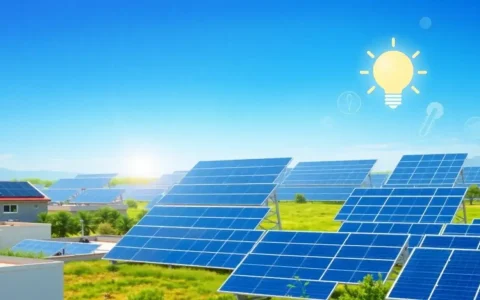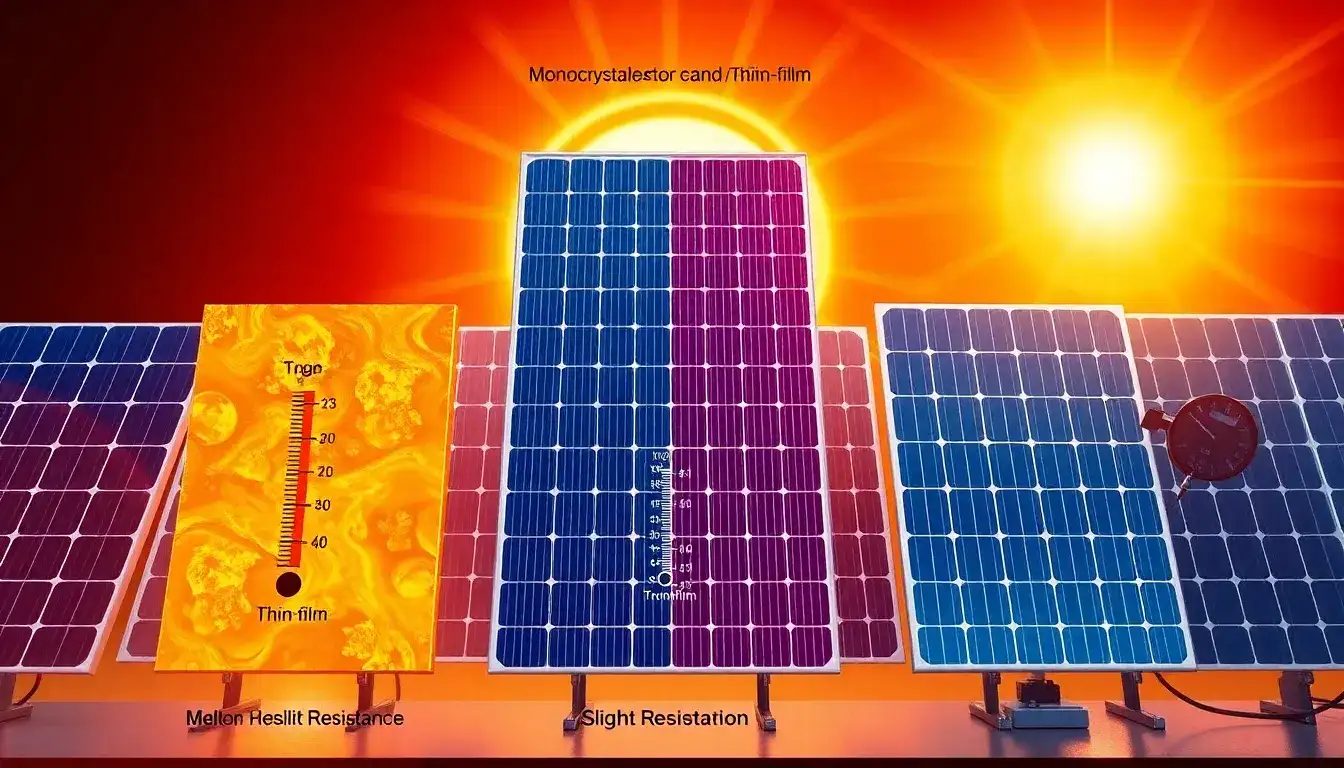
Solar panels face efficiency and durability challenges in high-temperature environments, but specific materials and design innovations help them better withstand heat.
Key Materials and Designs for High-Temperature Tolerance
1. Photovoltaic Cell Types:
- Monocrystalline cells tend to handle heat better than polycrystalline cells due to their single-crystal structure, resulting in lower efficiency losses at elevated temperatures.
- Thin-film solar panels are inherently more heat-resistant and generally have lower temperature coefficients, meaning their efficiency drops less with rising temperature.
- Interdigitated Back Contact (IBC) solar panels show superior thermal stability and performance retention in hot conditions compared to traditional PERC panels, due to their full back-contact design that reduces thermal stress and resistive losses.
2. Encapsulant Materials:
- Conventional solar panels use ethylene-vinyl acetate (EVA) as the encapsulant, but EVA can degrade (yellowing/darkening) under high heat (>85°C), negatively impacting panel efficiency and lifespan.
- Advanced panels use silicone gel encapsulants which can withstand higher temperatures (up to 110–115°C), have higher UV resistance, better transparency to sunlight, and longer lifetimes (~40 years vs. 25 years with EVA). Silicone gel also allows stress relaxation during daily thermal cycling, reducing mechanical degradation.
- New encapsulating materials like thermoplastic polyolefin (TPO) and thermoplastic elastomers (TPE) offer improved heat resistance and moisture protection compared to EVA, reducing risks like delamination and degradation.
3. Protective Layers and Structural Materials:
- Tempered glass (front cover) and polymer backsheets protect cells from environmental factors including UV radiation, moisture, and thermal cycling, enhancing durability.
- Aluminum or steel frames provide structural strength to withstand heat-induced expansion/contraction and other stresses.
- Backsheets with low moisture permeability (e.g., TPE) also help maintain panel integrity under hot, humid conditions.
4. Advanced Module Designs:
- Bifacial solar panels absorb sunlight from both sides and dissipate heat better, which improves efficiency retention at high temperatures.
- Innovative cooling systems (air or water-based) can actively manage panel temperature, preventing overheating and improving both efficiency and lifespan.
- Solar trackers adjust panel angles to optimize sunlight capture and reduce heat buildup, indirectly improving heat tolerance.
Performance Metrics Related to Heat
- Solar panels’ efficiency typically decreases as temperature rises above 25°C (77°F). The temperature coefficient quantifies this loss, usually between -0.2% and -0.5% per °C. Thin-film and IBC panels tend to have the lowest coefficients, meaning they lose less efficiency in heat.
- For example, IBC panels have a temperature coefficient around 0.29%/°C, leading to less power degradation in hot climates compared to PERC panels with about 0.34%/°C.
Summary Table of Materials and Features Enhancing Heat Resistance
| Material/Design Feature | Heat Tolerance & Benefits |
|---|---|
| Silicone gel encapsulant | Up to 110–115°C long-term, UV resistant, transparent, reduces mechanical stress |
| EVA encapsulant | Standard up to ~85°C, prone to yellowing/darkening under heat |
| Thermoplastic encapsulants (TPO, TPE) | Improved heat/moisture resistance, reduce delamination risk |
| Monocrystalline cells | Better thermal performance than polycrystalline |
| Thin-film cells | Intrinsically more heat tolerant with low temperature coefficient |
| IBC solar panels | Minimized thermal stress, lower resistive losses, stable under heat |
| Tempered glass and polymer backsheets | Protect cells from UV and moisture, enhance durability |
| Bifacial design | Better heat dissipation, higher energy yield in heat |
Conclusion
Solar panels that better withstand high temperatures typically use advanced encapsulants like silicone gel or thermoplastic materials, and employ cell technologies such as monocrystalline, thin-film, or IBC cells that have inherently better heat tolerance. Module designs like bifacial panels and cooling systems further improve performance and longevity in hot climates. Choosing solar panels with these materials and features is recommended for installations in high-temperature environments to maximize efficiency and durability over time.
Original article by NenPower, If reposted, please credit the source: https://nenpower.com/blog/are-there-specific-solar-panel-materials-that-better-withstand-high-temperatures/